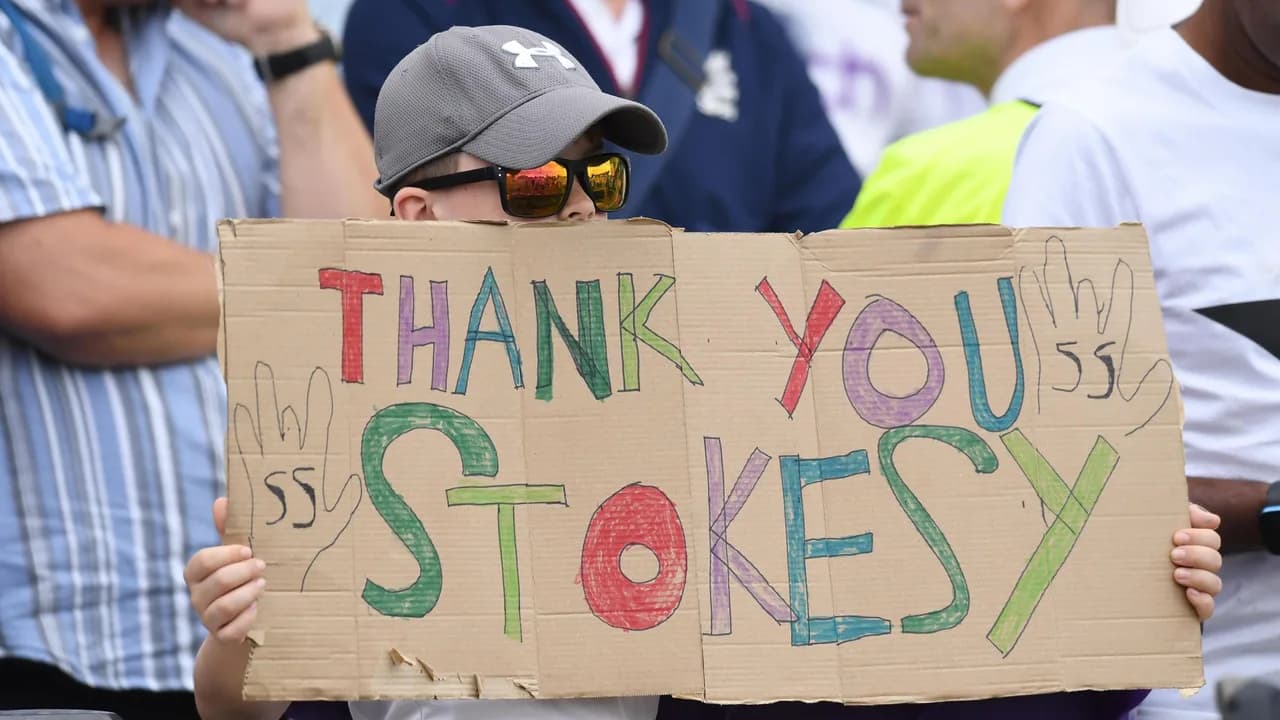
There are cricketers who accumulate statistics, and then there are cricketers who accumulate memories. Ben Stokes, who has now retired from international cricket after a remarkable 15-year career, was emphatically the latter — though as it turns out, he managed to do both at a level that puts him alongside the genuine all-time greats of the game.
The Numbers That Tell Half the Story
Let's start with the cold facts, because they deserve acknowledging before we get to the theatre. Stokes finishes with 7,273 Test runs and 252 wickets — figures that place him in the statistical company of Sir Garfield Sobers and Jacques Kallis, two of the most celebrated all-rounders the sport has ever produced. He ended his career having played more Tests as England captain than either Mike Brearley or Raymond Illingworth, and with more Test sixes than any other batter in the history of the game. His wickets came at a superior strike-rate to James Anderson and Ian Botham. His run tally eclipses household names like Graham Thorpe, Denis Compton, David Gower and Geoffrey Boycott. If numbers were all that mattered, the case would already be closed.
A Career Built on Defining Moments
But raw statistics never quite captured what made Stokes special, and as someone who has spent years analysing cricket at coaching level, I'd argue that's precisely the point. He was the kind of player who changed the atmosphere the moment he walked onto the field. Think back to Headingley 2019 — that astonishing unbeaten 135 that dragged England to a one-wicket Ashes victory most of us had already written off. Or the 2019 World Cup final at Lord's, where he produced one of the most extraordinary innings in the tournament's history to force a Super Over that England ultimately won. Then there was Melbourne in 2022, and the masterclass wins in Rawalpindi and Hyderabad that announced his captaincy era with serious intent. These were not just good performances — they were moments that will be retold for generations.
The Road That Nearly Wasn't
What makes Stokes's story even more remarkable is how close it came to ending very differently. The Bristol incident in 2017 cast a long shadow over his career, threatening to derail everything he had built. The fact that he not only recovered but went on to become arguably England's most important cricketer of the modern era — as both player and Test captain — speaks volumes about his character. Born in Christchurch and shaped by his upbringing in Cumbria, he came through as a fiery, combustible talent and left as a measured, respected leader. Losing a T20 World Cup final after being hit for four consecutive sixes in the final over would have broken lesser players. Stokes used it as fuel.
What England Lose Without Him
From a purely cricketing perspective, replacing Stokes is essentially impossible. England's Test selectors will now face an enormous challenge constructing a balanced side without his dual contributions. For those following the Test markets, England's outright series odds are likely to lengthen noticeably in any future contest where conditions would traditionally have suited him. More than the bowling wickets or the lower-order runs, though, what England lose is the belief that something extraordinary is still possible — because as long as Stokes was at the crease or running in to bowl, it always was.
Since Ian Botham lit up English cricket in the 1980s, no player has come close to generating the volume and quality of match-defining moments that Stokes produced across his career. That era is now over, and English cricket will feel its absence for a very long time.