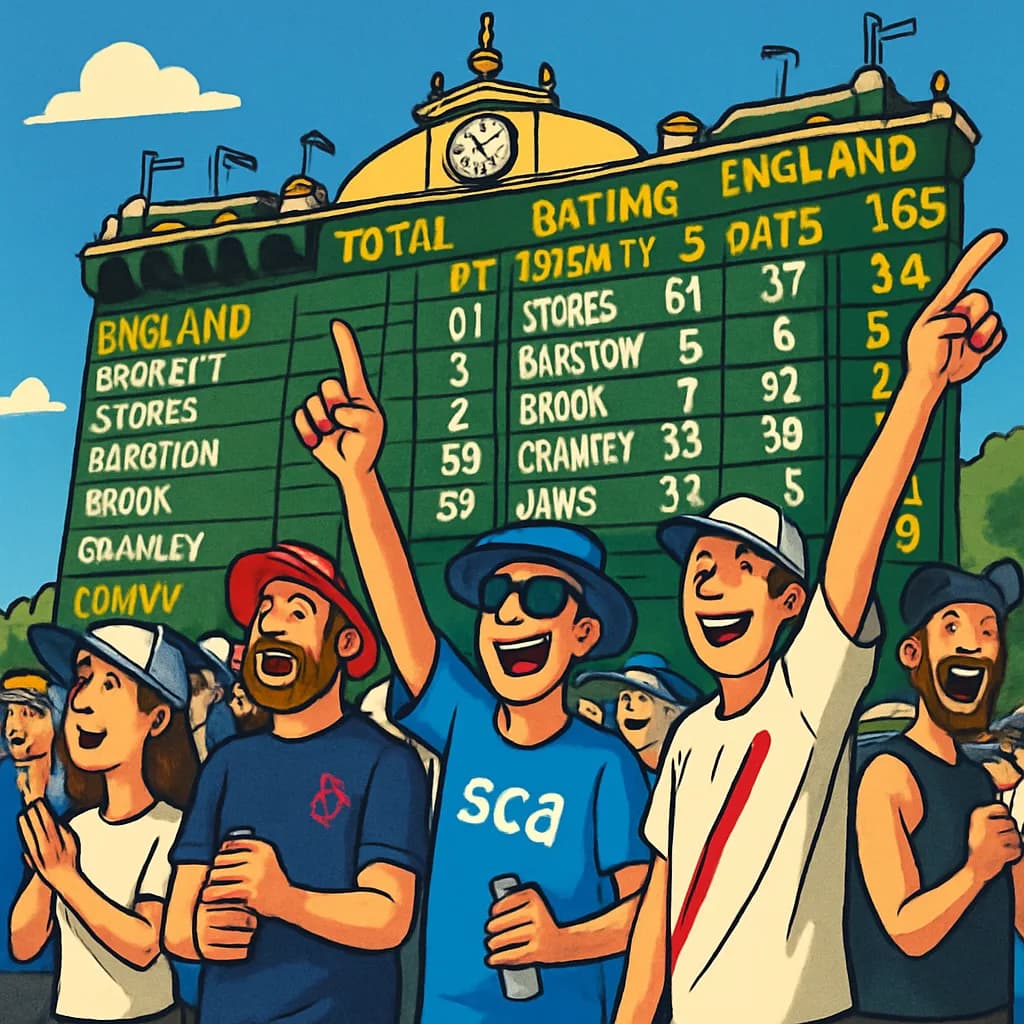
ADELAIDE — While the scoreboard at the Adelaide Oval told a familiar story of English cricketing struggle during the 2021-22 Ashes series, a quieter, more uplifting narrative was unfolding in the stands and streets beyond. Despite the team's performance, England's travelling supporters, most notably the famed Barmy Army, have been singled out for praise for their exemplary conduct and a unique environmental initiative that has left a lasting positive impression on the South Australian capital.
The initiative, dubbed the "Adelaide Tidy Up," was a collaborative effort born from a conversation on BBC Radio 5 Live's cricket coverage. Presenters and commentators, witnessing the dedication of the fans who had travelled thousands of miles, pondered how to channel that collective spirit into a tangible good for the host city. The result was a simple, powerful call to action: for supporters to spend a few minutes each day collecting litter in the city's parks, squares, and along the River Torrens.
From a Radio Chat to a Grassroots Movement
What began as an off-air suggestion quickly gained momentum. BBC 5 Live promoted the idea on air and across its social media channels, while the Barmy Army—the organised, vocal heart of England's away support—enthusiastically adopted it as a core part of their touring ethos. The message was clear: "We're here to support our team, enjoy the cricket and the city, and leave it better than we found it."
Fans were encouraged to share their efforts using the hashtag #AdelaideTidyUp, and the response was immediate and heartwarming. Images and videos flooded in showing groups of England fans, often still in their team colours and face paint, armed with bin bags and picking up rubbish in Elder Park, along North Terrace, and in the CBD. The initiative highlighted a key aspect of modern sports fandom often overshadowed by headlines of hooliganism: a sense of communal responsibility and respect.
Local Recognition and Lasting Goodwill
The impact was quickly noticed by Adelaide's residents and authorities. Local media ran positive stories, and city officials publicly thanked the visiting fans. The Lord Mayor of Adelaide, Sandy Verschoor, issued a statement commending the Barmy Army and England supporters, noting that their actions "demonstrated great respect for our beautiful city and set a wonderful example." This public relations victory stood in stark contrast to the gloomy mood emanating from the England dressing room.
The benefits of the initiative were multifaceted:
- Environmental: Directly improving the cleanliness of public spaces.
- Diplomatic: Fostering tremendous goodwill between touring fans and the local community.
- Reputational: Positively reshaping the global perception of travelling England cricket fans.
For many Australian onlookers, accustomed to a more ribald and competitive sporting rivalry, the sight was both surprising and refreshing. It challenged stereotypes and proved that passionate support and civic-mindedness are not mutually exclusive. As one local café owner told the ABC, "You see them singing and having a great time, and then you see them the next morning quietly doing this. It's a real class act."
The Barmy Army's Evolving Ethos
The #AdelaideTidyUp is not an isolated incident but part of a conscious evolution within the Barmy Army's culture. In recent years, the group has increasingly emphasised positive engagement, charity fundraising, and responsible tourism alongside its primary role of vocal support. This initiative provided a perfect platform for that ethos. Barmy Army founder Paul Burnham explained that the idea resonated deeply because it was a practical way to give back. "We're guests in this country," he said. "We want to enjoy the cricket, the beer, and the atmosphere, but we also want to be good guests. This was a small way to show our appreciation."
The initiative's success in Adelaide has since inspired similar efforts on subsequent tours. The model of a broadcaster (BBC 5 Live) amplifying a call to action that is then championed by the fans' own organisation has proven effective. It showcases how influential voices in sports media can leverage their platform for community benefit, moving beyond pure commentary to facilitate positive real-world action.
A Legacy Beyond the Scoreline
The 2021-22 Ashes series will be remembered in the record books for Australia's comprehensive victory. Yet, in Adelaide, a different memory persists. When locals and future visitors think of that Test match, alongside memories of batting collapses, they may also recall the unexpected sight of cheerful England fans contributing to their city's upkeep.
This story serves as a powerful reminder that the impact of a major sporting tour extends far beyond the boundary rope. The #AdelaideTidyUp demonstrated that even when national pride is stung on the field, it can be powerfully redeemed off it through simple acts of collective decency. It proved that fans are not just spectators but ambassadors, capable of writing a narrative of respect and community that endures long after the final wicket has fallen.
In an era where fan behaviour is constantly scrutinised, the collaboration between BBC Radio 5 Live and the Barmy Army in Adelaide set a new, impressively high benchmark. It showed that the most memorable legacy of a tour isn't always the result, but the respect earned and the positive mark left behind—one piece of litter at a time.