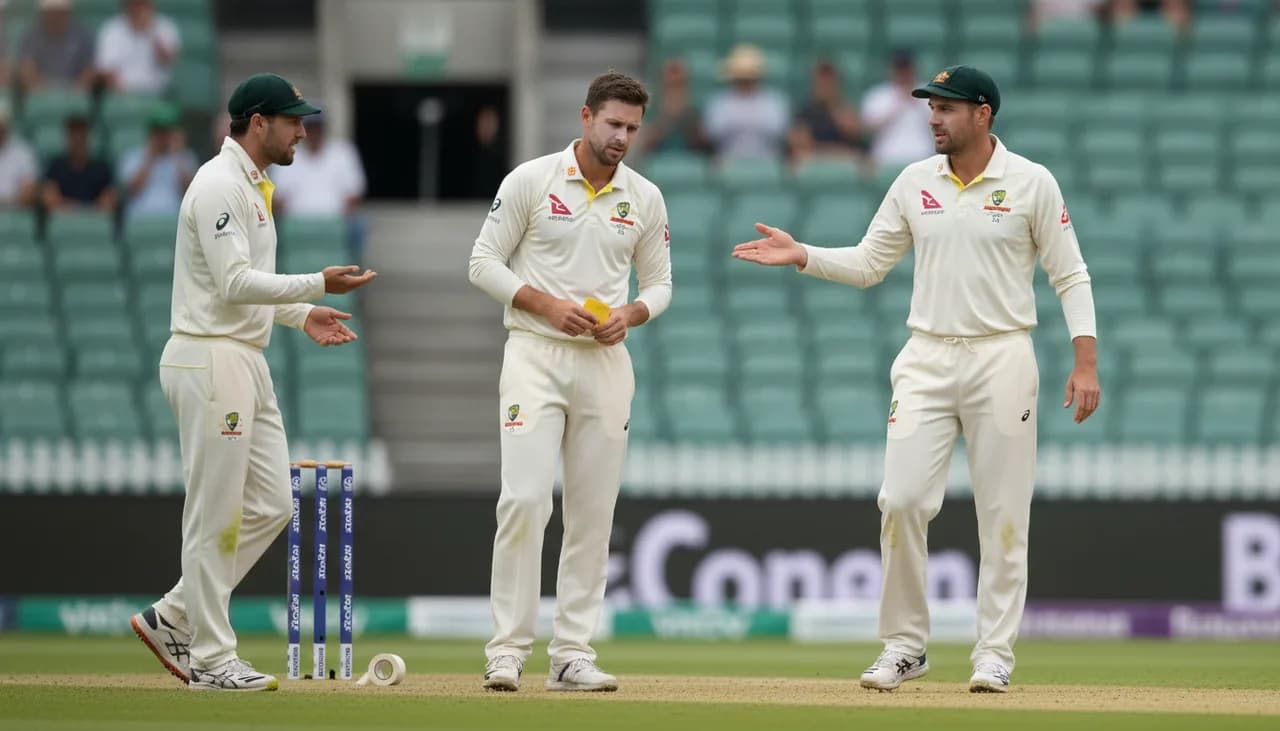
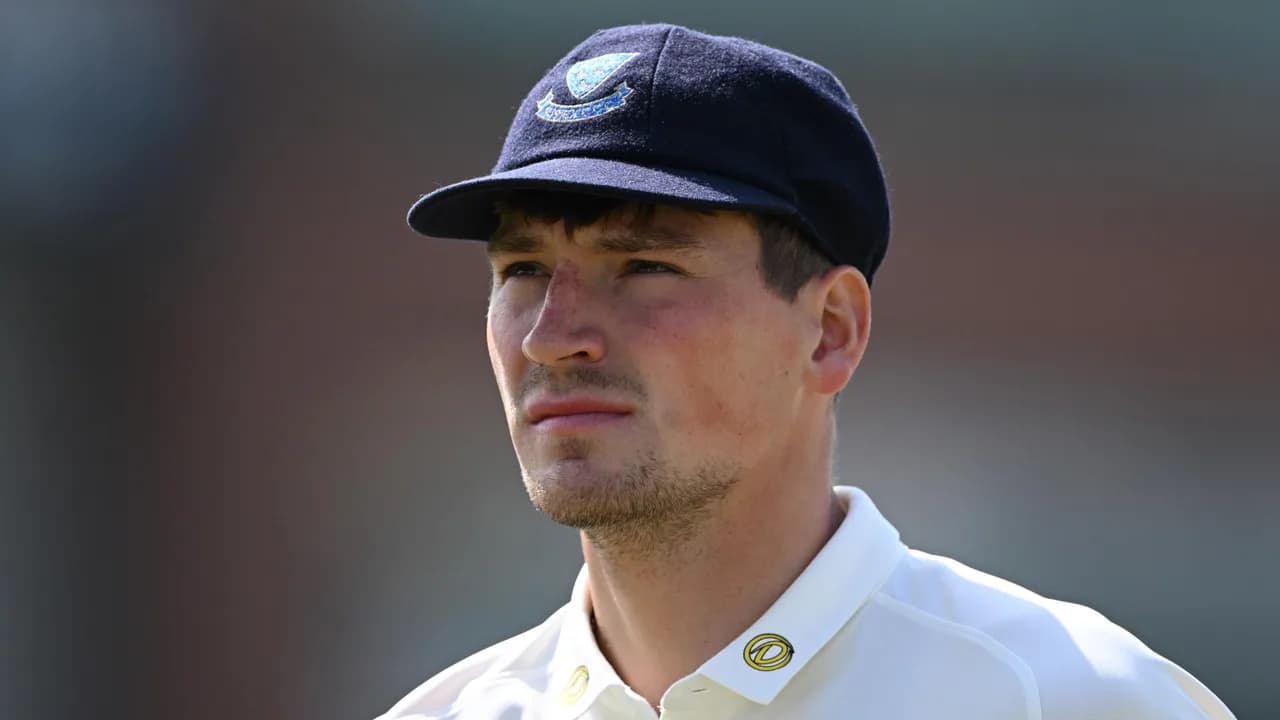
AUCKLAND — In the long, storied annals of cricket, a record considered one of the game’s final frontiers has finally been conquered. On a brisk March day at Auckland’s Eden Park Outer Oval, New Zealand fast bowler Brett Randell achieved the seemingly impossible: taking five wickets with five consecutive deliveries.
This feat, a ‘five-in-five’, had never been accomplished in the 254-year history of first-class cricket. Randell, playing for the Auckland Aces against the Canterbury Kings in New Zealand’s domestic Plunket Shield, etched his name into immortality with a spell of bowling that defied probability and left the cricketing world in awe.
The Unthinkable Becomes Reality
The match situation was tense. Canterbury, chasing 334 for victory, were 221 for 5, needing 113 more runs with five wickets in hand. Randell, who had bowled steadily without taking a wicket in the innings, was brought back for a final burst. What followed was a passage of play that transcended the context of the match and entered cricket folklore.
With his first ball of the 84th over, Randell had Canterbury’s top-scorer, Cole McConchie, caught at slip for 89. The next delivery clean bowled Zakary Foulkes for a golden duck. The hat-trick ball, the first of his next over, saw Matthew Boyle edge to the wicketkeeper. The crowd, now fully aware of history in the making, held its breath.
Completing the Perfect Sequence
The fourth ball of the sequence was a masterful outswinger that Sean Davey could only feather behind. Four wickets in four balls. The field closed in. The fifth ball, to new batsman Ish Sodhi, was full, fast, and straight, crashing into the stumps. In the space of ten minutes and five perfect deliveries, Canterbury had collapsed from 221 for 5 to 221 all out, handing Auckland victory by 112 runs.
The moment was one of pure, unadulterated cricketing magic. Randell’s teammates mobbed him, while the bowler himself seemed almost stunned by what he had done. "I'm still trying to process it, to be honest," Randell said post-match. "It all happened so fast. You dream of a hat-trick, but five in five? It's beyond a dream."
A Record 254 Years in the Making
To understand the magnitude of Randell’s achievement, one must consider cricket’s timeline. First-class cricket—the professional, multi-day format—dates back to 1772. In all those years, through hundreds of thousands of overs bowled by legends of the game, no one had ever taken five wickets in five balls. The closest anyone had come were several instances of four-in-four.
The rarity stems from the confluence of skill, conditions, luck, and circumstance required. A bowler must be in a rhythm of absolute perfection, each delivery demanding maximum concentration and execution. Furthermore, the batters must play at each ball—edges must carry, and lbw appeals must be given. Randell’s spell was a flawless alignment of all these stars.
Cricket statisticians and historians were immediately consulted. The Association of Cricket Statisticians and Historians (ACSH) confirmed the feat’s unprecedented nature. Renowned historian David Kendix noted, "We have meticulously recorded first-class cricket since its inception. This is a genuine first. It's a moment that rewrites the record books in the most dramatic fashion possible."
The Anatomy of a Historic Spell
Randell’s five-in-five was not a case of reckless slogging or poor batting; it was a display of high-quality fast bowling. Analysing the wickets reveals a bowler at the peak of his powers:
- Ball 1 (McConchie): A good length delivery on off-stump, drawing a defensive push that found a thick edge.
- Ball 2 (Foulkes): A fuller, straighter ball that beat the bat and hit the top of off stump.
- Ball 3 (Boyle): A seaming delivery on a fourth-stump line, taking the shoulder of the bat.
- Ball 4 (Davey): A classic, late-swinging away-seamer, drawing a thin edge.
- Ball 5 (Sodhi): A fast, full-pitched delivery that beat the bat for pace and hit the stumps.
The variety—seam, swing, and pace—showcased a complete bowler. Auckland captain Robbie O’Donnell praised Randell’s mindset: "He was just in the zone. Each ball was exactly where he wanted it. As a captain, you just get out of the way and let a spell like that happen. It was a privilege to watch from first slip."
Where It Ranks in Cricket Lore
Cricket has celebrated many extraordinary individual bowling performances. Jim Laker’s 19 wickets in a Test match, Anil Kumble’s 10-wicket innings haul, and Lasith Malinga’s four-in-four in international cricket are all iconic. Yet, Randell’s achievement occupies a unique space. Its sheer, condensed perfection—five wickets, five balls, no respite—sets it apart as a statistical and sporting marvel.
The achievement also highlights the magic that still exists in domestic first-class cricket, away from the glare of international TV coverage. It serves as a reminder that history can be made on any ground, at any time. Former New Zealand captain and commentator Simon Doull stated, "This is the kind of thing you tell your grandkids about. 'I was there when Randell did the unthinkable.' It’s that significant."
A Legacy Secured in Five Deliveries
For Brett Randell, a 27-year-old bowler known for his consistency rather than headline-grabbing feats, life has changed irrevocably. His name is now the answer to one of cricket’s ultimate trivia questions. The physical ball used has been secured for the museum, and his figures of 5 for 26 will forever be printed with an asterisk of legend.
In a sporting era often dominated by data, analytics, and predictable outcomes, Randell’s five-in-five is a glorious celebration of unpredictability and raw, sporting genius. It proves that after 254 years, cricket can still produce a moment that leaves everyone—players, historians, and fans—simply lost for words, reminded that in this ancient game, the impossible is always just one spell away.
As the cricketing world absorbs this new piece of history, one thing is certain: the record for the most consecutive wickets in first-class cricket now has a holder, and it may stand for another 254 years.