
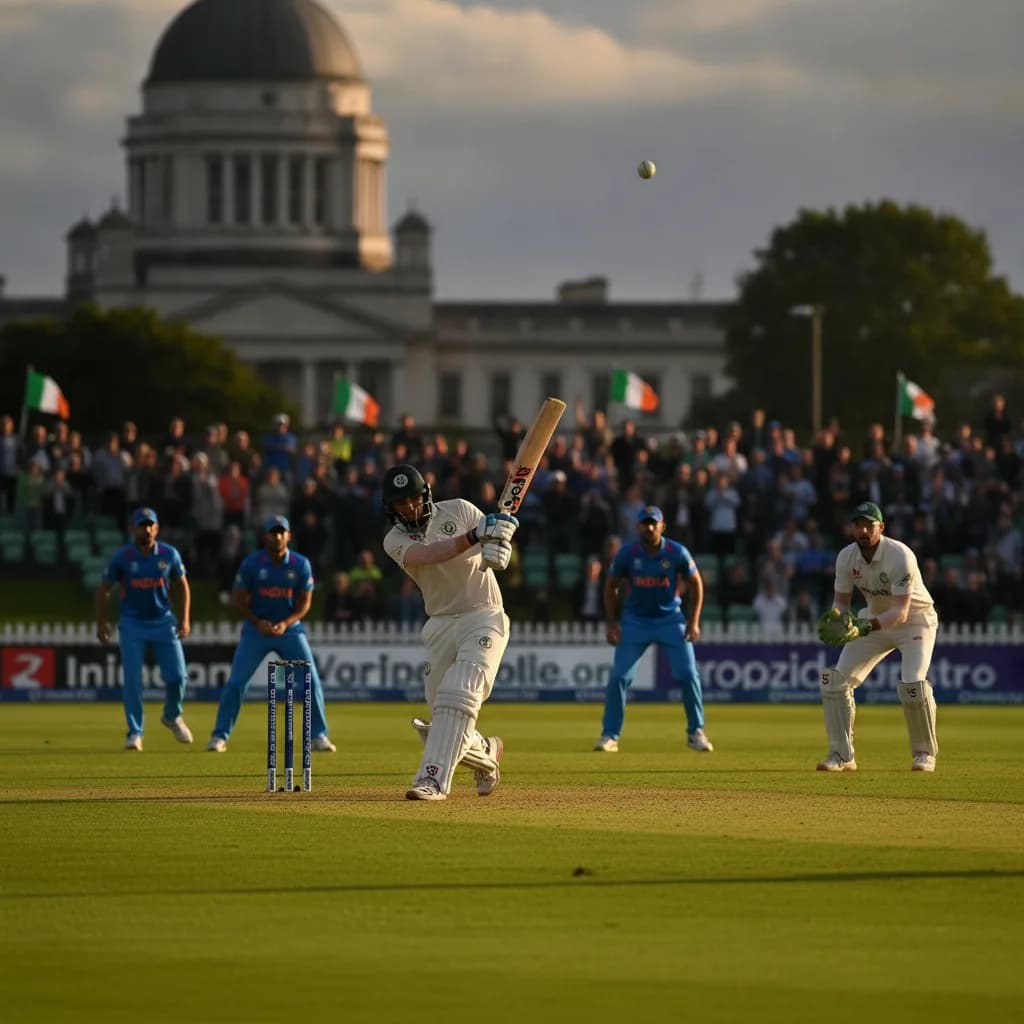
A Glimpse of What 2030 Could Look Like
There are occasions in sport when a fixture carries far more weight than the scoreboard alone will reflect. Ireland's back-to-back T20 internationals against India at Stormont this Friday and Sunday — both scheduled for 13:30 BST — feel like precisely one of those moments. The current world champions coming to Belfast isn't just a prestige occasion; according to Ireland assistant coach Gary Wilson, it's the opening chapter of a much bigger story.
England, Scotland and Ireland will co-host the 2030 T20 World Cup, and Stormont is expected to be one of the tournament's venues. Watching India — the reigning champions — play on that very ground gives local fans and cricket administrators a tangible sense of the scale of what is coming. Wilson is clearly keen to harness that energy early.
Wilson's Ambition: Ireland's Own 2003 Kenya Moment
Speaking to BBC Sport NI, Wilson was refreshingly candid about how high Ireland's sights should be set for a home World Cup. He drew a striking comparison to Kenya's remarkable run to the semi-finals of the 2003 ODI World Cup on home soil in Africa, suggesting there is no reason Ireland couldn't replicate something similarly dramatic in the T20 format in 2030.
"Why can't we do a Kenya from 2003 and reach a semi-final or go as far as possible? That should be everyone's goal," Wilson said. It's a bold but understandable benchmark. Home advantage, a passionate crowd and years of targeted planning could make Ireland genuine dark horses by the time 2030 arrives — and at tournament outright odds, they may well represent considerable value for adventurous punters as the event approaches.
Crucially, Ireland's ICC ranking already guarantees them a spot in both the 2028 and 2030 T20 World Cups, giving the coaching staff the luxury of planning across multiple cycles rather than scrambling for qualification. Wilson confirmed that T20 cricket will largely take a back seat after this series, with ODI World Cup qualifiers the immediate priority heading into next year. Ireland's next T20 international is unlikely to come before 2027, which makes this weekend's fixtures all the more significant as a yardstick.
Tucker Steps Up as Injuries Bite
Ireland arrive at Stormont without a full complement of players, with injuries ruling out several key figures including regular T20I captain Paul Stirling. Lorcan Tucker has been handed the captaincy on a permanent basis in the shortest format, combining the role with his responsibilities as wicketkeeper and top-order batter — no small ask against the planet's premier T20 side.
Wilson, however, expressed complete faith in Tucker's readiness. He described the new skipper as diligent, thoroughly prepared and one of Ireland's finest performers, adding that Tucker commands genuine respect from both teammates and the backroom staff. For his part, Tucker will be looking to stamp his authority on the role from the very first ball on Friday.
The absences do at least create openings for fringe players to press their claims against the stiffest possible opposition — a point Wilson acknowledged, framing the series as a chance for new faces to measure themselves against the world's best T20 exponents.
Building a Nation's Cricket Culture
Beyond the tactical and personnel questions, these two fixtures represent something culturally significant for Irish cricket. Hosting India at Stormont plants a flag. It tells the cricketing world — and perhaps more importantly, the Irish public — that this country is capable of staging marquee international occasions. If the 2030 World Cup is to be the transformative event Wilson envisions, weekends like this one are exactly how you begin building that momentum. The journey to 2030 starts now, and it starts under Belfast skies.