LONDON — Despite a chastening winter that saw England's men's Test team suffer series defeats in both India and the West Indies, head coach Brendon McCullum and managing director of cricket Rob Key are expected to retain the full backing of the England and Wales Cricket Board (ECB).
The 'Bazball' era, defined by its ultra-aggressive philosophy, has hit its first significant period of turbulence. A 4-1 loss in India was followed by a shock 1-0 series defeat in the Caribbean, England's first there in nearly two decades. This has prompted intense scrutiny of the team's methods and the leadership duo who instigated them.
However, sources close to the ECB indicate that the long-term vision shared by Key and McCullum remains the board's preferred path. The focus is on building towards the next Ashes series in Australia in 2025-26, with the belief that short-term setbacks are a necessary part of a transformative process. As one insider noted, "The project was never about winning every Test match immediately; it was about changing the mindset and identity of the team for sustained success."
The Winter of Discontent: A Review of Results
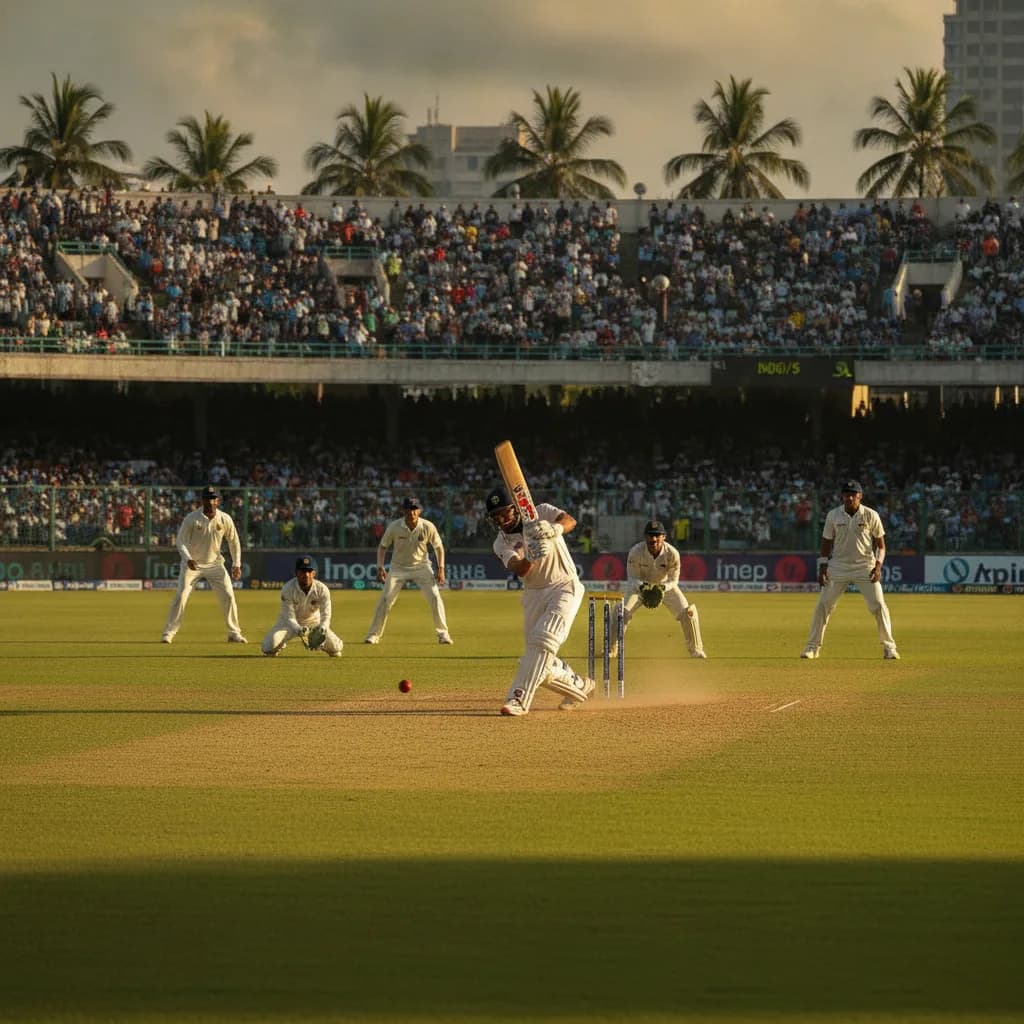
England's winter campaign began with high hopes in India, where they famously won the first Test in Hyderabad. Yet, the subsequent 4-1 scoreline laid bare familiar frailties against high-quality spin and an inability to consistently convert promising positions into match-winning ones. The batting, while thrilling, was often accused of being reckless at critical moments.
The West Indies tour was intended as a reset but instead delivered a profound reality check. A humbling innings defeat in the first Test in Bridgetown, featuring a dramatic second-innings collapse, was followed by a rain-affected draw in Antigua. The series loss triggered a wave of criticism, with former players and pundits questioning the very foundations of England's approach.
Key areas of concern that emerged from the twin tours include:
- The persistent top-order fragility, with only Zak Crawley cementing his place.
- The lack of a world-class spinner to support Jack Leach, especially in subcontinental conditions.
- The transition of the fast-bowling attack following the retirements of Stuart Broad and James Anderson.
ECB's Stance: Patience and a Long-Term Vision
Despite the disappointing results, the ECB's hierarchy, including chair Richard Thompson and chief executive Richard Gould, are understood to be preaching patience. They view the McCullum-Key partnership as instrumental in revitalising Test cricket's appeal in England after the turmoil of 2021-22. The dramatic victories, full houses, and increased engagement are metrics that hold significant weight alongside the win column.
Rob Key, in a recent media appearance, acknowledged the criticism but defended the overarching strategy. "We know we didn't play well enough in the West Indies, and parts of India," he stated. "But you don't become a bad team overnight. The core of what we're doing is right. It's about execution and refining, not ripping everything up."
The board's support is also rooted in contractual security. Both McCullum and captain Ben Stokes are tied to long-term deals, making any knee-jerk change logistically and financially complex. More importantly, there is a genuine belief that the duo possess the unique character to steer the team through this period of adversity.
The Road Ahead: Refinement, Not Revolution
The immediate focus for Key and McCullum is not on a philosophical U-turn, but on strategic refinement. The summer schedule, featuring series against Sri Lanka and Pakistan, offers a chance to rebuild confidence and integrate new players into the system. The selection of fresh faces like fast bowler Gus Atkinson and spinner Shoaib Bashir indicates a continued commitment to building depth.
A major item on the agenda is the management of the James Anderson succession. His retirement, announced during the Lord's Test against the West Indies, marks the end of an era. Nurturing the next generation of seam bowlers—including the returning Jofra Archer—will be a critical test of the management's acumen. As McCullum himself has said, "You have to be brave enough to be exposed at times to find out what you're capable of."
Furthermore, the balance of the Test squad will be scrutinised. There is a growing debate around whether the pure 'Bazball' approach needs subtle modulation, allowing for moments of game management and situational awareness without sacrificing the positive intent that has become the team's trademark.
Conclusion: Faith in the Project Endures
In the high-stakes world of international sport, consecutive series losses often precipitate major changes. Yet, for Brendon McCullum and Rob Key, the ECB's message appears to be one of continued faith. The board is choosing to view the winter not as a failure of ideology, but as a painful yet valuable phase in a longer journey.
The challenge for the leadership now is to demonstrate that the project can evolve. It must absorb the lessons from defeat, address clear weaknesses in personnel and technique, and prove that the exhilarating brand of cricket it champions can also be a consistently winning one. The 2025-26 Ashes loom as the ultimate benchmark, and the ECB is betting that McCullum and Key remain the best men to lead the charge down under.
The coming summer will be telling. While their positions seem secure for now, the pressure for tangible improvement is undeniable. As one county director of cricket privately observed, "The support is there, but it's not unconditional in perpetuity. Results, ultimately, are what count."