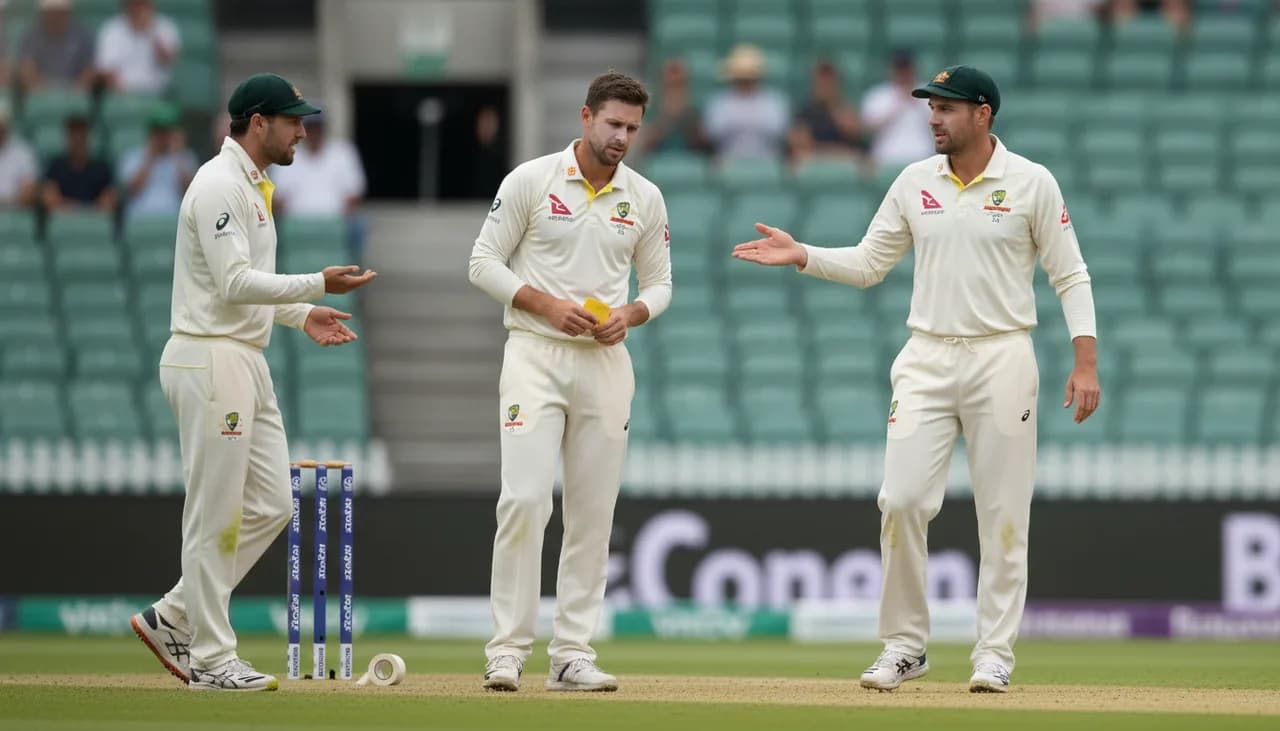
LONDON — Former England captain Michael Vaughan has claimed that head coach Brendon McCullum and managing director of cricket Rob Key were "very lucky" to retain their positions following the ECB's internal review into the 2023 Ashes series. Vaughan, writing in his column for The Telegraph, suggested that the pair's survival was down to the "emotional connection" they have built with the team and the public, rather than a cold assessment of results.
A Review That Sparked Controversy
The England and Wales Cricket Board (ECB) conducted a thorough post-Ashes debrief after the series ended in a 2-2 draw, with Australia retaining the urn. While the result represented a spirited comeback from 2-0 down, the failure to win the series on home soil, following a 4-0 thrashing in Australia in 2021-22, prompted serious questions about the direction of the Test team under the 'Bazball' philosophy. Vaughan argues that in any other era, such a record would have led to significant changes at the top.
"Let's be honest, if you go back over many years and an England team had drawn an Ashes series at home when they were huge favourites to win, there would have been a change," Vaughan wrote. He added, "McCullum and Key are very lucky to still be in their jobs after the Ashes review."
The "Bazball" Shield
Vaughan's central thesis is that the transformative, aggressive style of play championed by McCullum and captain Ben Stokes has created a protective shield. The brand of cricket has been wildly popular, breaking attendance records and revitalising interest in the Test format. This, Vaughan suggests, made it politically difficult for the ECB to make a change, despite the ultimate objective of winning the Ashes remaining unfulfilled.
"They have built up so much credit and have such an emotional connection with the players, fans and media that it became almost impossible to get rid of them," he stated. The review, led by ECB performance director Mo Bobat, ultimately endorsed the current leadership, focusing on fine-tuning rather than overhaul. Key areas identified for improvement included:
- The consistency of England's first-innings batting.
- The need for a more potent and varied bowling attack in all conditions.
- Smoother integration of new players into the high-pressure environment.
The Weight of Expectation and Missed Chances
Vaughan pointed to specific moments in the 2023 series where England's aggressive approach arguably cost them victory, and with it, the urn. He highlighted the first Test at Edgbaston, where a bold declaration on the first evening gave Australia a route back into the match, which they seized. He also cited the missed opportunities at Lord's and, crucially, the rain-affected draw at Old Trafford where England were utterly dominant. For Vaughan, these were pivotal moments that fell on leadership.
"They should have won at Edgbaston. They should have won at Lord's. They would have won at Old Trafford if not for the weather. That is three Tests they could easily have won, and the series with it," he argued. "When you analyse it like that, you see how close they were, but also how far they fell short of their own expectations."
The Road Ahead: India and Australia
The former skipper, who led England to their famous 2005 Ashes victory, believes the real judgement for McCullum and Key is now imminent. The recent 4-1 series defeat in India, despite a stunning victory in the first Test, exposed familiar frailties against high-quality spin and raised further questions about the method's effectiveness away from home. The next major benchmark is the 2025-26 Ashes tour to Australia, a frontier where 'Bazball' has yet to be successfully deployed.
Vaughan contends that the goodwill and emotional capital may start to deplete if tangible success in the form of major series wins does not materialise. "The next 18 months are huge. They have to show that this style can win the biggest series, not just entertain. The defeat in India has already turned the dial a little. If they go to Australia and lose again, the review will look very different," he warned.
A Defence of the Vision
In response to such critiques, Rob Key has consistently defended the long-term project. He has emphasised that the review was a constructive process designed to evolve the strategy, not dismantle it. The appointment of former New Zealand spinner Jeetan Patel as a full-time assistant coach, focusing on the development of young spinners, is a direct outcome. Key has also pointed to the successful integration of players like Harry Brook and the resurgence of veteran seamer James Anderson as evidence of progress.
Speaking to the BBC's Test Match Special recently, Key framed the Ashes as a stepping stone: "We didn't win the Ashes, and that is the bottom line. But we saw a team that refused to give in, that played a brand of cricket that inspired people, and that has laid a foundation. Our job now is to build on that foundation and turn these thrilling draws and near-misses into victories."
Conclusion: Credit in the Bank, But For How Long?
Michael Vaughan's comments cut to the heart of a modern sporting dilemma: does transformative entertainment buy you time, or are results the only true currency? There is little doubt that Brendon McCullum and Rob Key have revolutionised English Test cricket's mindset and popularity. Their "credit in the bank," as Vaughan puts it, is substantial. However, as the former captain asserts, the draw at home to an ageing Australian side was a significant missed opportunity. The ECB's review concluded that faith should be maintained, but the pressure is now unequivocally on. The coming campaigns, particularly the return trip to Australia, will determine whether Vaughan's assessment was a prescient warning or merely a provocative footnote in what becomes a successful legacy.