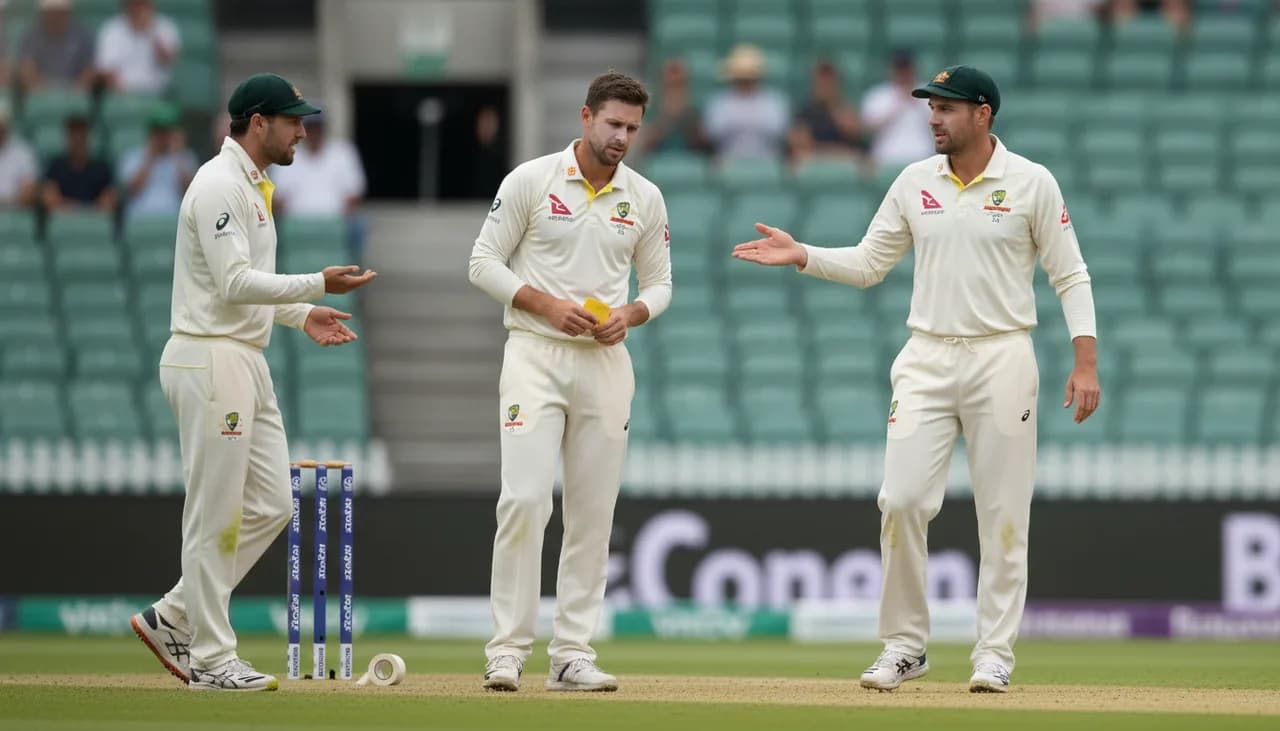
The dust has long settled on the 2023 Ashes series, a titanic contest that ended in a dramatic 2-2 draw, but the embers of its fiercely competitive narrative continue to glow. For England's vice-captain and batting linchpin, Ollie Pope, one particular narrative that emerged from the summer's heat has proven difficult to shake: the suggestion that England, in their relentless pursuit of 'Bazball' entertainment, were not fully committed to winning the urn.
A Narrative Born from Aggression
Following England's thrilling, series-levelling victory at The Oval, a discourse began to circulate in some quarters of the media and among pundits. The perception suggested that England's ultra-aggressive approach, which saw them declare on the first evening at Edgbaston and pursue seemingly impossible chases, indicated a cavalier attitude where the spectacle was prized above the result. This interpretation, for Pope, is a bitter pill to swallow.
"That’s quite a hard one to take," Pope stated in a recent interview, addressing the criticism head-on. "If anything we were too desperate to win it. That’s probably where we went wrong at times, trying to force the game too much when it wasn’t quite there. But the perception that we weren’t fussed about winning is miles off." His words cut to the heart of a fundamental misunderstanding about the team's philosophy under Ben Stokes and Brendon McCullum.
The Fine Line Between Bravery and Recklessness
England's strategy was never to disregard victory; it was to engineer it through relentless positivity, a tactic that had brought them 11 wins in 13 Tests prior to the Ashes. Pope argues that the line between boldness and over-eagerness is perilously thin, especially against an opponent of Australia's calibre. The desire to win was so intense, he suggests, that it occasionally tipped into overreach.
"We were trying to win at all costs," he explained. "Every decision that was made, whether it was a declaration or anything else, was made with a view to winning the Test match. We knew that to beat Australia, we couldn’t just sit back and hope they made mistakes. We had to force the issue."
This proactive mindset defined key moments that were later scrutinised. The first-day declaration at Edgbaston at 393-8, leaving Joe Root unbeaten on 118, was a statement of intent. Similarly, the relentless pursuit of a target in fading light at Lord's, which ended in a dramatic defeat, was born from a belief they could achieve the extraordinary, not from indifference.
Defining Moments of Intent
Pope points to specific instances that, for him, disprove the theory of a lack of competitive fire. His own monumental innings of 196 in the second Test at Lord's, which hauled England back from a precarious position, was a testament to skill, concentration, and sheer will. Furthermore, the team's resilience in bouncing back from 2-0 down to level the series showcased a mental fortitude that belies any accusation of being "not fussed."
The series was a masterclass in high-stakes drama, featuring several pivotal moments that defined its outcome:
- The Stokes Miracle at Lord's: While England lost, Ben Stokes' breathtaking 155 in a near-impossible run-chase was a pure distillation of the team's "never say die" attitude.
- Wood and Woakes' Impact: The introduction of Mark Wood's express pace and Chris Woakes' all-round brilliance at Headingley and The Oval changed the series' momentum, tactical moves aimed squarely at victory.
- The Oval Climax: The final day tension, with England pushing for wickets and Australia battling to save the match and the urn, was a pressure-cooker environment only a team desperate to win could create.
Legacy of a Drawn Series
For Pope, the 2-2 result, while leaving the urn in Australian hands, was a validation of England's method against the world's best. "We proved to ourselves we can live with Australia," he said. "We went toe-to-toe with them for five Tests. After being 2-0 down, a lot of teams might have folded, but we came back. That doesn’t happen if you’re not utterly desperate to win."
The perception he finds so hard to take likely stems from a stylistic clash. England's flamboyant brand of cricket, with its high-risk boundaries and aggressive fields, can appear carefree to the traditional eye. However, Pope insists every shot, every declaration, was underpinned by meticulous planning and an unwavering belief that it was the surest path to victory.
Looking ahead to the next Ashes showdown in Australia in 2025-26, Pope believes the experience has hardened the team. "We’ve learned so much about handling those big moments," he reflected. "We know we can hurt them. The aim isn’t just to play exciting cricket; it’s to win. That’s all we’ve ever wanted to do."
Conclusion: Passion Misinterpreted
In the final analysis, Ollie Pope's defence is a poignant reminder of the passion that fuels elite sport. The 'Bazball' era, for all its revolutionary flair, is built on a foundation of fierce competitiveness. To mistake its bold expression for a lack of desire is, as Pope contends, to fundamentally misunderstand the character of this England team. The 2023 Ashes was not a series played by a side unconcerned with winning; it was a five-act epic fought by two teams whose desperation to win was so profound that it occasionally spilled over into the realm of the audacious. For Pope and his teammates, ensuring that legacy is accurately recorded is a battle worth fighting long after the final ball has been bowled.