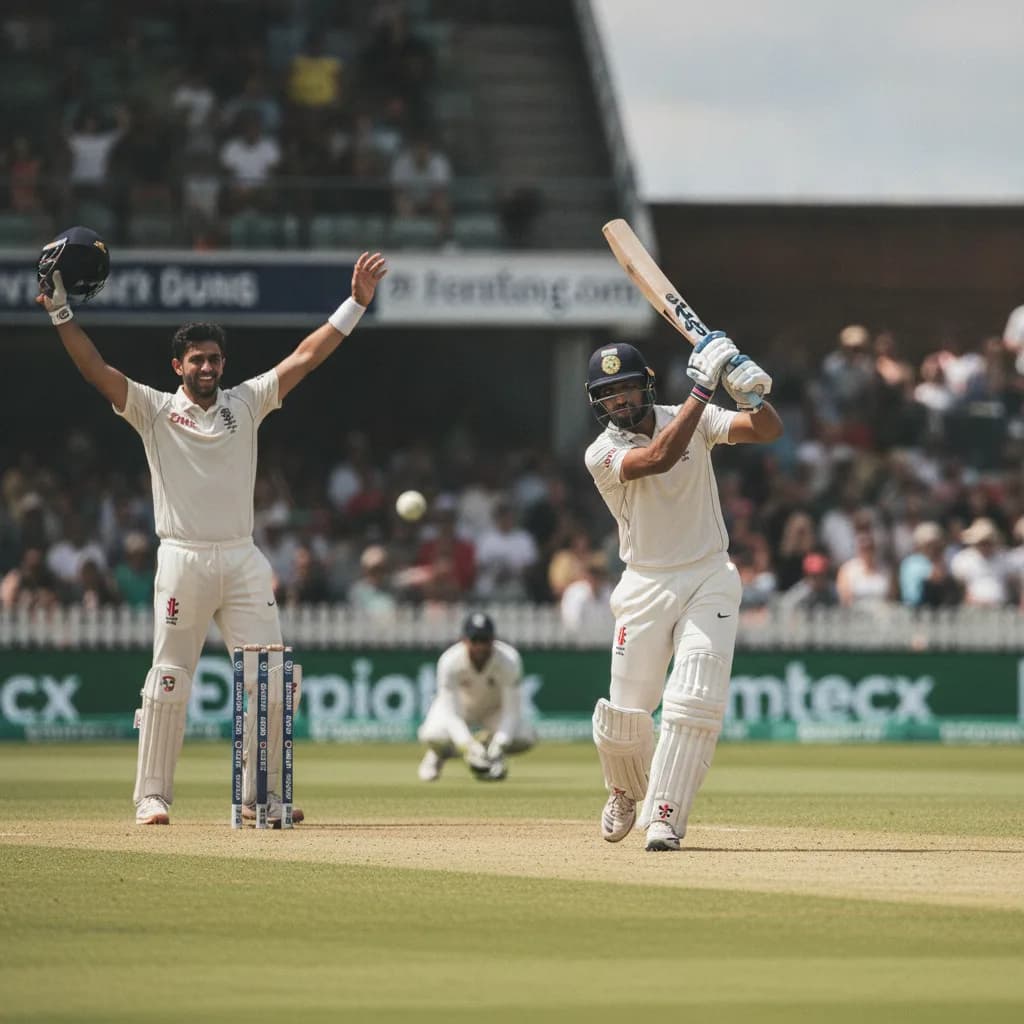

In an era where batters are hitting sixes with increasing frequency and power, England all-rounder Sam Curran has discovered that sometimes the slowest delivery can be the most devastating. His ultra-slow 'moon ball' variation has emerged as one of cricket's most intriguing new weapons, leaving international batters scratching their heads as they struggle to adjust their timing to a delivery that barely reaches club-level pace.
The Art of Deception
Curran's moon ball represents a masterclass in bowling deception, with the left-armer capable of reducing his delivery speed from 83mph down to a pedestrian 43mph whilst maintaining virtually identical body language and arm speed. This dramatic pace variation recently claimed another victim when Sri Lanka's Pathum Nissanka fell into the trap during England's narrow 19-run defeat in the first ODI, mistiming his shot completely and sending a simple catch to Liam Dawson.
The delivery itself relies entirely on flight and the batter's inability to read the change in pace. Former England quick Steve Harmison, analysing the technique for TNT Sports, explained how Curran achieves this deception: "He holds the ball between his first finger and his thumb, throws the ball in the air and tries to keep the same arm speed, but the ball comes out behind him much slower." The key lies in Curran's altered release point, which occurs much further back than his standard deliveries.
From Spinner's Weapon to Seamer's Arsenal
Traditionally, the moon ball has been the preserve of spin bowlers, with former England off-spinner Jeremy Snape amongst those who utilised the ultra-slow delivery effectively. However, the modern game's demands have seen pace bowlers increasingly adopt variations typically associated with spinners. Curran's version has proven so effective that his moon ball against Nissanka was actually slower than all six previous deliveries bowled by spinner Rehan Ahmed in the same innings.
The Surrey all-rounder has been perfecting this craft across various formats, deploying the variation with considerable success in both The Hundred and the T20 Blast. Speaking on the BBC's For The Love of Cricket podcast with former teammate Stuart Broad, Curran revealed his methodology: "You have to be creative, guys are developing so fast. I've worked so hard on trying to keep the arm speed the same and then I've got better at landing the ball at the right length."
Evolution in Response to Batting Innovation
The development of Curran's moon ball reflects the ongoing tactical arms race between bat and ball in modern cricket. With T20 leagues proliferating globally and batting techniques becoming increasingly aggressive, bowlers must constantly innovate to remain competitive. This tactical evolution has shifted betting markets considerably, with bowlers who possess effective variations now commanding premium odds in performance markets.
Steve Harmison's own experience with ultra-slow deliveries, including his famous 65mph slow yorker that bamboozled Michael Clarke during the iconic 2005 Ashes series, demonstrates that pace variations have long been part of cricket's tactical landscape. However, Curran's modern interpretation takes this concept to new extremes, proving that in cricket's fastest formats, sometimes the oldest trick in the book—delivered with contemporary precision—can be the most effective weapon of all.