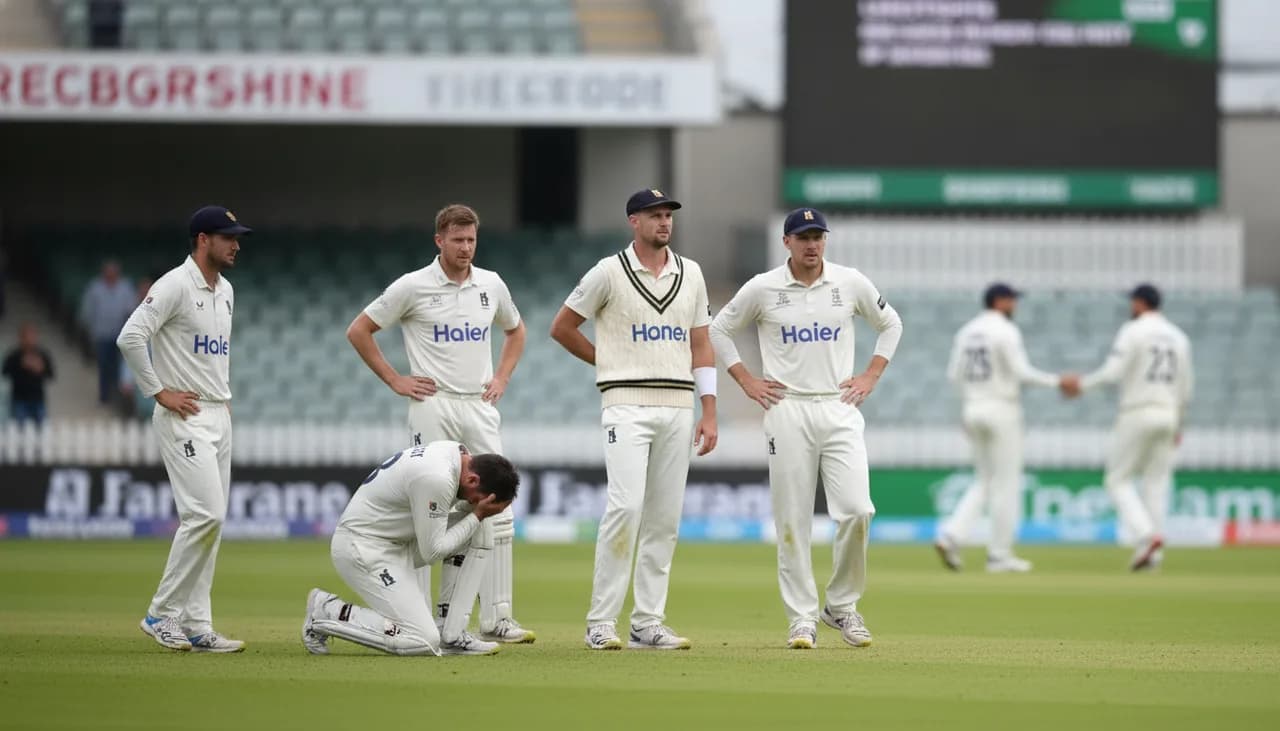

A Race Against Time for England's Star Player
There's a certain cruel irony when a tournament's most important player becomes a spectator at the business end of a World Cup. That's the scenario England are desperately trying to avoid as captain Nat Sciver-Brunt battles a calf muscle injury that has already forced her to retire out during the team's second group match of the Women's T20 World Cup 2026. At 33, Sciver-Brunt remains England's heartbeat — technically, tactically, and emotionally — and her absence from a semi-final would represent a near-catastrophic blow to their chances. The good news, at least for now, is that England's medical team are cautiously optimistic about her availability for the last-four stage.
The Treatment Shaquille O'Neal Would Recognise
Alongside more established recovery methods such as ice baths, compression therapy, physiotherapy, and oxygen treatment, Sciver-Brunt is also undertaking something far less conventional — and something the England Women's setup has never previously explored. Magnetic resonance therapy, occasionally referred to as MBST, uses electromagnetic energy directed at the damaged tissue to stimulate natural cellular healing. The patient places the injured area inside a compact device not unlike a small MRI scanner and undergoes sessions lasting roughly an hour at a time. Sciver-Brunt is reportedly completing two sessions daily, both at home and at the team hotel. Notably, NBA legend Shaquille O'Neal — a four-time championship winner — has spoken publicly about using comparable electromagnetic treatments during his own career, lending the approach a certain high-profile credibility.
What the Experts Say
Nick Worth, a sports physiotherapist with three decades of experience working alongside elite athletes, offered some measured insight into how the therapy functions. Speaking to BBC Sport, Worth explained: "The electromagnetic field goes around the injured area and they have treatment for about an hour seven or eight times. The electromagnetic energy has an impact on the cells that promotes healing in the cells naturally, rather than it needing any medication or drugs." Worth was candid about the limitations of the current evidence base, acknowledging that while research remains sparse, there are documented cases of meaningful positive outcomes. In the high-stakes environment of a World Cup, marginal gains and experimental options are often worth the gamble — especially when conventional methods alone may not get a player over the line in time.
What England Stand to Lose — and Gain
The human side of all this wasn't lost on Sciver-Brunt's wife and former England colleague Katherine, who told BBC Test Match Special: "I've not seen much of her to be honest because she's been off doing everything possible." That single line tells you everything about the determination driving this recovery. From a cricketing perspective, England's semi-final prospects look considerably brighter with Sciver-Brunt in the XI than without her, and the outright betting markets have reflected that uncertainty since news of the injury broke. Punters backing England for the title would do well to monitor team news closely in the coming days, as her confirmed availability — or otherwise — is likely to move the odds meaningfully.
Whether Sciver-Brunt's calf holds up in time will define much of England's World Cup narrative. The science is intriguing, the resolve is clearly there, and if this rare therapy can deliver when it matters most, it may well become a far more familiar fixture in elite cricket dressing rooms going forward. For now, all eyes remain on England's medical tent — and on the woman who makes their batting order tick.