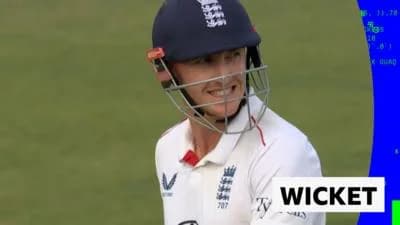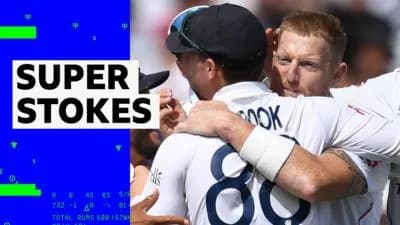

HEADINGLEY — The roar that greeted Harry Brook’s century at Headingley on Saturday was one of pure, unadulterated cricketing catharsis. It was the sound of a prodigious talent not just fulfilling a promise, but announcing his arrival as a man for the moment. After an immature winter, Brook’s mature and majestic 126 not out against Pakistan proved he is England’s leader for the future.
The backdrop was crucial. This was not a serene, pressure-free hundred on a placid track. England, chasing a daunting 337 to keep the series alive, were teetering at 72-3. The ghosts of a dismal winter, where Brook’s struggles in India were a microcosm of England’s wider failings, loomed large. The narrative was shifting from ‘wonderkid’ to ‘work-in-progress’. What followed was a masterclass in controlled, intelligent, and powerful batting that completely rewrote the script.
From Winter Woes to Summer Salvation
Brook’s tour of India was a chastening experience. Thrust into the No. 3 role following the retirement of Jonathan Trott and the shifting sands of England’s middle order, he averaged just 20.77 across five Tests. His technique, particularly against high-quality spin, was picked apart. He looked rushed, uncertain, and a far cry from the batter who had exploded onto the scene with four centuries in his first five Tests. The questions were inevitable: was he a flat-track bully? Could he adapt? The winter exposed flaws, but at Headingley, he showcased the character to fix them.
His innings against Pakistan was defined by a palpable shift in tempo and temperament. Early on, he was watchful, respecting the good deliveries from Shaheen Shah Afridi and Naseem Shah. There was no reckless charge, no wild swipe. He built a partnership with Joe Root, the very epitome of Test match nous, and absorbed the pressure. Then, as he passed fifty, the shackles were gradually released. The signature power through the covers and mid-wicket returned, but it was built on a foundation of sound judgement. As former England captain Michael Atherton noted in commentary, "This is the most mature and responsible innings we have seen from Harry Brook in an England shirt."
The Anatomy of a Mature Innings
What made this century so significant was its situational awareness. Brook understood precisely what his team needed. He navigated a tricky period, accelerated at the perfect moment to shift momentum, and then closed the game out with ruthless efficiency. This was not a solo act of brilliance, but a conductor’s performance, orchestrating the chase alongside Jonny Bairstow in a devastating, unbroken 171-run partnership. His game management was impeccable.
The statistical breakdown of his innings tells a story of calculated aggression:
- First 50 runs: 86 balls – patience and consolidation.
- Next 76 runs: 68 balls – accelerating dominance.
- Strike Rate: Finished at 82.88, having started below 60.
Filling the Leadership Void
England’s Test team is in a period of transition. The stalwarts of the ‘Bazball’ era, Ben Stokes and Brendon McCullum, provide the philosophy and inspiration, but the on-field batting leadership, post-Root, has been less defined. In this innings, Brook stepped into that void. He played like a senior pro, exuding a calm authority that steadied the dressing room. His celebration upon reaching three figures—a roar of release, a pointed stare at the England badge—spoke of a player taking ownership.
Captain Ben Stokes, who has long championed Brook’s mentality, was effusive in his praise. "For a young lad to come in under that amount of pressure, with everything that’s been said, and play like that… it was incredible," Stokes said. "That wasn’t just a hundred, that was a statement. He’s a special, special player." This endorsement from the captain, the ultimate judge of character in this England setup, is telling.
The Technical Tweaks
Observant viewers would have noticed subtle adjustments. His stance seemed slightly more side-on, his head stiller. He was quicker to get onto the front foot against spin, using his hands rather than committing his whole body. Most importantly, his decision-making was sharper. He left well outside off-stump early on, a discipline absent in India. He picked the right balls to attack, targeting the shorter deliveries from the pacers and using his feet to negate the spinners. This wasn’t a reinvention, but a refinement—the sign of a player who has done the hard work in the nets.
A Cornerstone for the Next Decade
The significance of this innings extends beyond one thrilling run-chase and a 2-0 series lead. It has provided a clear answer to one of English cricket’s most pressing questions: who will be the batting cornerstone for the next decade? Root remains the master, but Brook has now shown he possesses the game and the temperament to be his heir apparent. He can be the aggressive, match-defining No. 5, or, as he hinted here, a resilient and adaptable No. 3 or 4.
The challenge now, as it always is for the truly great, is consistency. Can he produce this level of performance against Australia, against India in their conditions, and on the biggest stages? Based on the evidence of his short career—he now averages 62.21 with six centuries in 13 Tests—and the profound growth displayed at Headingley, there is every reason to believe he can. He has weathered his first major storm and emerged stronger.
In the space of one sun-drenched afternoon in Leeds, Harry Brook transformed his narrative. He moved from a talented player with a point to prove, to the mature, majestic heartbeat of England’s batting future. The winter was a lesson; the summer has become his platform. As the Headingley crowd rose to acclaim him, it wasn’t just celebrating a century. It was acknowledging the arrival of a new leader. The future, it seems, is Brook.