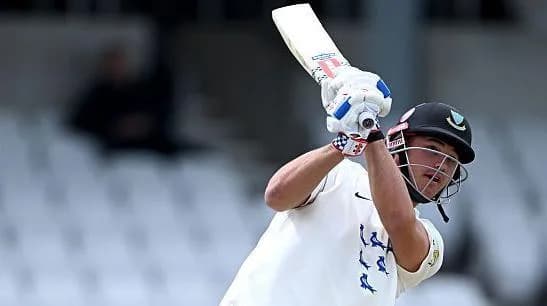
LEEDS — England and Yorkshire batter Harry Brook has opened up about the intense personal toll of the media storm that followed a late-night altercation outside a Brighton nightclub in January, describing the period as "horrendous" and admitting the controversy has "not been a very nice time of my life."
The 25-year-old cricketer, widely regarded as one of the brightest talents in world cricket, found himself at the centre of unwanted headlines after an incident in the early hours of January 2nd. Reports emerged that Brook was involved in a dispute with a bouncer outside the Shooshh club, an altercation that reportedly led to police being called to the scene. While no arrests were made, the story quickly spiralled across tabloid front pages and social media.
In his first detailed comments on the matter, Brook, speaking candidly ahead of Yorkshire's County Championship season, did not delve into the specific details of the night but focused squarely on the devastating aftermath. "The time in the spotlight has been horrendous," he stated, his usual confident demeanour replaced by a palpable weariness. "I’m not going to lie, it’s not been a very nice time of my life."
The Weight of Public Scrutiny
For a player whose career has been defined by a fearless approach at the crease, the experience of being scrutinised for his personal life proved a uniquely challenging ordeal. Brook, who had just returned from a disappointing England tour of India and was preparing for a lucrative stint in the Indian Premier League, found his name trending for all the wrong reasons. The narrative shifted abruptly from discussions of his cover drive to salacious clubland gossip.
He described the pervasive nature of the coverage, which extended beyond traditional media into a relentless online frenzy. "You try to ignore it, but it’s everywhere," Brook explained. "Family members are reading it, friends are seeing it. You get messages from people you haven’t spoken to in years. It becomes inescapable."
The batter revealed the episode affected him more deeply than any cricketing failure, citing the helplessness of being unable to respond or correct what he felt were misrepresentations. The personal cost was significant, impacting his mental well-being and his ability to focus on his primary craft during a critical pre-season period.
A Stark Contrast to On-Field Fame
Brook's rise in cricket has been meteoric. Bursting onto the Test scene in 2022, he announced himself with four centuries in his first six matches, playing with a blistering strike rate that revolutionised the perception of a modern Test number five. His talent commanded attention, but it was the admiration of purists and fans—a form of spotlight he was accustomed to and thrived under.
The nightclub controversy presented a fundamentally different type of fame. "When you’re playing well, the attention is about your performance, your skill," he reflected. "This was about me as a person, and assumptions being made about my character from one isolated incident. That’s a much harder thing to process."
The experience has forced a rapid maturation regarding the realities of life in the public eye for a modern sports star. Brook acknowledged that his actions, regardless of context, have consequences that extend far beyond the moment, amplified by the 24-hour news cycle and the insatiable appetite of social media.
Support Systems and Moving Forward
Throughout the ordeal, Brook leaned heavily on his close-knit support network. He was quick to praise the role of his family, his girlfriend, and the management teams at both Yorkshire and England for their unwavering backing during what he called a "dark few weeks."
Crucially, he also received public support from England Test captain Ben Stokes and coach Brendon McCullum, who both contacted him privately to offer reassurance about his place within the team environment. This, Brook said, was instrumental in allowing him to begin shifting his focus back to cricket.
He is now determined to use the experience as a catalyst for growth, both as a person and a player. "It’s been a massive learning curve," he admitted. "You have to be aware that everything you do can be seen. It’s about making better decisions, being smarter."
His immediate plan is to channel all his energy into scoring runs for Yorkshire, with the clear aim of reclaiming his spot in the England side for the summer Test series against the West Indies and Sri Lanka. The incident, he hopes, will become a footnote in a career destined for greater heights.
Broader Lessons for Young Stars
Brook’s very public difficulties highlight a recurring challenge for young athletes catapulted to stardom. The transition from talented prospect to household name brings with it a loss of anonymity and a magnification of every action. The key takeaways from his experience, which he hopes can guide others, include:
- The Permanence of the Digital Record: In the social media age, incidents are captured, shared, and become a permanent part of an athlete's online footprint.
- The Importance of a Trusted Circle: Having a small, dependable group of advisors and confidants is critical during a crisis.
- Professional Support is Vital: Utilising the mental health and media training resources provided by clubs and national bodies is not a sign of weakness.
- Performance as the Ultimate Response: On-field success remains the most powerful tool for reshaping a narrative.
As the new county season dawns, a visibly more circumspect Harry Brook is ready to let his bat do the talking once more. The flamboyant stroke-play that made him a star remains, but it is now accompanied by a hard-won understanding of the spotlight's dual nature. "I just want to play cricket," he concluded, a simple statement laden with the relief of a man eager to return to the sanctuary of the pitch. "That’s who I am. That’s what I do. Everything else is just noise."