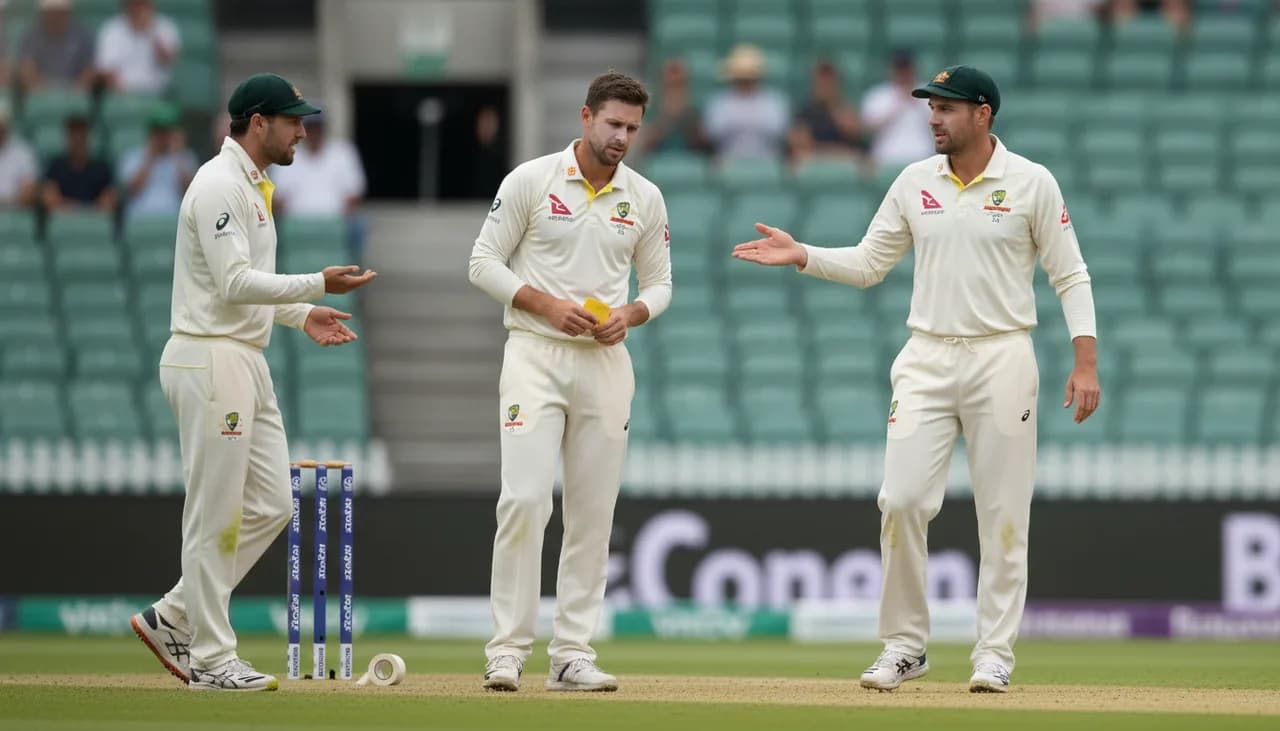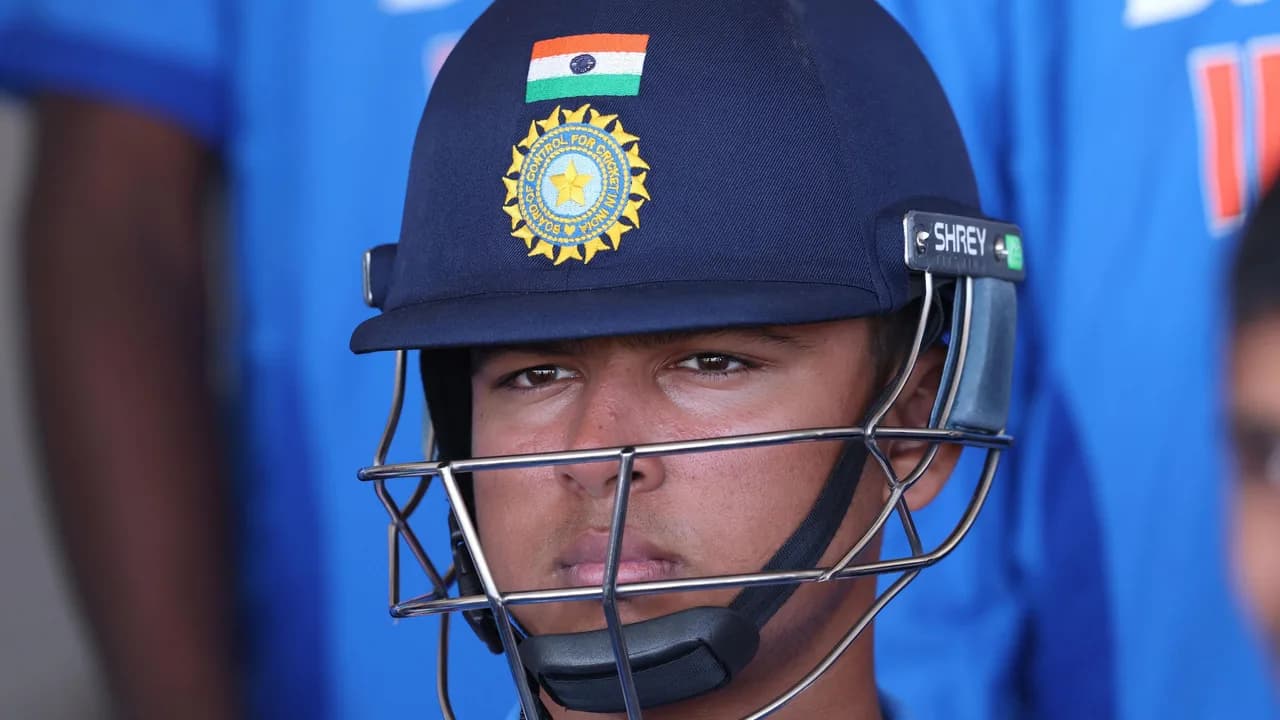
LAHORE — In the high-stakes world of international cricket, where every delivery is scrutinized, a new name has ignited a fierce debate that cuts to the very heart of the sport's integrity: Usman Tariq. The young Pakistani spinner finds himself at the center of a storm not over his wicket-taking prowess, but over the legality of his bowling action, a controversy that has reignited age-old discussions about biomechanics, fairness, and the fine line between unorthodox genius and illegality.
Who is Usman Tariq?
Usman Tariq is a 25-year-old left-arm spinner who emerged from the domestic circuit in Pakistan, turning heads with his remarkable control and ability to extract sharp turn. His breakthrough came during the 2023-24 domestic season, where his performances for the Rawalpindi region were nothing short of sensational. He finished as the leading wicket-taker in the Quaid-e-Azam Trophy, Pakistan's premier first-class competition, with a staggering 61 wickets at an average of under 20.
This dominance earned him a spot in the Pakistan Shaheens (A-team) and put him firmly on the radar of the national selectors. However, alongside the plaudits for his skill, a murmur began to grow into a roar. Fellow players, commentators, and fans on social media started to question the uniqueness of his action, particularly his doosra—a delivery that spins away from a right-handed batter—which many argued exhibited a visible kink at the elbow.
The Anatomy of the Controversy
The debate centers on cricket's Law 21.1, which governs fair delivery. The law states that a bowler's arm "may not straighten in the bowling action to an extent exceeding 15 degrees." This is the infamous "15-degree rule," a tolerance level established after extensive scientific research to account for the natural hyperextension found in some bowlers. The suspicion around Usman Tariq is that his action, especially when bowling certain variations, exceeds this limit.
The controversy gained mainstream traction during a televised domestic match. Slow-motion replays, the modern arbiter of such disputes, were played repeatedly, with analysts drawing lines on the screen to highlight the perceived flexion. Former Pakistani cricketer and noted commentator Bazid Khan voiced a common sentiment on air, stating, "There is a clear question mark. This needs to be looked at by the authorities."
Why This Story Resonates
The talk about Tariq's action is particularly charged for several reasons deeply rooted in Pakistan's cricketing history and the global game's ongoing battle with suspect actions:
- Pakistan's Checkered History: The nation has produced several legendary spinners—Saeed Ajmal, Mohammad Hafeez, and before them, the great Saqlain Mushtaq—who all faced public scrutiny and official bans for their actions. For fans, it feels like a painful, recurring narrative.
- The "Doosra" Dilemma: The doosra, pioneered by Saqlain, has long been biomechanically challenging to bowl within the 15-degree limit. Many believe a truly legal doosra is nearly impossible, making any bowler who masters it instantly suspect.
- Domestic vs. International Scrutiny: Critics argue that while Tariq has thrived in the domestic setup, his action would be immediately targeted by rival teams and match officials in international cricket, potentially derailing his career and harming Pakistan's prospects.
The Official Process and Current Status
In response to the growing clamor, the Pakistan Cricket Board (PCB) has officially stepped in. As per the standard protocol for managing suspect bowling actions, Tariq has undergone informal testing. Reports suggest he was assessed at the PCB's National Cricket Academy in Lahore using high-speed cameras and biomechanical software. While the PCB has not released official results, sources indicate that his stock delivery was found to be within legal limits.
However, the critical test for his variations, particularly the doosra and a quicker arm ball, remains a point of contention. The PCB's High Performance department is reportedly working closely with him on technical adjustments. A PCB official, speaking on condition of anonymity, told media, "We are aware of the discussions. Our process is ongoing, and player development and legality are our top priorities."
This "process" is crucial. If a bowler is reported in an international match, they undergo official ICC testing. A finding of an illegal action leads to suspension until the action is remedied and re-tested. The PCB's preemptive work aims to avoid this disruptive scenario, but it has also fueled debate about whether domestic systems are rigorous enough in policing actions before players reach the global stage.
Broader Implications for the Game
The talk about Usman Tariq is more than just about one bowler. It reflects a perpetual tension in cricket. On one side are the purists and former players who demand strict adherence to the laws to preserve the traditional skill of finger spin. On the other are those who advocate for evolution, arguing that the 15-degree rule itself is arbitrary and that modern biomechanics have changed how we understand the bowling action.
Former England spinner and noted analyst Graeme Swann weighed in on a similar debate, capturing the essence of the conflict: "The law is the law. But we also have to ask if we're stifling innovation and unique talent with a rule that the naked eye can't even perceive being broken." This is the tightrope Tariq walks on—being hailed as a unique talent while being scrutinized for potentially breaking a fundamental law.
Conclusion: A Career in the Balance
The talk about Pakistan spinner Usman Tariq's action is a multifaceted saga of emerging talent, historical baggage, and the relentless pursuit of technical purity in sport. He is a phenomenal wicket-taker whose success is shadowed by doubt. For now, his future hinges on the silent work in bio labs and coaching nets, far from the roar of the crowd.
The cricket world watches and waits. Will Usman Tariq be the next in a line of Pakistani spinners sidelined by the action controversy, or will he, through technical refinement, silence the talk and become the next great match-winner for his country? His story is a stark reminder that in cricket, a bowler's journey is measured not just in wickets, but in degrees.