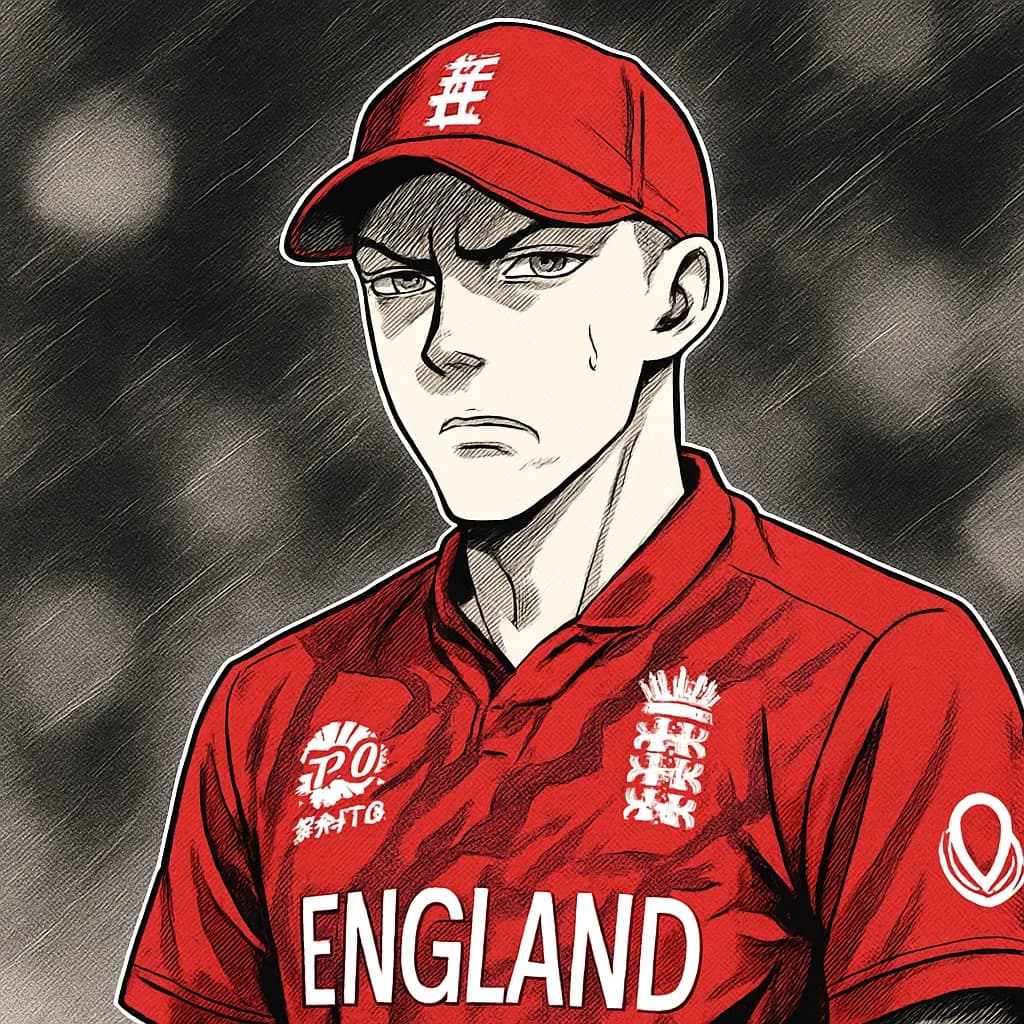
LONDON — England batting star Harry Brook has weighed in on the growing controversy surrounding the potential exclusion of Pakistani cricketers from this year's edition of The Hundred, stating it would be "a shame" if they were barred from participating. Brook's comments come amid a backdrop of escalating political tensions between the Pakistan Cricket Board (PCB) and the England and Wales Cricket Board (ECB), which threaten to derail the participation of some of the world's most exciting T20 talent.
In a separate but related announcement, Brook confirmed he will not be captaining the Sunrisers Leeds franchise this season, opting to focus solely on his batting. The 25-year-old, who is set to be a marquee player for the Northern Superchargers, cited the need to manage his workload after a hectic international schedule. His stance on the Pakistan player issue, however, highlights a significant concern within the dressing rooms about the tournament's quality and global appeal.
The Stalemate Between Boards
The core of the dispute lies in the ECB's decision to unilaterally withdraw its men's and women's teams from a scheduled white-ball tour of Pakistan in October 2024. The ECB cited "increased concerns about travelling to the region" for pulling out of the short trip, which was intended as a reciprocal gesture for Pakistan's crucial tour of England during the COVID-19 pandemic in 2021. The PCB, understandably furious, viewed the withdrawal as a breach of trust and contract, and is now considering its legal and reciprocal options.
One of the most powerful retaliatory measures at the PCB's disposal is to deny No-Objection Certificates (NOCs) to its players for The Hundred. This would immediately rule out a host of superstars who are central to the tournament's marketing and competitive balance. Brook, who has shared dressing rooms with many of these players in various global leagues, expressed his disappointment at the prospect. "They're world-class players, and any tournament is better for having them," he said. "It would be a real shame if they weren't allowed to come over and play."
Key Pakistani Stars in the Firing Line
The potential loss would be significant, stripping The Hundred of some of its most explosive and popular attractions. The affected players are not just squad members but headline acts for their respective teams. The situation creates immense uncertainty for the eight franchises, who have already drafted their squads and built marketing campaigns around their overseas stars.
Among the Pakistani contingent whose participation hangs in the balance are:
- Babar Azam (Manchester Originals): The world's premier white-ball batter and a global icon.
- Shaheen Shah Afridi (Welsh Fire): A left-arm fast-bowling superstar and a major box-office draw.
- Mohammad Rizwan (Manchester Originals): A top-order batting pillar and a fan favourite.
- Haris Rauf (Welsh Fire): A genuine fast bowler who brings extreme pace and excitement.
- Naseem Shah (Birmingham Phoenix): One of the most promising young fast bowlers in the world.
The absence of these players would not only dilute the on-field quality but also impact ticket sales and viewership among the large South Asian diaspora in the UK. Brook acknowledged this, hinting at the broader implications for the tournament's identity. "The Hundred is about bringing the best players together. You want to test yourself against the best," he remarked.
Brook Steps Down as Sunrisers Captain
In a parallel development, Brook confirmed reports that he would not be leading the Sunrisers Leeds team in the upcoming season. Having taken over the captaincy mid-season last year, Brook has decided to relinquish the role to concentrate on his primary skill. "I've had conversations with the coach and the director of cricket, and we all agreed it's the right decision for me and the team," he explained.
He emphasized that the decision was purely about performance management. "I want to focus on my batting. I feel like I can offer more to the team by scoring runs rather than worrying about the captaincy." The Sunrisers are expected to name a new captain in the coming weeks, with the franchise looking to build on a mixed 2023 campaign.
A Tournament at a Crossroads
The dual issues highlighted by Brook—the Pakistan impasse and his own captaincy decision—point to a tournament at a critical juncture. The Hundred, while successful in attracting new audiences, faces increasing pressure from established T20 leagues and must constantly reaffirm its status as a premier competition. Losing an entire nation's worth of elite talent would be a major blow to that prestige.
Discussions between the ECB and PCB are understood to be ongoing, but the clock is ticking with the tournament scheduled to begin in late July. The PCB holds a strong negotiating position, and its chairman, Mohsin Naqvi, has been vocal about expecting "adequate compensation and apology" for the cancelled tour. The ECB, for its part, must balance its geopolitical stance with the commercial and sporting needs of its flagship domestic tournament.
The Players Caught in the Middle
Ultimately, as Brook's comments underscore, the players become collateral damage in these boardroom disputes. Pakistani cricketers lose lucrative contracts and a platform to showcase their skills, while English players and fans miss out on competing alongside and against world-class opposition. The franchise coaches and analysts, who have built strategies around specific players, are left scrambling for last-minute replacements who may not be of the same calibre.
Brook's hope, shared by many within the game, is that cricket sense will prevail. "These things tend to get sorted, don't they?" he said, with a note of optimism. "You'd like to think the people in charge will find a solution."
The coming weeks will be crucial. If a resolution isn't found, The Hundred 2024 risks being remembered not for its on-field fireworks, but for the high-profile absences that dimmed its light. As one of England's leading cricketers, Harry Brook has simply voiced what many are thinking: the sport is poorer when its best talents are kept apart by politics.