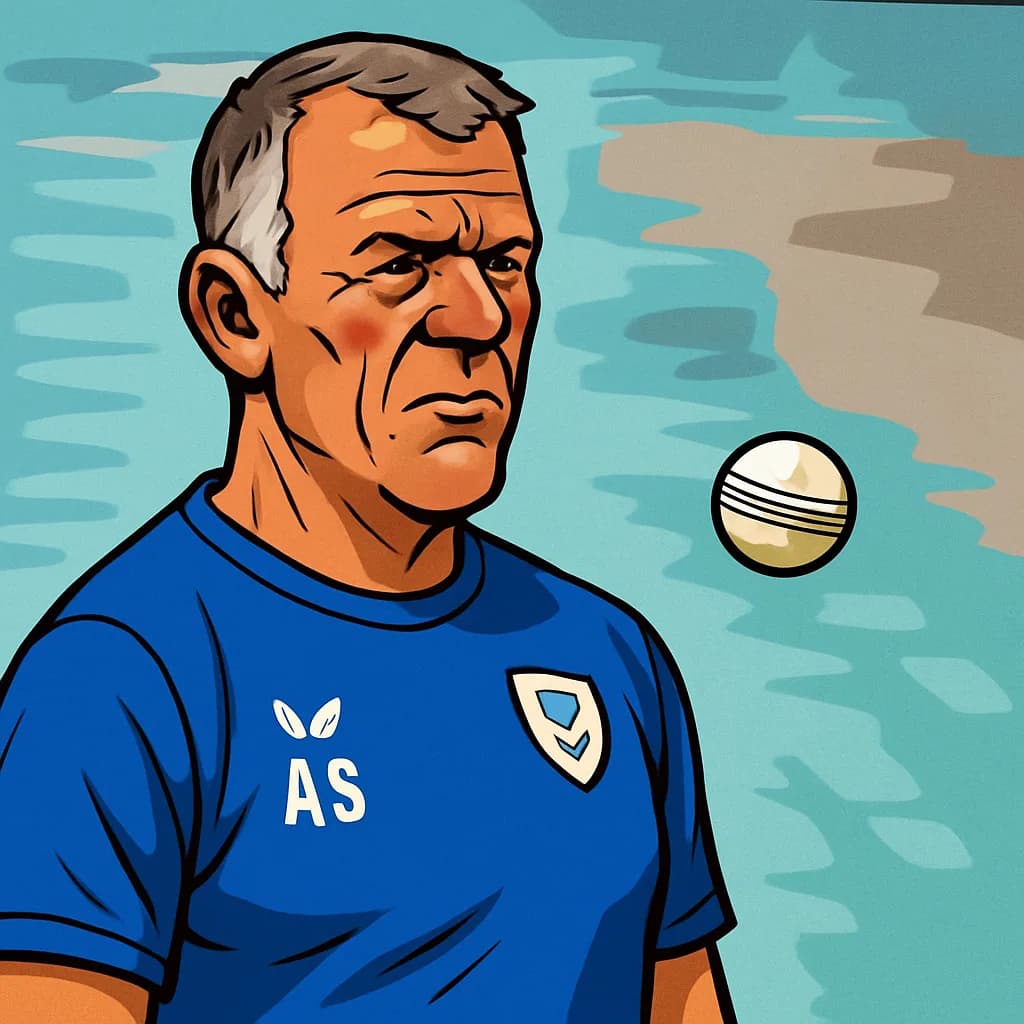
LONDON — The relationship between professional cricket and alcohol is as old as the game itself, from post-match pints in the pavilion to sponsor logos emblazoned on boundary ropes. Yet, in an era of heightened professionalism and public scrutiny, this long-standing association is under the microscope. According to former England captain and director of cricket Alec Stewart, the sport does not have a systemic alcohol problem, but its modern players must exercise far greater personal judgment. "Cricketers need to understand the time to have a drink and the time not to," he asserts, framing it as a crucial matter of career management and public responsibility.
The Cultural Backdrop: Celebration and Scrutiny
For generations, sharing a drink has been woven into cricket's social fabric. It symbolizes camaraderie, a tradition of bonding after a hard day's play, and a way to decompress. Stewart, a veteran of 133 Tests, is no stranger to this culture. However, he highlights a significant shift. "The game is more professional now than it's ever been," he notes. "The financial rewards are greater, the scrutiny is 24/7, and the physical demands are higher." This new environment means that a player's recovery, decision-making, and public image can be severely compromised by poor timing or excess.
Recent incidents have brought this issue to the fore. High-profile players, including England's Ollie Robinson and Australia's Cameron Bancroft, have faced suspensions or fines for late-night drinking incidents during tours. In 2022, the England and Wales Cricket Board (ECB) revised its disciplinary code, introducing stricter penalties for "unprofessional conduct" which explicitly includes alcohol-related missteps that damage the game's reputation. Stewart's comments are not a call for prohibition, but a pragmatic warning in this stricter climate.
Defining "The Right Time": A Player's Guide
So, what constitutes the "right" and "wrong" time for a professional cricketer? Stewart's philosophy breaks down into clear, performance-centric guidelines. The "wrong time" is any period that directly interferes with professional duty. This is non-negotiable and includes:
- During a match or series: Any consumption while on playing duty is strictly off-limits.
- The night before a match day: Critical for physical recovery and mental sharpness.
- During training blocks or fitness camps: Periods dedicated to physical improvement.
- When in the public eye on team duty: Risking unprofessional public behavior.
Conversely, the "right time," Stewart suggests, is during clearly defined off-periods. "At the end of a series, if you've won and you want to have a beer in the dressing room together, that's fine," he says. This controlled celebration reinforces team spirit. The off-season, or a substantial break between tournaments, also allows for personal time where players can relax without impacting performance. The key is intentionality—understanding that a drink is a conscious choice with potential consequences.
The Impact Beyond the Hangover
The ramifications of poor timing extend far beyond a headache. Stewart emphasizes the multifaceted impact on a player's career. Physiologically, alcohol impairs muscle repair, hydration, and sleep quality—all vital for an athlete. Mentally, it can cloud judgment and slow reaction times, a critical disadvantage in a game decided by milliseconds. From a team perspective, incidents can fracture dressing room unity and force management to drop key players, as was seen when Jonny Bairstow was omitted from an England Test squad in 2022 following a late-night altercation.
Perhaps most damaging is the reputational cost. In the age of social media, a single misstep can be captured and disseminated globally in minutes. "Players are role models, whether they like it or not," Stewart states. "Fans, especially young ones, see their behavior. Clubs and sponsors invest heavily in them and expect a certain standard of professionalism in return." A loss of trust from sponsors or the governing body can have direct financial and selection repercussions.
Leadership and Personal Responsibility
Stewart places the onus on two key groups: the players themselves and the team leadership. For senior players and captains, he advocates for setting a clear cultural tone. "It's about the senior players leading by example," he explains. "If the established stars are professional in their habits, it sets the standard for the younger guys coming through." This involves having the courage to speak to a teammate if their behavior is jeopardizing the group, fostering an environment where performance is the ultimate priority.
Ultimately, however, the final responsibility rests with the individual. With the support of player unions and agents, education on the effects of alcohol on performance and brand value is more accessible than ever. Stewart believes modern cricketers must view themselves as CEOs of their own careers. "It's about making smart choices. You have a short career to maximize your talent and earnings. Every decision counts," he concludes. This includes recognizing that abstaining at certain times is a professional advantage, not a sacrifice.
Conclusion: A Balanced Approach for a Modern Game
Alec Stewart's commentary steers clear of moralizing. He does not label cricket as having an "alcohol problem," but rather a "judgment problem" in navigating its traditions within a new, hyper-competitive era. The call is for maturity and situational awareness. The celebratory pint after a hard-fought victory remains a cherished ritual, but it must be compartmentalized. As the sport continues to globalize, commercialize, and intensify, the players who thrive will be those who master not just their cover drive or googly, but their lifestyle choices. Understanding the right time to drink, and more importantly, the right time *not* to, has become an unspoken yet essential line on a modern cricketer's scorecard.