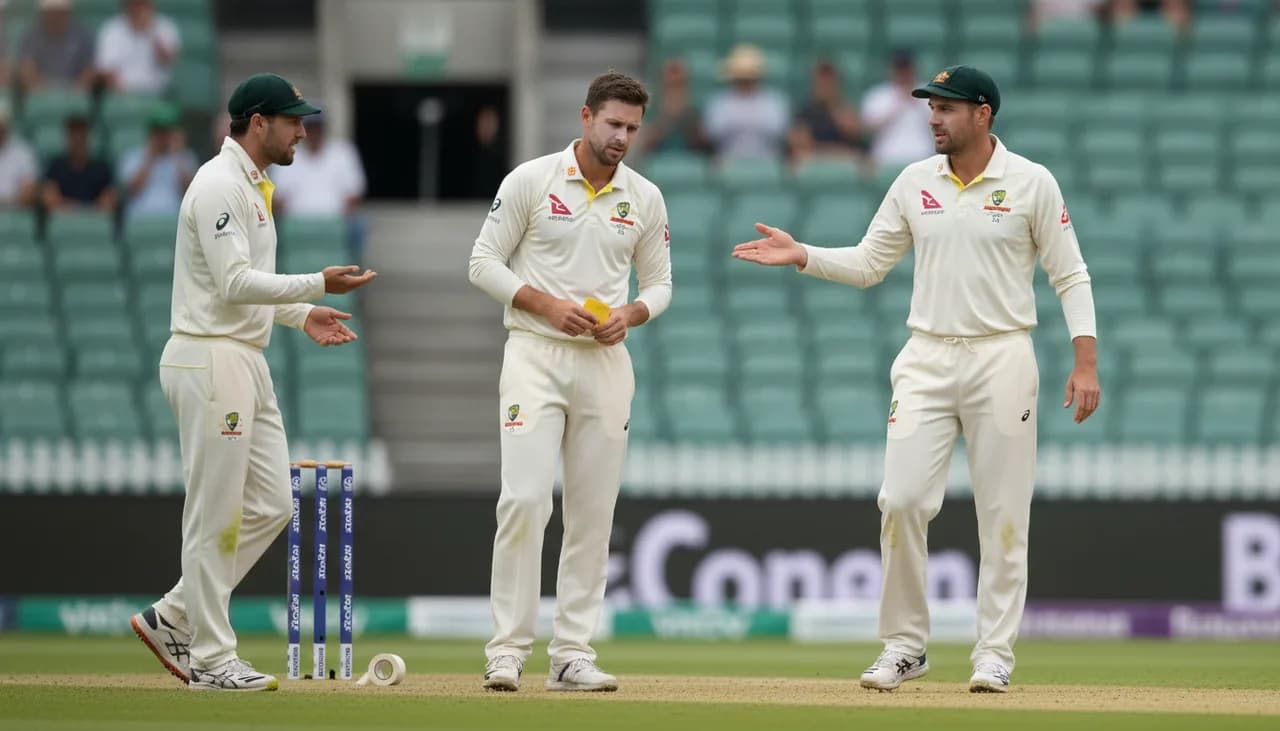

PALLEKELE — As Australia's T20 World Cup campaign concluded not with the ultimate glory but with a commanding, nine-wicket consolation victory over Oman, leg-spinner Adam Zampa delivered a firm rebuttal to any suggestion his team undervalues the shortest format. In the wake of a semi-final exit to eventual champions India, Zampa insisted the squad's commitment was never in question, despite the tournament's placement at the end of a grueling, 11-month season.
The comprehensive win in Pallekele, spearheaded by a blistering 50* off 20 balls from Travis Head and a clinical 3-16 from Zampa himself, served as a stark reminder of Australia's firepower. Yet, it also framed a narrative the team is keen to dispel: that their focus had waned after securing the ODI World Cup and World Test Championship in the preceding year. Zampa, a veteran of 88 T20Is, was unequivocal in his dismissal of that notion.
A Question of Scheduling, Not Desire
The central challenge for Australia was one of scheduling and mental fatigue, not a lack of ambition. The T20 World Cup arrived as the final act in a relentless cycle, a point Zampa emphasized while defending the team's intent. "I don't think it's a case of us not valuing T20 cricket," he stated post-match. "I think it's a case of us playing a lot of cricket and the scheduling and things like that. But I don't think that's an excuse. I think every time we pull on the Australian shirt, we're trying to do our best."
The physical and mental toll of the past year was a subplot throughout the tournament. Several key players, including captain Mitchell Marsh and star batsman Glenn Maxwell, arrived under injury clouds or with limited game time. The team's preparation was fragmented, a stark contrast to the meticulously planned build-up to their 2021 title triumph in the UAE.
Dissecting the Semi-Final Hurdle
The campaign's defining moment was the 24-run loss to India in St. Lucia. Australia's powerplay bowling, usually a strength, was put to the sword by Rohit Sharma in a breathtaking assault. While the batting lineup, led by Head's explosive 76, staged a valiant chase, the early damage proved insurmountable. Zampa reflected on the fine margins that decided the contest.
"I think the way Rohit played in the powerplay was probably the difference in the game," Zampa admitted. "We fought back really well, but chasing 200 against India in a semi-final is always going to be tough. On another day, with a few things going our way, it could have been different."
The match highlighted both the depth and the occasional volatility of Australia's approach. Their strategy, built on aggressive batting and taking wickets through the middle overs, had carried them through the group stage. Against the tournament's best team, however, they met their match. Key factors in the semi-final defeat included:
- Powerplay Onslaught: Rohit Sharma's 29-ball fifty set a platform India never relinquished.
- Middle-Order Stutter: After Head's dismissal, the required rate climbed despite Marcus Stoinis' efforts.
- Spin Neutralization: India's batsmen played Zampa and Maxwell with calculated respect, denying them their usual wicket-taking flow.
Building for the Future
Despite the disappointment, the tournament was not without its positives and signs for the future. The emergence of players like Nathan Ellis, who was economical and incisive when called upon, added depth to the bowling stocks. The consistent world-class performances of Zampa, who finished with 13 wickets at an average of 12.07, reaffirmed his status as a white-ball linchpin. Furthermore, the explosive form of Travis Head across all formats has solidified him as Australia's most feared batsman in big tournaments.
Looking ahead, the focus shifts rapidly. With the Champions Trophy in Pakistan early next year and the next T20 World Cup in 2026, planning begins anew. Zampa hinted at the inevitable evolution of the squad, acknowledging the need to blend experience with fresh energy. "There's going to be some changeover, isn't there? You look at the age profile of our team, it's probably on the older side," he said. "But there's also a lot of experience. It's about finding that balance and making sure we're building towards the next one."
The Oman Victory in Context
The final match against Oman was a demonstration of what the team is capable of when firing. After restricting Oman to 126/9, with Zampa's three-wicket haul breaking the back of their innings, Head and David Warner chased the target in just 10.2 overs. It was a ruthless, professional performance that served as a reminder of their baseline capability. For Zampa, it was a fitting way to end a challenging campaign on a positive note, both personally and for the group.
A Firm Rejection of the Narrative
In his closing remarks, Zampa returned to the core issue, firmly rejecting the external narrative that had begun to take hold. He argued that the unique structure of international cricket, where bilateral series often take precedence, can create a misleading impression about a team's priorities for global events. "It's easy to say we don't value it when you look at the scheduling and maybe some team selections in bilateral series," he conceded. "But a World Cup is a World Cup. Every Australian team wants to win it. We came up short this time, but to question our desire is to misunderstand the team."
As the squad departs the Caribbean, they leave with the consolation of a final victory but the primary goal unfulfilled. The message from Zampa, however, is clear: Australia's T20 ambitions remain undimmed. The challenge now is to manage the transition of an aging squad, navigate the unforgiving international calendar, and reconvene with a fresh hunger to reclaim the trophy they last held in 2021. The value they place on T20 cricket, he asserts, will be proven not in words, but in their actions when the next World Cup cycle begins.