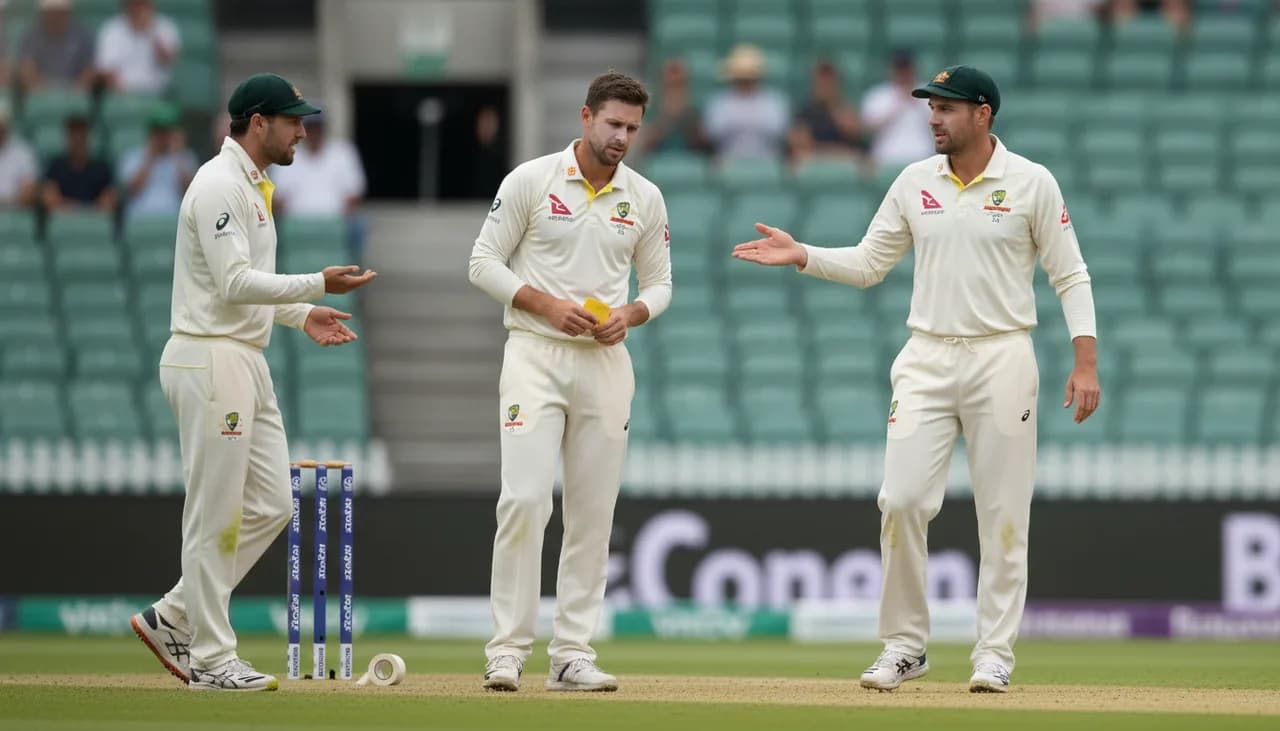

LONDON — The England and Wales Cricket Board (ECB) is finalizing plans for a crucial pink-ball warm-up match ahead of next year's historic 150th anniversary Ashes Test against Australia at the Melbourne Cricket Ground (MCG). With the iconic Boxing Day Test marking a century and a half of Test cricket between the two nations, England's management is leaving nothing to chance in their preparation for the day-night spectacle.
The decision stems from a desire to rectify the shortcomings of their preparation for the last Ashes tour in 2021-22, where a combination of COVID-19 restrictions and a sparse warm-up schedule was widely cited as a key factor in their 4-0 series defeat. England were thrust into the first day-night Test in Adelaide with minimal practice under lights, a scenario they are determined to avoid this time around.
Learning from Past Mistakes
The 2021-22 Ashes tour serves as a stark warning. England played just three days of intra-squad practice in Queensland before the first Test, with no competitive multi-day cricket against a local side. The lack of acclimatization to Australian conditions, particularly the unique challenges of the pink Kookaburra ball under floodlights, was brutally exposed. Captain Ben Stokes and head coach Brendon McCullum, architects of England's 'Bazball' revolution, are adamant that history will not repeat itself.
Rob Key, the ECB's Managing Director of England Men's Cricket, has been vocal about the need for robust preparation. He stated, "We are working closely with Cricket Australia to ensure we have the best possible lead-in to that monumental Test match. The pink-ball Test is a unique challenge, and we want our players to be as prepared as they can be. It's about giving ourselves every chance to perform in one of the biggest games in cricket's history."
The Unique Challenge of the Pink Ball
Playing with the pink ball under lights presents a distinct set of variables that differ significantly from traditional red-ball cricket. England's planning acknowledges that success in Melbourne will require specific, targeted practice. The key challenges they aim to address in the warm-up include:
- Ball Behaviour: The pink ball often swings more under lights but can go soft and become unresponsive during the daytime sessions.
- Visibility: Batters and fielders must adjust to the twilight period, which is notoriously difficult for sighting the ball.
- Conditions: The MCG drop-in pitch and the potential for evening dew can drastically alter the playing surface as the match progresses.
A specialist warm-up match, likely against a Cricket Australia XI or a strong state side, would allow England's batters to build innings against the moving ball and let the bowlers develop plans for the different phases. As former England captain and now commentator Nasser Hussain noted, "You cannot just rock up and play a day-night Test in Australia. It's a different sport. The preparation for that specific Test needs to be meticulous."
Logistics and the Broader Schedule
The 2025-26 Ashes series is scheduled to begin in Perth in mid-November 2025, with the Melbourne anniversary Test slated for its traditional December 26 start. The proposed pink-ball warm-up is expected to be slotted in after the second Test, likely in Adelaide or another suitable venue, providing a focused block of preparation immediately before the marquee event.
This request for additional preparation highlights the collaborative, if still fiercely competitive, relationship between the ECB and Cricket Australia (CA). CA is understood to be supportive, recognizing the global significance of the 150th Test and the commercial and sporting benefits of a closely-fought contest. A CA spokesperson said, "We are in positive discussions with the ECB regarding the schedule for the 2025-26 season. We all want to celebrate this historic occasion with a series and a Test match that captures the imagination of the cricket world."
A New Era of Strategic Tour Planning
England's proactive approach is part of a broader shift in tour strategy under the Stokes-McCullum-Key leadership. The days of accepting minimal warm-up games appear to be over. For the recent tour of India, England arrived early for a training camp in Abu Dhabi, a template that could be repeated before flying to Australia. The focus is on "condition-specific" preparation rather than just miles in the legs.
This philosophy extends to player welfare and peak performance. By securing a dedicated pink-ball match, management can better manage the workloads of key multi-format players like Stokes, Joe Root, and Mark Wood, ensuring they enter the MCG Test with the right rhythm and confidence, rather than being undercooked.
The Stakes for the Anniversary Test
The 150th Test between England and Australia is more than just another match; it's a celebration of cricket's oldest and most storied rivalry. The MCG, which hosted the first-ever Test in 1877, is the perfect venue. Both teams will be desperate to etch their name on this piece of history. For England, a team that has not won an Ashes series in Australia since 2010-11, victory in Melbourne would be particularly sweet.
A well-prepared England, comfortable with the pink ball, increases the likelihood of a competitive, high-quality Test—exactly what the occasion demands. As Australian great Ricky Ponting remarked, "The 150th Test deserves to be a classic. If England come prepared, which it sounds like they will, we could be in for something very special at the 'G."
Conclusion: A Blueprint for Success
England's push for a dedicated pink-ball warm-up is a clear signal of intent. It demonstrates a learning mindset, a respect for the unique challenges of Australian conditions, and a commitment to doing justice to one of sport's great anniversaries. While the final details are still being negotiated with Cricket Australia, the principle appears settled.
By prioritizing specific preparation, the ECB is not only aiming to win a crucial Test match but is also contributing to the legacy of the Ashes. A properly contested day-night battle at a packed MCG would be a fitting tribute to 150 years of rivalry, and England's planning suggests they are determined to play their full part in that history. The message from the England camp is unequivocal: they plan to arrive in Melbourne ready.