
EDINBURGH — Cricket Scotland has formally urged the International Cricket Council (ICC) to review what it calls "strange and outdated" rules concerning 12th man duties, after the regulations cost fast bowler Scott Currie a place at the men's T20 World Cup 2024. The governing body has submitted a detailed proposal to the ICC's Cricket Committee, arguing that the current interpretation of the rules is unnecessarily punitive and can deprive players of career-defining opportunities due to minor, team-oriented actions.
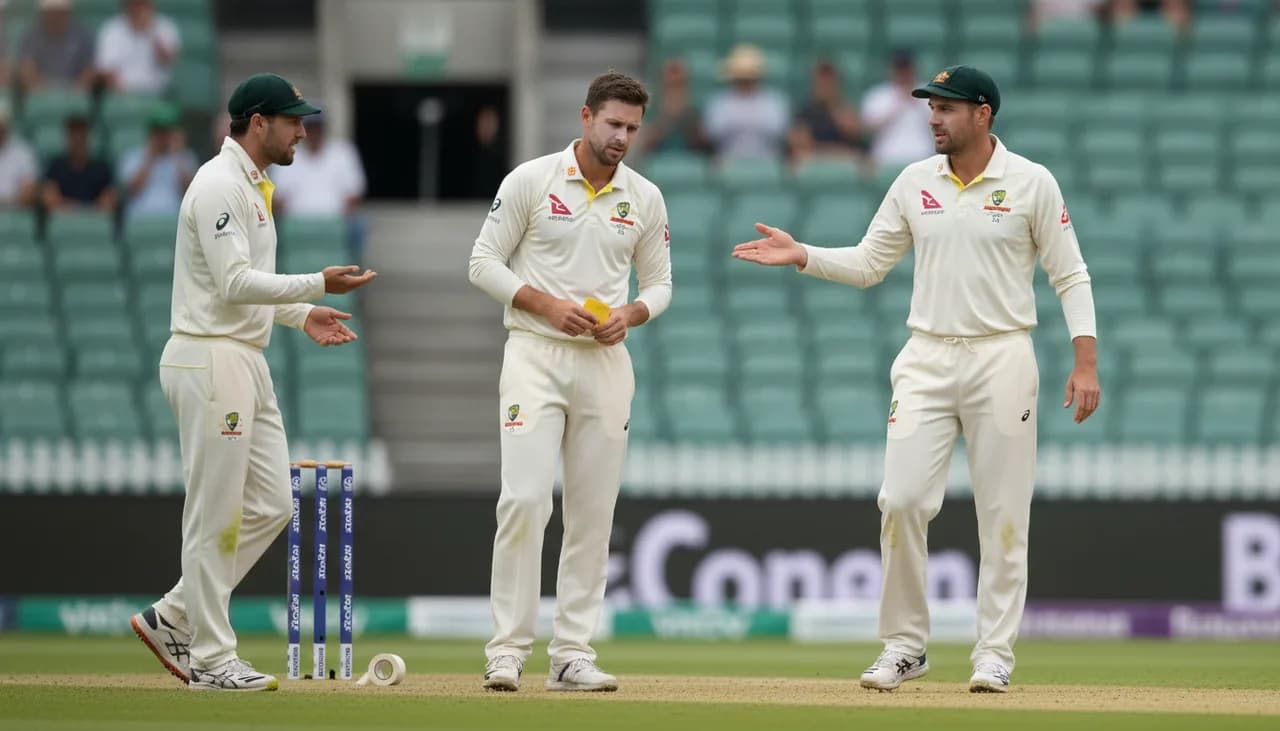
The controversy stems from England's T20I series against Pakistan in May 2024, a final preparatory step before the World Cup. Scott Currie, the 23-year-old Hampshire seamer, was named as a traveling reserve in England's provisional squad. During the fourth T20I at The Oval, Currie performed 12th man duties, which included running drinks onto the field. Under the ICC's strict player eligibility rules, this simple act rendered him officially "part of the playing XI" for that match, thus making him ineligible for selection by another nation at the upcoming global tournament.
Cricket Scotland, for whom Currie had played seven ODIs and was a strong contender for their final World Cup squad, was left powerless to select him. The Scots had been monitoring his progress closely, but the ICC's regulations, designed to prevent player poaching during events, slammed the door shut. Steve Snell, Performance Director at Cricket Scotland, expressed the organization's profound frustration, stating, "We find the rule strange, to be honest. The spirit of it is to stop countries from stealing players last minute, but this wasn't that. Scott was helping out as a reserve."
The Rule and Its Consequences
The ICC's regulation in question falls under the "Eligibility of Players" section of its Event Playing Conditions. The key clause states that a player is considered to have been "fielded" in an international match if they are named in the starting XI or act as a substitute fielder. Crucially, the definition of a substitute fielder is broad. As Snell elaborated, "The interpretation we've been given is that if you step onto the field of play, you are considered a substitute fielder, even if you're just carrying drinks." This meant Currie's brief time on the turf for England permanently altered his eligibility status for the ICC event cycle.
For Scott Currie, the personal cost was significant. Missing a World Cup represents a major setback in any professional cricketer's career, impacting visibility, experience, and earning potential. He had been a consistent performer for Hampshire and was viewed as a potential x-factor for Scotland's bowling attack. The incident highlights a growing tension in the modern game, where the role of a traveling reserve or 12th man is one of team support, not necessarily a declaration of permanent national allegiance.
Cricket Scotland's Case for Change
In its submission to the ICC, Cricket Scotland has not argued for the removal of eligibility rules, which are vital for maintaining the integrity of international competition. Instead, it proposes a nuanced revision that distinguishes between active participation and peripheral support. The core of their argument rests on the intent and impact of the player's involvement.
Their proposed criteria for a player being deemed "fielded" should be limited to scenarios where they are:
- Officially named as a substitute to replace an injured player on the field.
- Actively involved in on-field play (e.g., fielding, bowling, batting).
- Named in the official team sheet as a member of the playing XI.
The submission explicitly states that the act of carrying drinks, delivering equipment, or performing other non-playing 12th man duties should not trigger a change in eligibility status. "The current rule is a blunt instrument," a Cricket Scotland official noted. "It fails to differentiate between a player who is genuinely part of a team's strategy and one who is simply fulfilling a logistical role as a reserve."
Broader Context and Precedents
This is not an isolated incident. The Currie case echoes previous eligibility tangles that have sparked debate. For instance, the status of players who appear in unofficial "A" team tours or as injury replacements in bilateral series has often been a grey area. The ICC's rules are designed to prevent nations from "capping" players loosely to tie them to their system, but the Currie situation is seen as a misapplication of that principle.
Furthermore, the rise of franchise T20 leagues complicates national allegiances. A player might be a reserve for one international side while being a regular domestic star in another country. The rigidity of the current rule can inadvertently punish associates and smaller nations, who often have players with dual qualifications or who gain experience in larger cricketing ecosystems. Scotland's head coach, Doug Watson, emphasized the developmental impact, saying, "We want to see the best players available for the World Cup. This rule, as it stands, can block a player's pathway based on a technicality, not a genuine choice."
The ICC's Position and Next Steps
The ICC has acknowledged receipt of Cricket Scotland's proposal. Historically, the governing body has been cautious about altering eligibility rules, which are foundational to international cricket's structure. The primary concern is maintaining clear, unambiguous boundaries to prevent manipulation. An ICC spokesperson stated, "Player eligibility regulations are carefully considered to ensure the integrity of international cricket. We review all submissions from member boards as part of our ongoing policy development process."
The matter is expected to be placed on the agenda for the next meeting of the ICC Cricket Committee, which comprises former players, coaches, and representatives from member boards. This committee can recommend changes to the Chief Executives' Committee and ultimately the ICC Board. The debate will likely center on finding a balance—protecting against tactical "capturing" of players while allowing for the practical realities of team management and player development in a globalized sport.
A Call for Common Sense
The heart of Cricket Scotland's appeal is a call for common sense. The spirit of the eligibility rules is to protect the sanctity of international representation, not to ensnare reserves who are merely supporting their teammates. As Snell poignantly concluded, "Scott didn't choose to play for England that day. He was asked to help out. To lose your chance at a World Cup over that is desperately harsh and feels against the spirit of cricket."
While the review process may take time, the case of Scott Currie has ignited a necessary conversation about modernizing ICC regulations. As cricket continues to evolve with more teams, more leagues, and more movement of players, its governing rules must demonstrate similar flexibility and precision. The outcome will be closely watched by associate nations and players worldwide, for whom clarity and fairness in eligibility can mean the difference between obscurity and a chance to shine on the world's biggest stage.