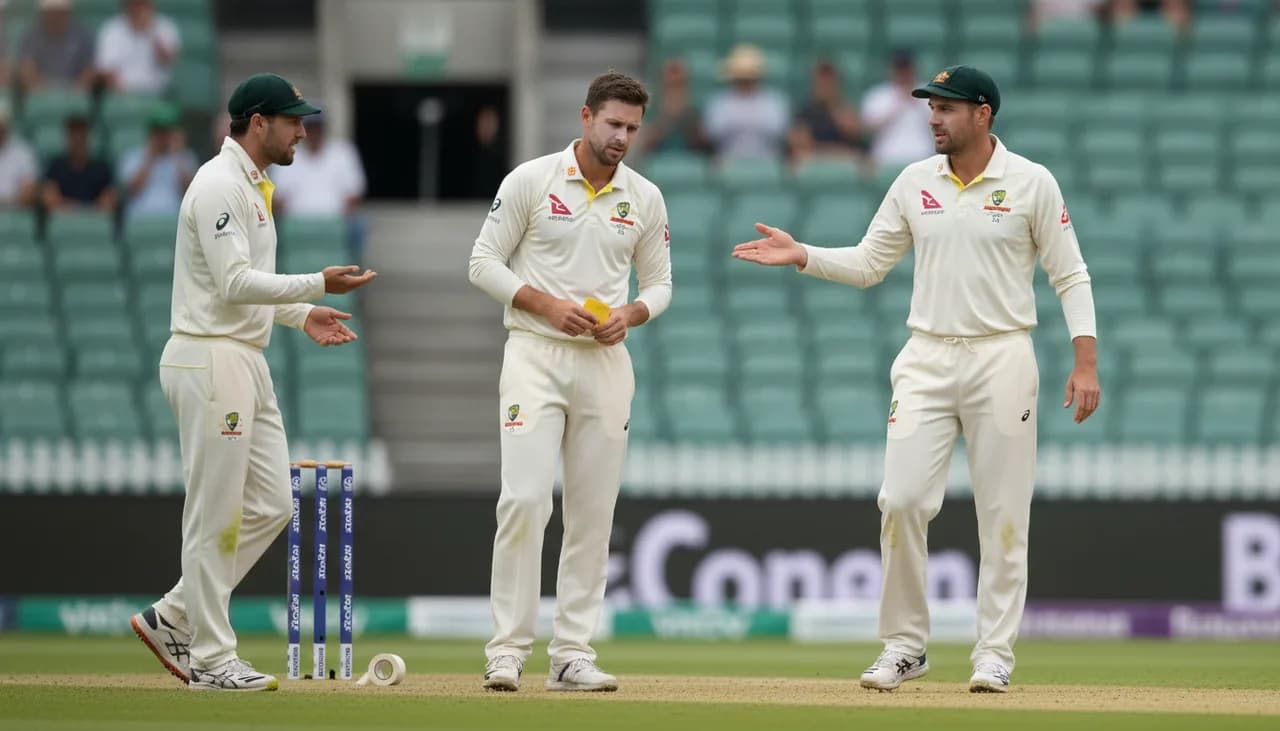
The Scandal That Almost Went Unnoticed
Eight years on from one of cricket's darkest chapters, the man who inadvertently blew the whistle on Australia's ball-tampering plot has spoken about just how close Steve Smith's side came to getting away with it. Alvin Naicker, the director overseeing SuperSport's live broadcast from Cape Town's Newlands ground during the third Test between South Africa and Australia in March 2018, has told BBC Sport that the exposure of what became known as sandpapergate was, in his own words, "an absolute fluke."
Not merely one piece of good fortune, either — but a remarkable sequence of them. As Australia prepare to return to South Africa for their first Test series since that notorious afternoon, Naicker's account offers a fascinating behind-the-scenes look at how the cheating was caught in real time, broadcast to millions across the globe.
A Plan Hatched Over Lunch
According to subsequent admissions from those involved, captain Smith, vice-captain David Warner and opening batsman Cameron Bancroft conceived their ball-tampering scheme during the lunch interval on the third day of the third Test. It was a calculated decision, born from a series-long obsession with generating reverse-swing — a factor that had played a significant role in the opening two matches of a fiercely contested and often ill-tempered tour.
Tensions had been simmering well before Cape Town. Warner had become embroiled in a heated confrontation with Quinton de Kock during the first Test in Durban, while Smith found himself in a flashpoint with Kagiso Rabada in the second match in Port Elizabeth. The Australian camp clearly felt that manufactured swing could be the decisive edge — and they were willing to cheat to get it.
The Camera Operator Who Changed Everything
What makes Naicker's account so compelling is how candidly he acknowledges that his team were not actively looking for any wrongdoing. "No one mentioned anything to me," he explained, noting that despite the combustible nature of the series, the broadcast crew had not been specifically alerted to monitor for potential cheating.
Live cricket coverage, Naicker explains, is a remarkably fluid and human-driven operation. Unlike football or rugby, where camera directions tend to follow the ball in a more structured way, cricket's substantial periods of downtime mean directors and camera operators are constantly crafting narratives on the fly — with anywhere between 80 and 100 personnel contributing to what viewers see at any given moment. It was precisely this creative freedom that proved Australia's undoing. An attentive camera operator lingered on Bancroft at the very moment he was working on the ball with sandpaper, and crucially, that footage was simultaneously shown on the stadium's big screen — meaning there was no chance of it being quietly buried.
ESPNCricinfo's contemporaneous reports indicate the ball had begun reversing in the first hour after lunch, around the 35th over of South Africa's second innings. By the 43rd over, Bancroft had been caught in the act, on camera, in front of the world.
A Moment That Reshaped Australian Cricket
The fallout was seismic. Smith, Warner and Bancroft all received bans, and Australian cricket entered a prolonged period of soul-searching that fundamentally altered the culture of the national side. With the Australians now heading back to South Africa, the tour carries a weight of history that will not be easily ignored — and the betting markets reflect the narrative intrigue, with the series attracting significant interest given the symbolic backdrop.
As a former coach, I've always maintained that the margins in elite sport are razor-thin — and Naicker's account is a vivid reminder that sometimes the difference between getting away with cheating and being exposed comes down to nothing more than a camera operator's instinct and a big screen in the right place at the right time.