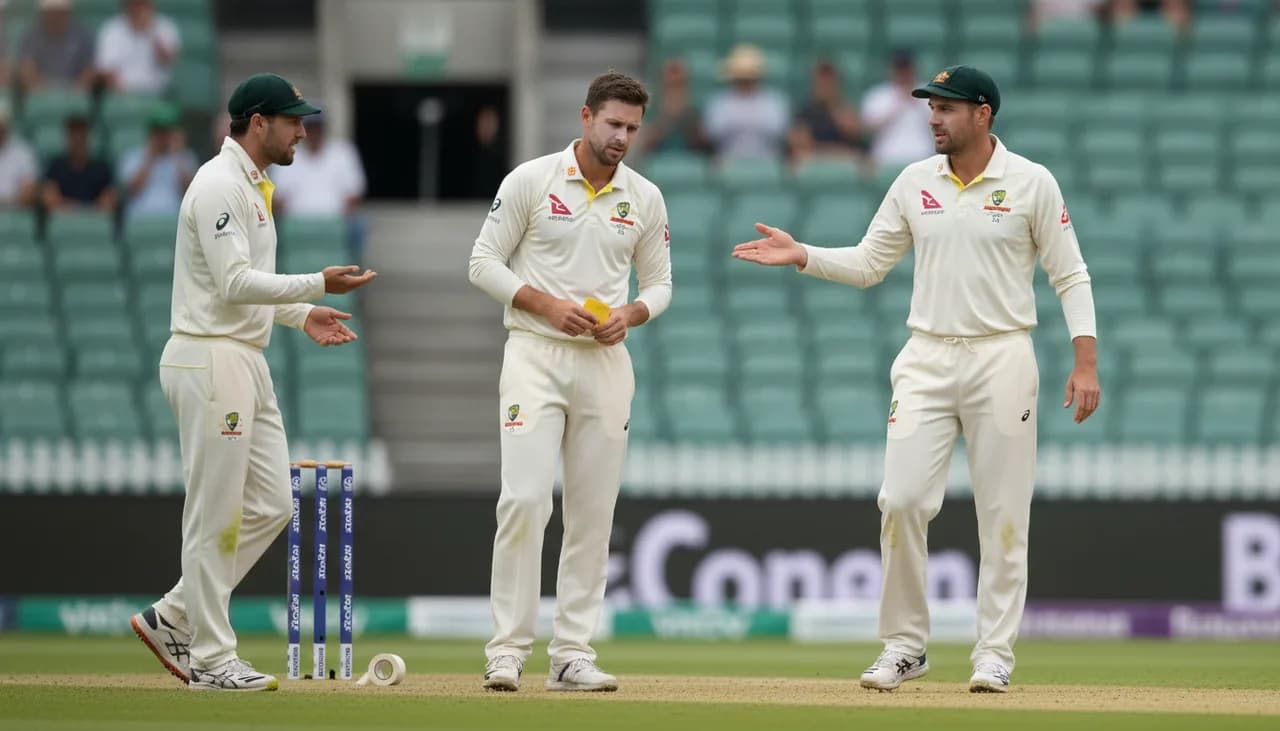
Cricket has always prided itself on being a game of honour and integrity, yet its history is littered with moments that have shaken the sport to its core. With Australia set to play their first Test on South African soil in eight years — a series carrying the long shadow of the sandpapergate controversy — the Test Match Special team saw fit to ask the public a simple but loaded question: which scandal has done the most damage to the game?
How the Poll Worked
A panel assembled by Test Match Special whittled the vast catalogue of cricketing controversy down to ten of the most infamous incidents in the sport's history. BBC Sport readers then cast their votes to rank them in order. The findings were unveiled on the TMS podcast, with BBC chief cricket commentator Jonathan Agnew, former England pace bowler Steven Finn, and the ever-precise TMS scorer Andy Zaltzman on hand to offer their verdicts. Given the calibre of the panel and the breadth of the subject matter, it made for compelling listening.
The 2006 Oval Ball-Tampering Affair
One scandal that generated particularly strong debate was the 2006 Test between England and Pakistan at The Oval. Pakistan, already beaten in the series, were in a commanding position in the final match when Australian umpire Darrel Hair called for the ball to be replaced during the afternoon session on day four, awarding five penalty runs for alleged ball-tampering in the process. Pakistan refused to take the field after the tea interval, and the match was ultimately abandoned before being awarded to England — making the final series scoreline 3-0.
Agnew was unequivocal in his assessment: "Pakistan weren't accused of ball-tampering, they were found guilty of ball-tampering, on the field, without any opportunity to defend themselves." He acknowledged the rules at the time gave umpires sweeping powers to act on suspicion alone, which left many feeling the process was fundamentally unjust. Zaltzman, meanwhile, noted a statistical curiosity that still irks him — the 331-run first-innings deficit England theoretically overturned to claim victory is now recorded as the largest such turnaround in Test history, which he admitted "irritates me slightly."
Gatting vs Shakoor Rana: A Crisis of Trust
Going further back, England's 1987 tour of Pakistan produced one of cricket's most extraordinary images: captain Mike Gatting locked in a furious finger-pointing confrontation with home umpire Shakoor Rana that halted the Test for more than a full day. Agnew expressed surprise that this incident ranked as low as it did among voters, pointing out that the fallout poisoned England-Pakistan relations for years, with England refusing to tour Pakistan for a prolonged period afterwards.
Zaltzman put the episode in its proper context, highlighting that neutral umpires were not yet in use at the time, meaning accusations of bias were entirely plausible and deeply corrosive. For Steven Finn, hearing this was almost incomprehensible — his own introduction to Test cricket came complete with both DRS technology and neutral umpires as standard. The incident serves as a reminder of how far the game's governance has evolved, even if scandals have continued to emerge in other forms.
Why These Rankings Matter
Polls like this do more than settle pub arguments — they reflect what supporters genuinely value and where they feel the game has let them down most acutely. For anyone involved in cricket betting, it is worth noting that match-fixing scandals in particular have historically prompted significant regulatory responses that affect how markets are monitored and odds are managed at international level. The sport's credibility is inextricably linked to its commercial appeal.
As Australia and South Africa prepare to meet again in a series charged with historical weight, cricket finds itself, as so often, looking back at its past while trying to chart a more trustworthy path forward. Whether fans, players, or commentators, we all have a stake in getting that right.