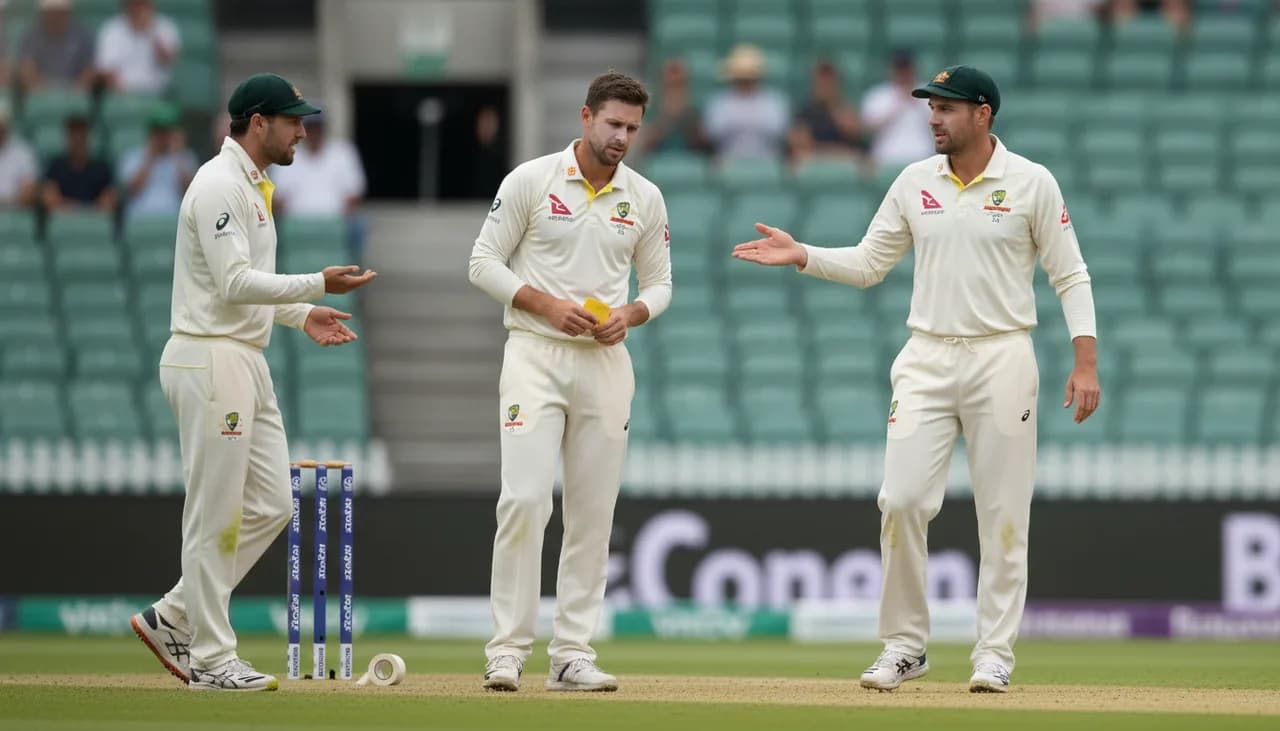
LAHORE — In a move that has sent shockwaves through the cricketing world, officials from the International Cricket Council (ICC) are set to hold emergency talks with the Pakistan Cricket Board (PCB) in Lahore this Sunday. The urgent meeting was called to address Pakistan's escalating threat to boycott its high-voltage T20 World Cup 2024 group-stage match against arch-rivals India, scheduled for June 9 in New York.
The PCB's stance stems from a long-standing and unresolved dispute regarding the hosting of bilateral series. Pakistan officials have consistently argued that the ICC has failed to enforce its own rules and the memorandum of understanding (MoU) signed by all full members, which mandates that all nations must tour each other in a designated cycle. India has not toured Pakistan since the 2008 Asia Cup, with all subsequent bilateral series played at neutral venues or not played at all, citing governmental clearance issues.
The Impasse: More Than Just a Game
At the heart of the crisis is the PCB's assertion of what it sees as a fundamental breach of the sport's governance. PCB Chairman Mohsin Naqvi has been vocal in recent weeks, framing the issue as one of principle and parity. "How can the ICC have different rules for different members?" Naqvi questioned in a press conference last week. "If the commitment to the Future Tours Programme is not binding, then the entire structure of international cricket is called into question. We have been patient for over 15 years, but patience has its limits."
The ICC, for its part, has maintained that while it facilitates the FTP, it cannot compel a government to grant security clearance for its team to travel. This legal and diplomatic grey area has left the PCB feeling isolated and its financial coffers significantly depleted, as India-Pakistan matches are among the most lucrative in global sport. The potential boycott is not merely a sporting decision but a potent political and financial gambit designed to force the ICC's hand.
The Stakes: A World Cup in Jeopardy
A boycott of the India-Pakistan match would represent an unprecedented crisis for the ICC. The fixture is the crown jewel of any global tournament, attracting hundreds of millions of viewers and generating a disproportionate share of the event's broadcasting revenue. The 2022 T20 World Cup encounter in Melbourne drew a record-breaking television audience, underscoring its commercial indispensability. An empty slot on June 9 would be a logistical and financial nightmare for organizers, broadcasters, and sponsors alike.
ICC Chairman Greg Barclay and CEO Geoff Allardice are expected to lead the delegation to Lahore. Their primary objective will be to de-escalate the situation and find a compromise that keeps Pakistan in the tournament. However, sources within the PCB suggest the board is prepared to take drastic measures. "This is not an empty threat," a senior PCB official, speaking on condition of anonymity, stated. "We have legal counsel reviewing all our options, including the financial compensation we are owed for the repeated breaches of the FTP by the Board of Control for Cricket in India (BCCI)."
Potential Ramifications and Legal Quagmire
Should Pakistan follow through on its boycott, the consequences would be severe and multi-faceted. The ICC's event participation agreement carries heavy penalties for unilateral withdrawal, including substantial fines and potential suspension. Furthermore, the PCB could face a slew of lawsuits from broadcasters and commercial partners. However, the PCB's potential counter-claim, seeking billions in lost revenue from unplayed India series, could tie the matter up in international arbitration for years.
The situation is further complicated by the delicate geopolitical relationship between India and Pakistan. Cricket has often been a barometer of political ties, and this dispute lays bare the challenges of governing a global sport where international relations intrude upon the playing field. The ICC finds itself in an almost impossible position, caught between enforcing its own regulations and navigating the realities of geopolitics.
Key Points of Contention for the PCB
In preparation for the talks, PCB officials have outlined their core grievances, which they believe the ICC has consistently overlooked:
- The FTP Breach: The BCCI's repeated failure to honor its commitment to tour Pakistan as per the agreed-upon cycle.
- Financial Disparity: The massive revenue loss for Pakistan cricket due to the absence of high-profile India series.
- Precedent Setting: The fear that other nations might also begin to pick and choose tours based on political convenience.
- Governance Failure: The perception that the ICC is unwilling or unable to regulate its most powerful member.
A former ICC legal advisor, commenting on the complexity, noted, "This is the ICC's worst-case scenario. The MoU and FTP are the bedrock of the international calendar. If one major board can disregard them without consequence, the whole system could unravel. The ICC must find a face-saving solution that acknowledges Pakistan's legitimate concerns while keeping the World Cup intact."
The Road Ahead: Seeking a Solution
As the cricket world holds its breath, the Sunday meeting in Lahore will be a critical test of diplomacy. Potential compromise solutions being floated in media circles include:
- The ICC guaranteeing Pakistan a significant share of additional revenue from ICC events as compensation.
- A formal acknowledgement by the ICC of the PCB's financial hardship and a commitment to review the FTP's enforcement mechanisms.
- A mediated settlement where the BCCI agrees to play a bilateral series at a neutral venue in the next cycle.
However, with national pride and significant financial interests on both sides, the path to reconciliation is narrow. The PCB has signaled it is in no mood for vague promises. "We need actionable guarantees, not just more dialogue," Chairman Naqvi emphasized.
The outcome of this high-stakes meeting will not only determine the fate of one of sport's greatest rivalries but will also set a crucial precedent for the balance of power and the rule of law within international cricket. A failed negotiation could lead to the unthinkable: a World Cup without its most anticipated clash, and a schism in the sport that may take years to heal. The eyes of the cricketing world are firmly fixed on Lahore this Sunday.