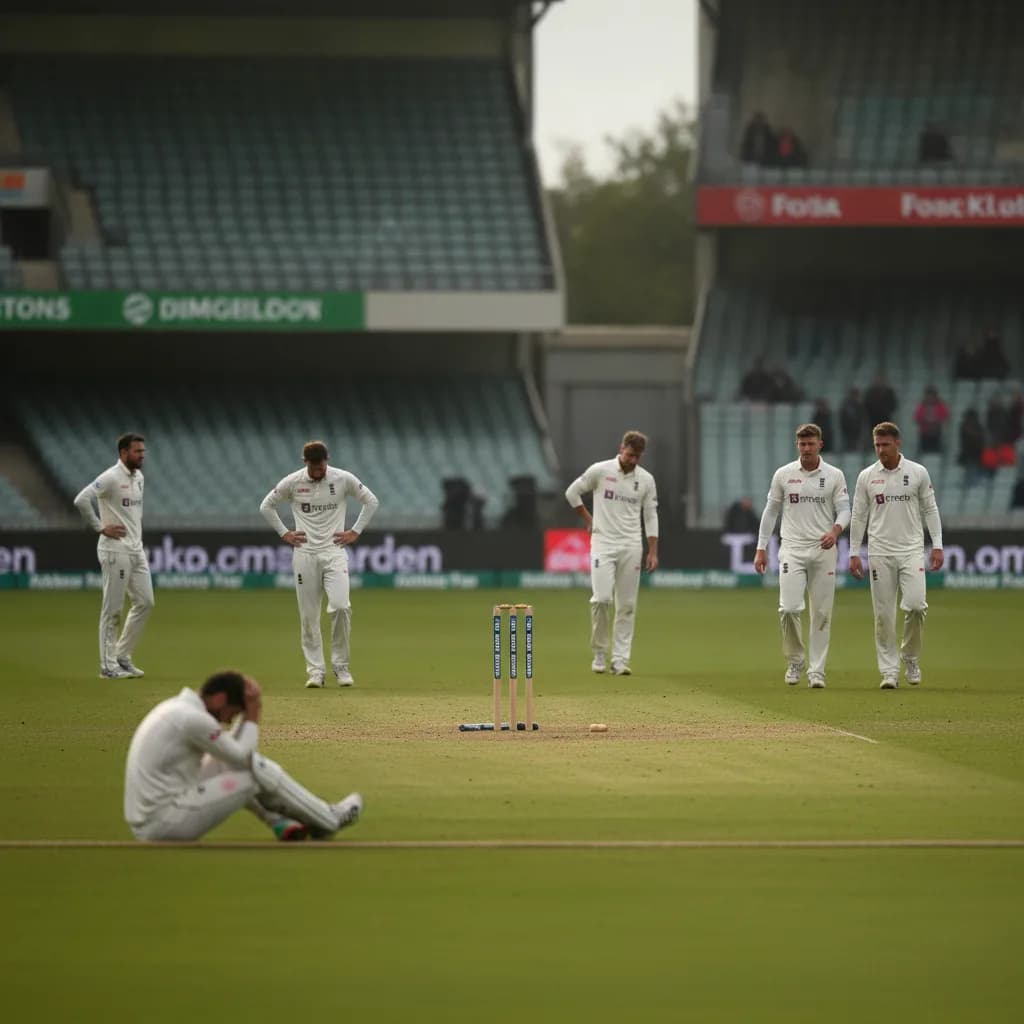

In an era where Twenty20 cricket has pushed boundaries to breaking point and batsmen routinely clear stadiums with ease, England's Sam Curran has found success by doing the complete opposite. His 'moon ball' delivery - an ultra-slow, looping variation that crawls through the air at just 43mph - has become one of cricket's most talked-about weapons, claiming another victim when Sri Lanka's Pathum Nissanka fell to the deceptive delivery in the recent ODI series opener.
The Art of Extreme Deception
Curran's moon ball represents a masterclass in disguise and timing disruption. The Surrey all-rounder can seamlessly transition from his regular 83mph pace down to this crawling delivery with only subtle adjustments to his release point and grip. Speaking on the BBC's For The Love of Cricket podcast with former team-mate Stuart Broad, Curran explained his approach: "You have to be creative, guys are developing so fast. I've worked so hard on trying to keep the arm speed the same and then I've got better at landing the ball at the right length."
Former England fast bowler Steve Harmison, analysing the delivery for TNT Sports, highlighted the technical aspects that make it so effective. Curran holds the ball between his first finger and thumb, maintaining his natural arm speed whilst releasing the ball much further back in his action. This creates a visual illusion that leaves batsmen completely misjudging the pace and flight.
Why Slower Can Be Deadlier
The moon ball's effectiveness lies in its complete contradiction to modern cricket's pace obsession. Whilst traditionally associated with spinners like former England off-spinner Jeremy Snape, medium-pace bowlers are increasingly adopting this variation as batsmen become more adept at handling conventional pace bowling. The delivery that dismissed Nissanka was actually slower than all six previous balls bowled by spinner Rehan Ahmed in the same innings - a statistic that perfectly illustrates how dramatically Curran can alter his pace.
This tactical evolution reflects broader changes in white-ball cricket strategy. With T20 leagues proliferating globally and batting standards reaching unprecedented heights, bowlers must constantly innovate to remain competitive. Curran's success with this delivery in The Hundred and T20 Blast demonstrates its practical value beyond novelty appeal.
Impact on Modern Cricket
The moon ball's growing prominence could influence betting markets significantly, particularly in player performance and method of dismissal markets. Bowlers who master such variations become increasingly valuable in shorter formats, where a single breakthrough delivery can shift match momentum dramatically.
Curran's weapon joins a lineage of famous slow deliveries, including Steve Harmison's 65mph yorker that bamboozled Australia's Michael Clarke during the iconic 2005 Ashes series. However, the moon ball's extreme pace reduction - a 40mph differential - represents perhaps the most dramatic variation seen in international cricket.
As batsmen continue pushing boundaries with power and technique, expect more bowlers to follow Curran's lead. In cricket's ongoing arms race between bat and ball, sometimes the most effective response isn't to bowl faster or spin harder - it's to float the ball through the air at barely more than walking pace and watch batsmen tie themselves in knots trying to time it.