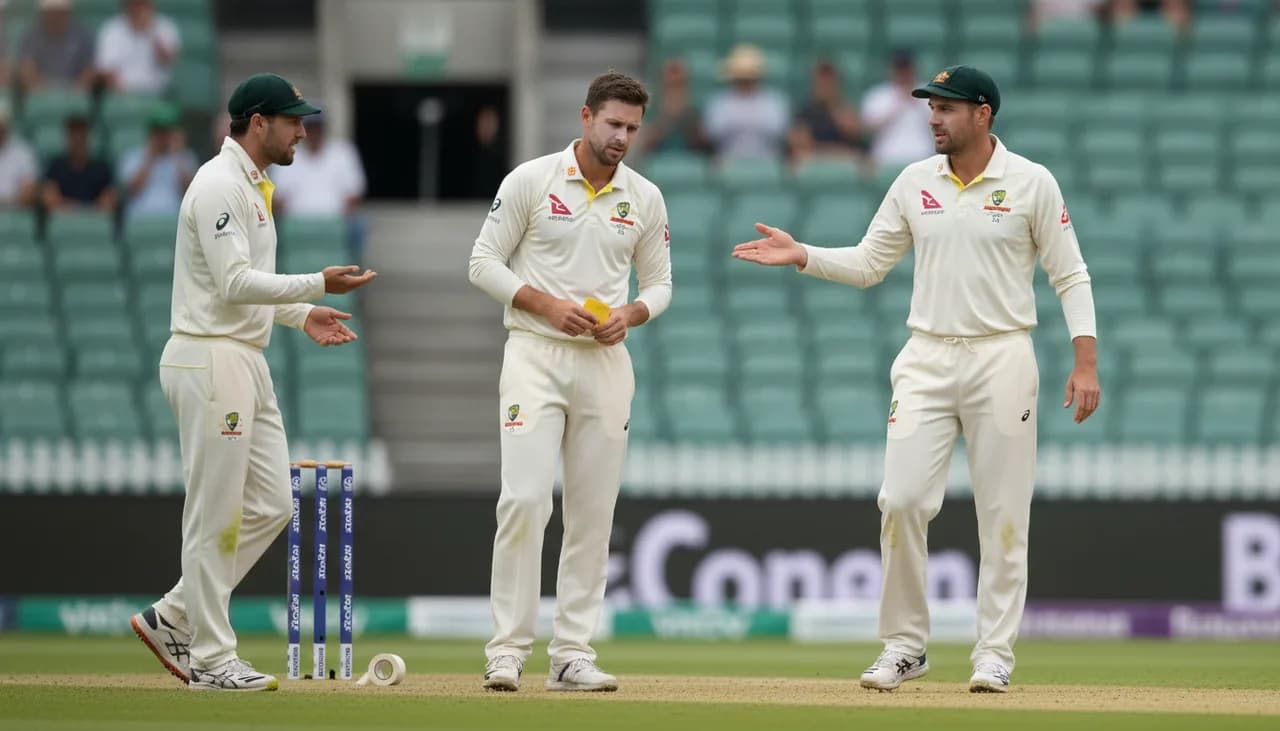
SYDNEY — In a move highlighting the increasing priority placed on national team workload management, Cricket Australia (CA) has intervened to pull left-arm seamer Ben Dwarshuis out of his upcoming T20 contract with Worcestershire. The decision, confirmed by the county club on Tuesday, sees the 29-year-old New South Wales quick withdrawn from his stint in the Vitality Blast just weeks before the competition's start, as CA looks to manage his commitments ahead of a congested international schedule.
Worcestershire had announced the signing of Dwarshuis in late March, securing him as one of their overseas players for the entirety of the T20 campaign. The club expressed clear disappointment at the late change but stated it understood the rationale from the Australian governing body. In an official release, Worcestershire's Chief Executive Officer, Ashley Giles, said, "Naturally, we are disappointed Ben won’t be joining us as planned, but we completely understand Cricket Australia’s decision to manage his workload."
The Workload Management Imperative
The intervention by CA is not an isolated incident but part of a broader, strategic approach to player management for Australian-contracted cricketers. With a packed calendar featuring the ICC Men's T20 World Cup in the West Indies and USA this June, followed by a marquee five-Test series against India at home next summer, the national body is taking a proactive stance. The goal is to ensure key squad members, particularly fast bowlers, are fresh, fit, and available for these premium international assignments. Dwarshuis, while not a permanent fixture in the Australian XI, is considered a valuable part of the white-ball depth chart and was part of the recent T20I squad that toured New Zealand.
A Cricket Australia spokesperson elaborated on the decision, stating, "Ben is a valued member of our white-ball set-up and, with an important period of cricket ahead, including the T20 World Cup, we have made the decision to withdraw him from his county contract to best manage his preparation and workload. We thank Worcestershire for their understanding and cooperation in this matter." This philosophy of centralised control over a player's schedule, even during periods they are not on national duty, has become increasingly common among top cricketing nations.
Worcestershire's Swift Replacement
Faced with the late withdrawal, Worcestershire moved quickly to secure a high-calibre replacement, signing New Zealand and Chennai Super Kings pace bowler Matt Henry for the T20 Blast. Henry, a seasoned campaigner with vast global franchise experience, is arguably an even bigger catch for the Rapids. Giles confirmed the swift pivot, noting, "We have moved quickly to secure a replacement of Matt’s quality and experience."
The club outlined Henry's credentials, which include:
- Over 200 wickets in the format at an impressive economy rate.
- A recent ICC Cricket World Cup finalist with New Zealand.
- Vital Indian Premier League (IPL) experience with one of the tournament's most successful franchises.
Henry himself expressed enthusiasm for the opportunity, stating, "I’m really excited to be joining Worcestershire for the Vitality Blast. It’s a competition I’ve followed and one that has a great reputation around the world for exciting cricket and big crowds." The signing demonstrates the delicate balance counties must strike between planning and the unpredictable nature of relying on overseas stars subject to national board directives.
A Growing Trend in Global Cricket
The Dwarshuis situation is a textbook example of the modern tensions between domestic leagues, player interests, and national board priorities. Cricket Australia's action follows a familiar pattern:
- In 2023, CA recalled Glenn Maxwell and Mitchell Marsh early from the IPL.
- The Board of Control for Cricket in India (BCCI) famously manages its stars' participation in overseas leagues.
- England and Wales Cricket Board (ECB) also carefully monitors its multi-format players.
This trend underscores a shift in power dynamics, where the financial and sporting clout of national boards often overrides the commitments made to domestic franchises. For players like Dwarshuis, while a county stint offers valuable experience and financial reward, their primary contract and career trajectory are firmly tied to the wishes of Cricket Australia. The body invests heavily in their development and medical management, and in return, expects oversight of their annual workload to mitigate injury risk.
The Player's Perspective and Schedule
For Ben Dwarshuis, the immediate future now likely involves a period of controlled conditioning and preparation in Australia before linking up with the national white-ball squad. His recent form has been solid, and he remains in contention for a spot in Australia's final 15-man squad for the T20 World Cup, where his left-arm angle and death-bowling skills are considered assets. The decision, while perhaps disappointing personally, is framed as being in his and the national team's long-term interest.
The episode also highlights the precarious nature of county cricket's overseas recruitment. Clubs build marketing campaigns and tactical plans around key signings, only to have them upended by decisions made thousands of miles away. Ashley Giles alluded to this challenge, stating, "The landscape of the global game means these situations can occur, and our focus is always on securing the best possible talent available to us."
Conclusion: A Sign of the Times
Cricket Australia's last-minute withdrawal of Ben Dwarshuis from his Worcestershire deal is a clear signal of the modern era's priorities. While county cricket remains a prestigious and attractive destination, the schedules and fitness of internationally-contracted players are increasingly dictated by their home boards' macro-level planning. Worcestershire's ability to secure a replacement of Matt Henry's calibre softens the blow significantly, but the incident serves as a stark reminder of the fragility of such agreements in a crowded global calendar.
As the sport continues to grapple with fixture congestion, the power of national bodies to manage their assets will only grow. The ultimate aim—producing peak performance in ICC events and marquee bilateral series—is deemed to outweigh the benefits of short-term domestic league participation. For players, counties, and fans, this reality means that the announced team sheet today may well be subject to change tomorrow, dictated by the ever-present calculus of workload management.