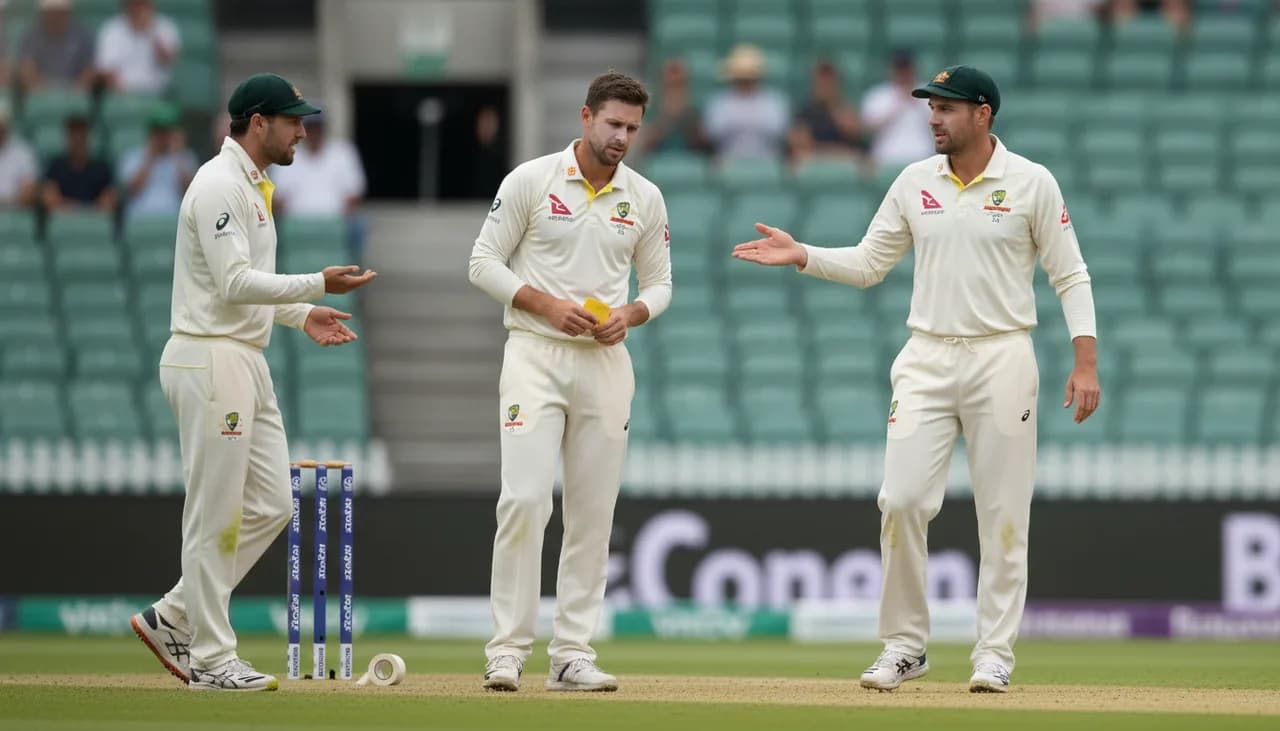
COLOMBO — In a frustrating but all-too-familiar twist of fate for cricket in Sri Lanka, the highly anticipated Women's World Cup 2025 qualifying group match between defending champions Australia and the host nation, Sri Lanka, was abandoned on Tuesday without a single ball being bowled.
Persistent rain throughout the day at the R. Premadasa Stadium in Colombo left the outfield waterlogged and the pitch under covers, leaving officials with no choice but to call off the encounter. The abandonment hands both teams a single point each, a result that has significant, albeit different, implications for their respective campaigns in the tournament.
A Damp Squib in Colombo
The anticipation for the match had been building for days. For Sri Lanka, it was a chance to test their mettle against the world's best on home soil. For Australia, it was an opportunity to continue their dominant run and secure an early foothold in the qualification group. However, the weather gods had other plans.
Dark clouds had loomed over the capital city since the early hours, and a steady drizzle began just as the ground staff were completing their final preparations. Despite several inspections and the best efforts of the ground crew, the rain refused to relent, creating large puddles across the vast outfield.
Match referee Shandre Fritz, after consulting with the umpires and both team captains, made the inevitable decision shortly after the scheduled start time had passed. A statement from the International Cricket Council (ICC) confirmed the abandonment, citing "unsafe playing conditions due to persistent rain and a saturated outfield."
Reactions from the Dressing Room
The disappointment was palpable in both camps. Australian captain Alyssa Healy, while pragmatic, expressed her team's frustration at being denied a chance to play. "It's incredibly disappointing for both teams and for the fans who turned up," Healy said.
She added, "We were really looking forward to the challenge. Sri Lanka in their own conditions are a tough opponent, and these are the games you want to play in a World Cup. It's a shared point, but you always want to earn your points on the field."
Sri Lankan skipper Chamari Athapaththu echoed Healy's sentiments, highlighting the missed opportunity for her developing side. "It is a sad day for Sri Lankan cricket," she remarked.
"Our players were ready, and the crowd was ready to support us. To play the world champions is a big moment for us and for the growth of women's cricket here. We take the point, but we wanted to show our fight. Now we must regroup and focus on our next match."
Implications for the Group Standings
The single point from the washout has a ripple effect on the Group A table. For the mighty Australians, who are heavily favoured to top the group, it is a minor setback. Their campaign is built on winning, and a no-result is a slight dent in their momentum.
However, for Sri Lanka, every point is precious in a tight qualification group that also features strong teams like India and New Zealand. The shared point could prove crucial in the final tally for a semi-final spot.
The current points scenario in Group A now sees:
- Australia: 1 point from 1 match (No Result)
- Sri Lanka: 1 point from 1 match (No Result)
- Other teams' points pending their opening fixtures.
A win would have been ideal for Sri Lanka's net run rate, but avoiding a loss to the tournament favourites and securing a point is a respectable, if unsatisfying, outcome from a ruined fixture.
The Broader Context of Weather in Cricket
This abandonment is not an isolated incident. Colombo's weather, particularly during the monsoon season, is a well-known risk for scheduling international cricket. The R. Premadasa Stadium has a modern drainage system, but even the best technology cannot combat continuous, heavy rainfall.
The ICC faces an ongoing challenge in scheduling global events in the subcontinent, where the weather can be unpredictable. This washout reignites the debate about the need for:
- More reserve days for critical group matches.
- The use of venues with permanent floodlights.
- Strategic scheduling around historical weather data.
While reserve days are typically reserved for the knockout stages of tournaments, group matches often determine a team's entire fate, leading to calls for greater flexibility from players and coaches alike when the weather intervenes.
Looking Ahead for Both Teams
With the Colombo clash wiped out, both teams must now quickly shift their focus to their next assignments. Australia will look to bounce back and secure a comprehensive victory in their next fixture to get their campaign for a seventh World Cup title properly up and running.
Sri Lanka, meanwhile, will take confidence from the fact they have not lost to the world champions. The point could provide a psychological boost as they face what they would consider their more direct competitors for a semi-final berth.
The team's coach, Hashan Tillakaratne, remained optimistic, stating, "We cannot control the weather. What we can control is our preparation and performance for the next game. The fight continues."
Conclusion: Points Shared, Opportunity Lost
In the end, the scoreboard at the R. Premadasa Stadium will forever read "Match Abandoned without a ball bowled." It is a stark entry that tells a story of anticipation, preparation, and ultimately, nature's veto.
For the fans who braved the weather, the players who trained for the contest, and the organizers who prepared the stage, it was a day of collective disappointment. Cricket, a sport so often dictated by conditions, was reminded of its most fundamental and uncontrollable variable.
While the single point keeps both Australia and Sri Lanka undefeated on paper, the real story is one of a missed spectacle—a chance for an upset, a display of champion mentality, and a celebration of women's cricket that was, quite literally, washed away.