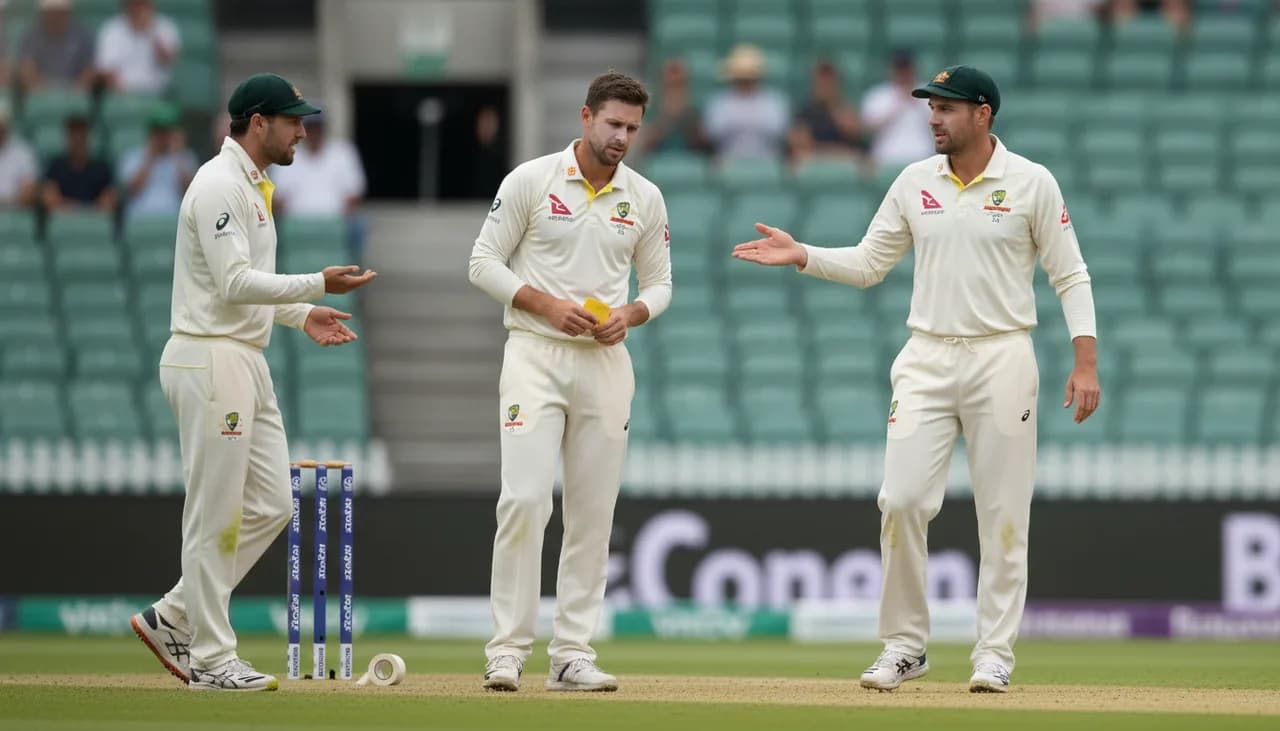
BRIDGETOWN, Barbados — The Australian cricket team’s T20 World Cup campaign has been rocked by an extraordinary and highly unusual injury, with captain Mitchell Marsh ruled out of their opening Super 8s match against Ireland due to what team officials have described as "testicular bleeding."
The 32-year-old all-rounder sustained the injury while fielding during Australia’s final group stage victory over Scotland on Saturday night in St. Lucia. Marsh underwent scans upon the team's arrival in Barbados, which confirmed the significant soft tissue trauma, leading to the immediate decision to rest him for the crucial Ireland fixture.
A Rare and Painful Setback
Testicular bleeding, medically referred to as a scrotal hematoma or hematocele, is an uncommon injury in professional sport, typically caused by direct blunt force trauma. The impact causes blood vessels within the scrotum to rupture, leading to internal bleeding and significant swelling.
Team doctor for the Australian men’s side, Dr. David Beakley, provided a clinical update, stating, "Mitchell sustained a soft tissue injury to his right lower abdominal and groin area during the match against Scotland. Subsequent scans have revealed a low-grade tear to his right hamstring, but more significantly, some bleeding related to his testicle."
The primary treatment for such an injury is rest, ice, compression, and elevation to manage pain and reduce swelling. The timeline for Marsh's return is uncertain and will be strictly managed on a day-by-day basis, with his availability for Australia's subsequent Super 8 matches against Afghanistan and India now in serious doubt.
Smith Steps Into the Breach as Cover
In a swift response to the captain's unexpected withdrawal, the Australian selectors have called up veteran batsman Steve Smith as a traveling reserve. Smith, who was not originally selected in Australia's 15-man T20 World Cup squad, had remained with the squad in the Caribbean following their pre-tournament training camp.
Smith is now officially on standby and will train with the group. While he provides experienced cover, he is not a direct like-for-like replacement for Marsh's powerful batting and handy seam bowling. The immediate leadership duties for the Ireland match will fall to vice-captain Matthew Wade, with all-rounder Marcus Stoinis also a candidate to step up.
A team spokesperson confirmed the contingency plan, noting, "Mitchell is an important part of our set-up and we will continue to monitor him, but we have the utmost confidence in the players within the squad, and Steve as cover, to get the job done."
Impact on Australia's World Cup Strategy
Marsh's absence is a substantial blow to Australia's campaign at a critical juncture. As captain and a key figure batting at number three, his aggressive style at the top of the order and his ability to bowl crucial overs have been central to the team's balance and success in the T20 format over the past two years.
His likely replacement in the playing XI against Ireland is expected to be all-rounder Cameron Green, who offers a similar skillset. However, the loss of Marsh's leadership and big-match temperament in the high-pressure Super 8 stage cannot be understated. The team management now faces several key decisions:
- Batting Order: Who will promote to the pivotal number three position? Options include Marcus Stoinis, Glenn Maxwell, or a reshuffle that sees Travis Head or David Warner drop down.
- Bowling Balance: Marsh’s two-to-three overs of medium pace often provided flexibility. His absence places a greater load on Stoinis and Green.
- Leadership Dynamic: Matthew Wade’s tactical acumen will be tested in a must-win phase of the tournament.
A History of Unfortunate Injuries
While bizarre, Marsh's injury adds to a long list of unusual and unfortunate cricket injuries. From players slipping in hotel bathrooms to being bitten by insects, the sport has seen its share of freak incidents. Most famously, former England batsman Graham Gooch was once ruled out of a Test match after being struck in the groin by a ball in the nets.
For Marsh personally, this is another frustrating interruption in a career often punctuated by injury setbacks, particularly to his lower body. He has undergone multiple ankle surgeries and has battled persistent hamstring and calf issues, though nothing quite as uniquely painful as this latest episode.
The Road Ahead for Australia and Marsh
Australia's immediate focus will be securing victory against Ireland without their skipper. The Super 8 group, which also features India and Afghanistan, is exceptionally tough, and every match is vital for progression to the semi-finals. The team's depth and adaptability are now under the microscope.
For Mitchell Marsh, the path is one of careful rehabilitation and recovery. The medical team’s priority will be ensuring the bleeding has fully resolved and that he is free from pain before he can even consider a return to training, let alone the physical demands of international cricket.
As Dr. Beakley emphasized, "Our primary concern is Mitchell's comfort and preventing any risk of complication. He will be managed medically and we will monitor him over the coming days before making any decisions on his playing availability."
The incident serves as a stark reminder of the fine margins and unpredictable nature of elite sport. Australia, a team considered one of the tournament favorites, now faces its biggest challenge not from an opponent, but from an injury that is as rare as it is debilitating, threatening to derail their quest for a historic triple crown of global cricket titles.