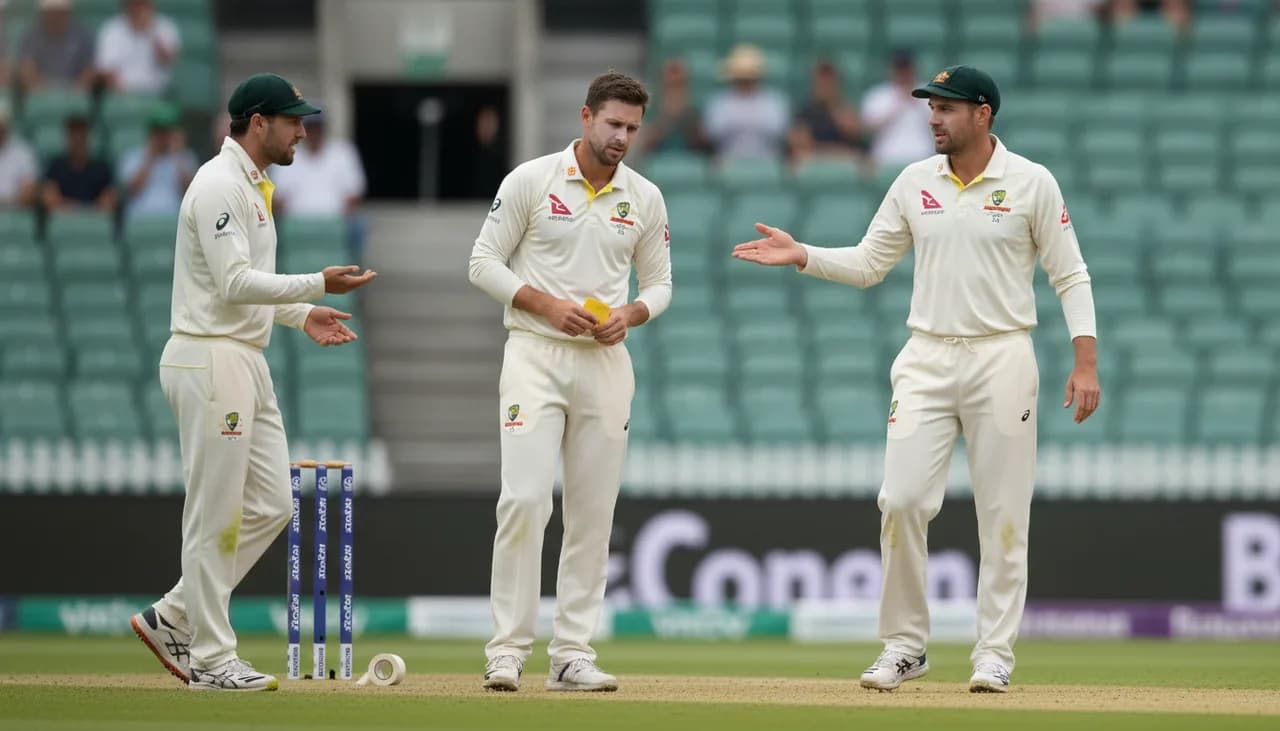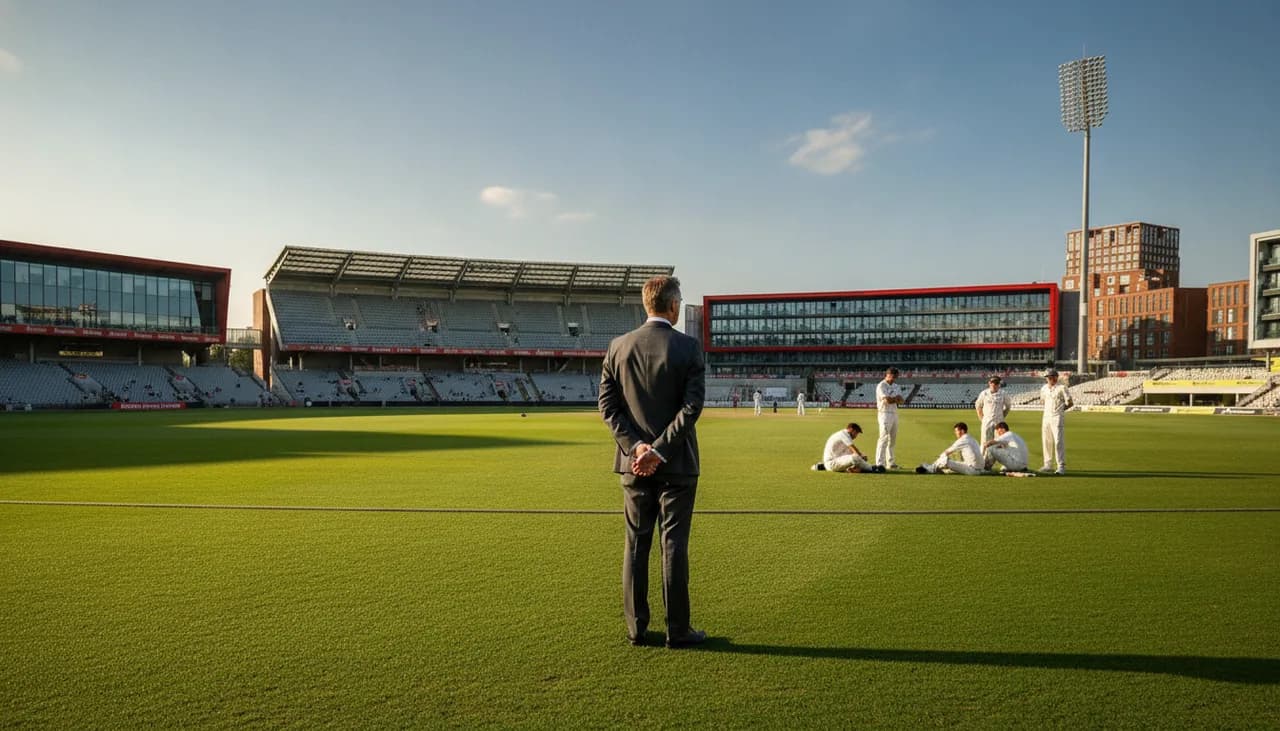
LONDON — Middlesex were left frustrated by the fading light at Lord's after they had forced Gloucestershire to follow-on, with the visitors battling to 120 for three, still 127 runs behind, when the umpires deemed conditions unplayable on the third day of this Vitality County Championship Division Two encounter.
The home side, desperate for a first red-ball victory of the season to ignite their campaign, had dominated the opening two days. After posting a formidable first-innings total of 404, their bowlers skittled Gloucestershire for just 157, with Toby Roland-Jones and Tom Helm sharing seven wickets. Enforcing the follow-on was a straightforward decision for captain Mark Stoneman, but his side's push for victory was ultimately halted by the elements.
Middlesex's Commanding Position
The foundation for Middlesex's dominance was laid on day one by a resolute batting performance. Leus du Plooy, the prolific South African, continued his rich vein of form with a classy 96, falling agonisingly short of a century. He received valuable support throughout the order, notably from Max Holden (58) and a fluent 73 from Jack Davies. This collective effort ensured Middlesex built a commanding total on a Lord's pitch offering assistance to the bowlers.
When it was their turn to bowl, the Middlesex attack exploited the conditions perfectly. Roland-Jones, leading from the front, produced a spell of high quality, removing the top order to finish with figures of 4 for 35. He was ably supported by Helm, whose pace and bounce accounted for three middle-order wickets. The Gloucestershire innings never gained momentum, losing wickets at regular intervals before being dismissed shortly after lunch on the second day.
The decision to enforce the follow-on was immediate. Speaking after the day's play, a hopeful but realistic Mark Stoneman said, "We’ve given ourselves a brilliant chance. To bowl them out for 150 on that wicket was an outstanding effort. We knew the light would be a factor later, so we had to try and force the issue."
Gloucestershire's Second Innings Fightback
Facing a deficit of 247 runs, Gloucestershire's second innings began with a renewed sense of purpose. Openers Ben Charlesworth and Cameron Bancroft navigated a tricky period before tea, showing far greater application than in the first innings. They batted through the entire evening session on day two, taking the score to 47 without loss and providing a glimmer of hope for the visitors.
The third morning, however, brought a swift change in fortunes. Ethan Bamber, generating significant movement, made the crucial breakthrough, trapping Charlesworth lbw for 28. The floodgates threatened to open when Roland-Jones produced a superb delivery to have the dangerous Ollie Price caught behind for a duck. At 53 for two, Middlesex were firmly in the ascendancy. The key moments of resistance came from:
- Cameron Bancroft: The Australian Test batter dug in, displaying immense concentration to anchor the innings.
- James Bracey: The wicketkeeper-batter joined Bancroft and the pair began to rebuild, frustrating the Middlesex attack.
The partnership between Bancroft and Bracey was critical. They blunted the new ball attack and began to accumulate runs, slowly eating into the massive deficit. Just as Middlesex looked to be running out of ideas, left-arm spinner Luke Hollman provided the vital wicket, dismissing a stubborn Bancroft for 46. The dismissal, with the score on 104, gave Middlesex a late boost, but Bracey remained, unbeaten on 41, alongside Graeme van Buuren.
The Frustrating Finale
As the afternoon wore on, the Lord's light, often a decisive factor in early-season fixtures, began to deteriorate rapidly. The floodlights were on at full capacity, but the umpires, following strict player safety protocols, consistently consulted their light meters. The Middlesex bowlers, particularly the seamers, were visibly eager to continue, knowing that a couple of quick wickets could seal the match. However, the reading eventually fell below the acceptable level.
At 4:45 PM, with Gloucestershire on 120 for 3, the decision was made to take the players from the field. The frustration in the Middlesex camp was palpable. They had fought hard for two and a half days to engineer a winning position, only to see their progress stalled. Tom Helm, who bowled with great heart, expressed the team's feeling, stating, "It’s incredibly frustrating. We felt we were right on top and another half an hour could have made all the difference. But the rules are the rules, we have to accept it."
The Challenge of Early-Season Conditions
The issue of bad light is a perennial talking point in English county cricket, especially in April and May. The regulations are designed for player safety, particularly batsmen facing fast bowlers, but they often lead to accusations that the game is not doing enough to maximise playing time. With Gloucestershire still requiring 127 runs to make Middlesex bat again, and with seven wickets remaining, the final day promises a tense finish, weather and light permitting.
Middlesex will be hoping for clear skies and bright conditions on day four to allow them a full crack at the remaining Gloucestershire batsmen. The new ball is due in 10 overs, which could be a decisive factor. The home side knows that early wickets will be crucial. The equation is simple: seven wickets for a victory that would provide a massive boost to their season. For Gloucestershire, the goal is survival, hoping that Bracey and van Buuren can bat deep into the day and secure an unlikely draw. The forecast suggests better light, setting the stage for a compelling final day's play at the Home of Cricket.