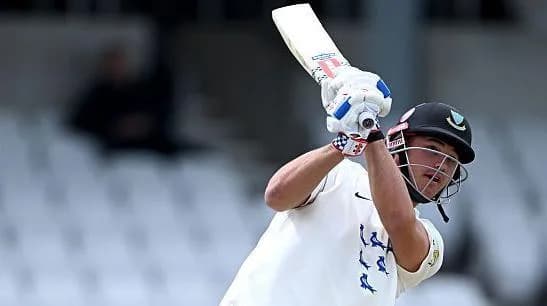
The world of cricket is built on statistics: runs scored, wickets taken, centuries made. It is a sport that venerates its star players, the ones who etched their names onto scorecards and into history books. Yet, one of its most universally adored figures, Harold Dennis "Dickie" Bird, who has died aged 92, never scored a run, never took a wicket, and never played a single Test match for England. His legend was forged not with a bat or a ball, but with a keen eye, an unflappable character, and an unwavering sense of fair play from the sanctum of the cricket pitch: the umpire's position.
The Man in the White Coat
Bird’s ascent to the pinnacle of umpiring was as unlikely as it was glorious. Born in 1933 in Barnsley, South Yorkshire, he was a miner's son who first dreamt of being a professional cricketer. He was a handy opening batsman for Yorkshire and Leicestershire in the 1950s and 60s, even sharing a memorable 100-run partnership with a young Geoffrey Boycott. But his playing career was modest; he scored just over 3,000 first-class runs. It was after hanging up his batting gloves that he found his true calling. In 1970, he stood in his first first-class match as an umpire, and by 1973, he was officiating his first Test match, between England and New Zealand at Headingley.
What followed was a career that spanned a quarter of a century, during which he became the most famous cricket umpire the world has ever known. Bird stood in 66 Test matches, a record at the time of his retirement in 1996, including three World Cup finals (1975, 1979, and 1983). But the numbers alone do not capture his essence. Dickie Bird was a character, an institution. His nervous, fidgety mannerisms at the crease—adjusting his hat, polishing the ball, having a quiet word with the bowler—were as much a part of a day's cricket as the tea interval.
An Unmistakable Character
Bird’s popularity transcended the traditional boundaries between official and player, and between official and spectator. He was respected by the fiercest competitors because his decisions were fair and his knowledge of the game's laws was encyclopedic. "He was a wonderful umpire," said former England captain Michael Atherton. "He had a great feel for the game and was universally respected." This respect was hard-earned in an era before neutral umpires, where standing in a Test match abroad could be a daunting prospect.
Yet, it was his personality that made him a folk hero. He was famously cautious about the weather, often delaying play for the faintest hint of drizzle, earning affectionate teasing from players and commentators alike. His conversations with batsmen were legendary, often involving worries about everything from the light to the state of the pitch. He was a man of immense warmth and humility, whose love for the game was palpable in every decision he gave. He was, in many ways, the heart of cricket during its transition into the modern television age.
A Reputation for Fairness
The core of Bird's authority was his absolute impartiality. In a career filled with high-pressure moments, his judgement was rarely questioned. Former Australian fast bowler Dennis Lillee, one of the most intimidating competitors of the era, once said, "You might not have agreed with Dickie's decision, but you never, ever doubted his honesty." This trust was his currency, and he spent it wisely throughout his career.
His approach to the game was built on a few key principles that players came to rely on:
- Consistency: His interpretation of the laws was the same on the first ball of the match as it was on the last.
- Communication: He believed in talking to players, explaining his decisions and managing the game through dialogue.
- Compassion: He understood the pressures of the game, having been a player himself, and this informed his man-management on the field.
A Nation's Farewell
Bird’s retirement in 1996 was treated not as the departure of an official, but as the farewell of a national treasure. His final Test match, at Lord's between England and India, was an event of immense emotion. He was given a guard of honour by both teams, a tribute almost exclusively reserved for great players. The crowd gave him a standing ovation that seemed to last an age. He was visibly moved, a testament to the deep connection he had forged with the sport and its followers. In retirement, he was appointed OBE and became a best-selling author, sharing stories from his unique life in cricket.
Tributes have poured in from across the cricketing world following the news of his passing at the age of 92. England cricketing legend Ian Botham led the praise, stating, "Dickie was a true great and a character who loved the game and was loved by all who played it. The game has lost one of its best." Current England Test captain Ben Stokes simply posted on social media, "RIP Dickie Bird, an absolute legend of the game."
A Legacy Beyond Statistics
Dickie Bird’s story is a powerful reminder that greatness in sport is not measured by numbers alone. He became a legend without a single statistic to his name in the record books. His contribution was something more intangible but equally vital: he was the guardian of the game's spirit. In an era of increasing professionalism and sometimes fractious relations between players and officials, Bird was a unifying figure, a symbol of integrity and old-fashioned values.
He proved that authority could be wielded with kindness, that fairness could be entertaining, and that the official in the white coat could be the most beloved person on the field. His life serves as an enduring lesson that how you play the game—or in his case, how you officiate it—matters just as much as winning. The sound of leather on willow will forever be accompanied by the memory of a nervous, meticulous, and utterly beloved man from Barnsley, who, without scoring a run, became one of cricket's most enduring icons.
As former England batsman David Gower perfectly encapsulated, "There will never be another Dickie Bird. He was unique. He was the umpire that every player wanted to see out in the middle. He was part of the fabric of cricket, and his passing marks the end of an era. But his legend, built on a foundation of utter decency and a profound love for cricket, will undoubtedly live on forever."