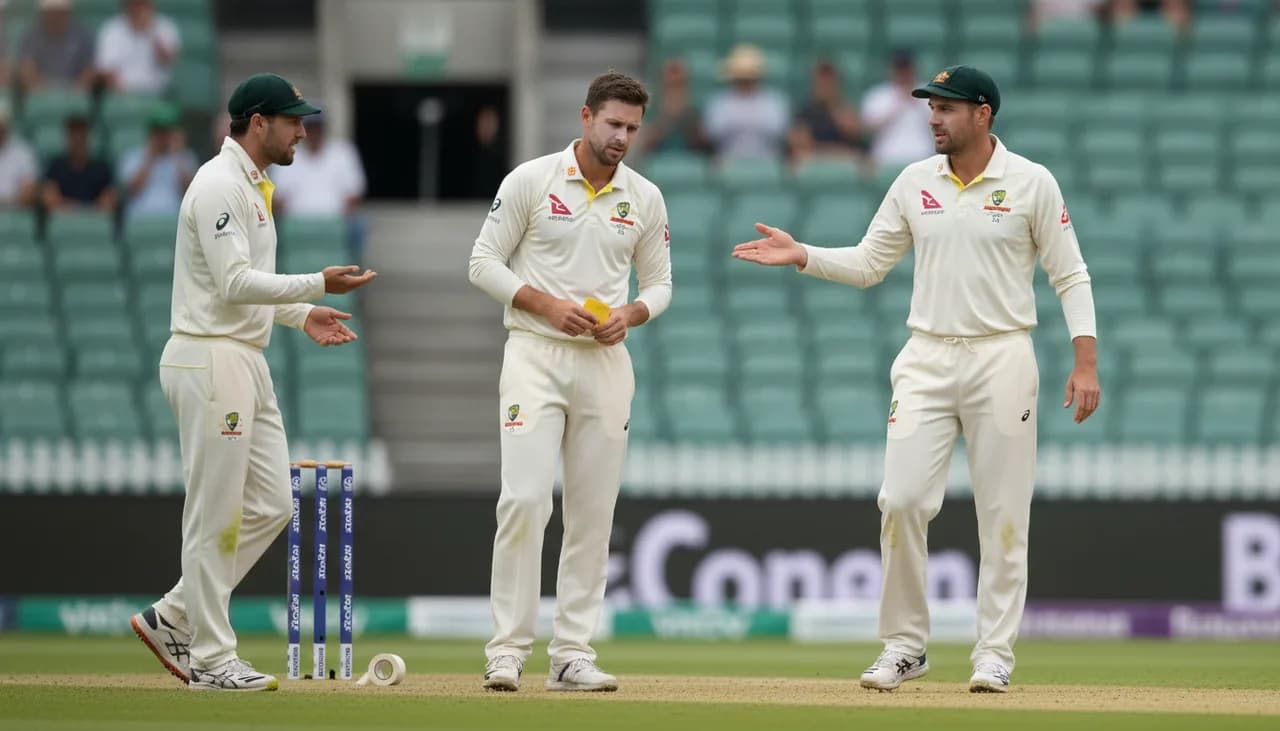
The 2021-22 Ashes series in Australia was meant to be a fresh start for England. A new captain, Pat Cummins, led an Australian side in transition, while England arrived with a squad they believed could compete. Instead, it became a brutal, comprehensive, and at times chaotic 4-0 defeat that exposed deep flaws in the English game, both on the field and in the team environment. BBC Sport's chief cricket reporter, Stephan Shemilt, spent the tour embedded with the squad, witnessing a campaign that unravelled from the very first ball in Brisbane.
The Calamitous Start: Brisbane & Adelaide
The tone for the entire series was set in the opening session at the Gabba. England, having won a good toss on a green-tinged pitch, chose to bowl. What followed was a masterclass in poor execution from their vaunted seam attack. "The lengths were too short, the plans appeared non-existent," observed Shemilt. Australia, led by a Travis Head century, racked up 425. England's reply was a shambolic 147 all out, with their batting techniques ruthlessly exposed by the pace and bounce. The defeat by nine wickets was a psychological body blow from which they never recovered.
The day-night Test in Adelaide offered a chance for redemption. Instead, it highlighted a critical failure in selection and strategy. On a flat pitch under lights, England omitted both James Anderson and Stuart Broad, their two greatest-ever wicket-takers. "It was a decision that baffled everyone, including many within the camp," Shemilt reports. Australia piled on 473/9 declared. England's batters again folded, losing by 275 runs. They were 2-0 down, and the Ashes were effectively gone before Christmas.
Off-Field Distractions & The "Booze" Culture
While the on-field performances were poor, stories began to emerge of a disjointed and sometimes ill-disciplined environment off it. The tour took place under strict COVID-19 protocols, confining players to hotels and creating a pressure-cooker atmosphere. Reports surfaced of late-night drinking sessions that concerned team management. "There was a sense that standards were slipping," a source told Shemilt. "The focus wasn't always where it needed to be."
This culminated in the controversial omission of wicketkeeper Jos Buttler for the Sydney Test. Officially, it was due to a finger injury. However, Shemilt's sources indicate a disciplinary element was also involved following a breach of team protocols. The incident highlighted a lack of leadership cohesion between captain Joe Root and head coach Chris Silverwood, who struggled to impose authority on a tour spiralling out of control.
Key Factors in the Collapse
The defeat was multi-faceted. Shemilt identifies several core issues that plagued England throughout:
- Batting Technique: A generation of batters reared on white-ball cricket and flat County pitches were utterly unprepared for Australian conditions. The repeated failure to leave the ball outside off-stump was a technical and mental failing.
- Injuries & Rotation: A policy of resting and rotating key bowlers, compounded by genuine injuries to Jofra Archer and Ollie Robinson at times, meant England never fielded their best attack.
- Leadership Vacuum: Root's on-field captaincy grew increasingly reactive, while Silverwood, also acting as selector, was stretched too thin and failed to provide strategic clarity.
Moments of Resistance & The Inevitable End
Amidst the gloom, there were flickers of fight. The drawn Test in Sydney, saved by a magnificent rearguard from Anderson and Broad, showed pride remained. In the final Test in Hobart, under the lights, England's bowlers finally found their rhythm to skittle Australia for 155. Yet, characteristically, their batting then collapsed twice to lose by 146 runs, a perfect microcosm of the tour. "They would have a good session, then immediately undo all that good work," said Shemilt. "It was a team incapable of sustaining pressure or seizing momentum."
The series statistics made for grim reading. Only Root averaged above 30 with the bat. Australia's three frontline pacers – Cummins, Mitchell Starc, and Scott Boland – dominated. England's much-vaunted "pace for pace" approach with Mark Wood was underutilised until it was too late. The 4-0 scoreline flattered England; it could easily have been 5-0.
The Aftermath & Reckoning
The fallout was swift and severe. Silverwood was sacked upon returning home, followed by director of cricket Ashley Giles. Root resigned as Test captain a few months later, exhausted by the burden. The tour served as the catalyst for the "red-ball reset" and the eventual appointment of Brendon McCullum as coach and Ben Stokes as captain. "The Ashes defeat was the rock bottom that English Test cricket needed," Shemilt concludes.
In the end, the 2021-22 Ashes was a story of a team beaten before a ball was bowled – beaten by superior skill, by poor planning, and by their own internal disarray. It was a tour where the booze on the beach became a symbol of a lost focus, and where England were comprehensively beaten in every department. The scars of that humiliation would define the next era of English cricket, forcing a painful but necessary revolution.