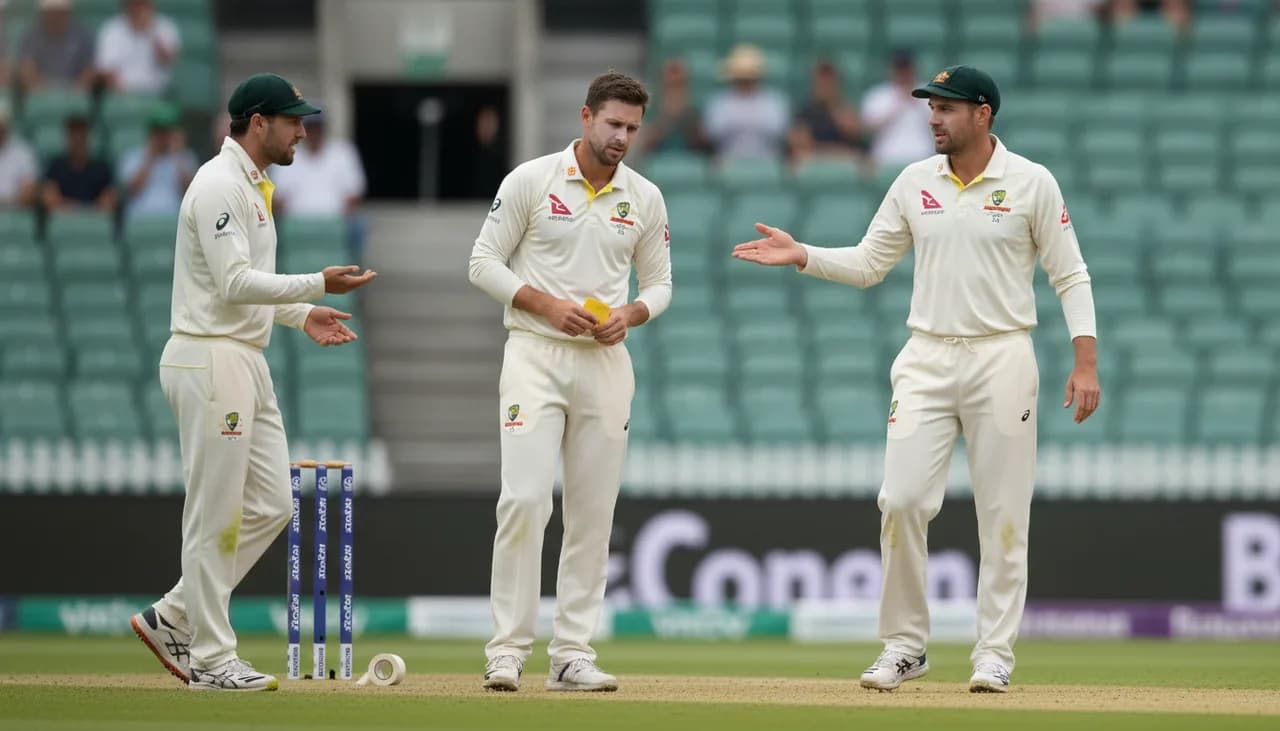

LONDON — The Ashes hangover is a well-documented phenomenon in English cricket, a lingering malaise of regret, recrimination, and reflection that can last for years. Yet, the latest revelations surrounding star batter Harry Brook suggest this particular post-Ashes comedown has taken a more literal and concerning turn. News that the 25-year-old was involved in a physical altercation with a nightclub bouncer in Sydney, following England’s dispiriting 4-0 defeat in the 2021-22 series, has thrown a harsh spotlight back onto the team’s culture under the leadership of Ben Stokes and Brendon McCullum.
The Incident and its Echoes
The details, first reported by The Telegraph, paint a familiar picture of post-series release gone awry. In the early hours following the final Test in Hobart, a group of England players, including Brook, engaged in a lengthy drinking session—a ritual informally dubbed ‘Boozeball’ by some within the squad’s orbit. The evening culminated in an attempt to enter a Sydney nightclub, where Brook, allegedly after being denied entry, became involved in a scuffle with security. While no official complaint was filed and the matter was resolved without police charges, the incident has now surfaced as an uncomfortable footnote to a disastrous tour.
This is not an isolated blip in the modern England narrative. It echoes the infamous ‘Bristol incident’ of 2017 involving Ben Stokes, which led to a trial and significant reputational damage. More recently, the tenure of previous captain Joe Root was punctuated by off-field controversies, including the Ollie Robinson Twitter scandal debuting at Lord’s and questions over team discipline during the Covid-bubble era. The Brook episode prompts an inevitable question: for all the transformative ‘Bazball’ rhetoric of fearless cricket and positive vibes, has the underlying culture truly shifted, or merely been repackaged?
‘Bazball’: Freedom or a License to Excess?
The philosophy instilled by McCullum and Stokes is built on granting players unprecedented freedom and personal responsibility. The stated aim is to liberate talent from fear of failure, both on and off the field. As Stokes famously articulated, “I want everyone to feel free under my captaincy... I want them to be the best version of themselves on the field.” This approach has yielded spectacular, record-breaking Test cricket and a remarkable run of victories.
However, critics argue that such an environment, while empowering, can blur lines. The celebration of aggressive, ‘carpe diem’ attitudes in the middle can potentially spill over into off-field conduct. The ‘Boozeball’ moniker itself, even if used in jest, hints at a normalized culture of hard celebration. Former England captain Michael Vaughan commented on the Brook story, noting, “It does feel like a cultural thing that has been within the England cricket team for years... You wonder if the message from the very top is quite right.”
The key distinction the leadership would make is between collective responsibility and infantilism. They trust their players to manage themselves. Yet, the Sydney incident suggests that for a young player like Brook, then on the fringes of the Test team and experiencing his first major tour defeat, that freedom can be a double-edged sword. The potential pitfalls of this culture include:
- Burnout and blurred boundaries: The relentless emphasis on attack and energy can be mentally exhausting, with celebration becoming a necessary pressure valve.
- Accountability gaps: When players are told to be their own men, defining where personal responsibility ends and team discipline begins becomes complex.
- Perception vs. reality: The public image of a fearless, united band can be fractured by private incidents, leading to accusations of hypocrisy.
The Brook Conundrum and the Road Ahead
For Harry Brook, the timing is particularly sensitive. Now an established superstar and central to England’s future in all formats, he represents both the brilliant product of the new regime and a potential symbol of its vulnerabilities. His phenomenal batting success has been born of the very fearlessness Stokes and McCullum champion. Yet, the reported incident shows the pitfalls awaiting young talent navigating immense fame and a permissive team environment.
The England and Wales Cricket Board (ECB) has reportedly spoken to Brook about the matter. In a standard formulation, a spokesperson stated, “We are aware of the story and have spoken to Harry. He regrets the incident and has moved on. Our focus is entirely on the upcoming summer of cricket.” This private handling is consistent with the current leadership’s style—addressing issues internally without public melodrama. However, it does little to quell the external debate about the standards expected of England cricketers as role models.
A Defining Summer
The true test of this episode’s impact will come this summer. England face a grueling schedule against the West Indies and Sri Lanka, with the specter of the next Ashes series in 2025-26 already looming. The team must prove that the ‘Bazball’ ethos is robust enough to withstand not just bowling attacks, but also the distractions and temptations that have historically derailed English cricket. The leadership’s challenge is to harness the undeniable positive energy they have created while instilling an unspoken code that protects players from themselves. As former fast bowler Steve Harmison observed, “You’ve got to enjoy the good times, but there’s a line... and it looks like that line was overstepped.”
Conclusion: More Than Just a Night Out
The story of Harry Brook and the bouncer is, on one level, a trivial tale of a post-tour mishap. But in the heightened context of English cricket’s perpetual soul-searching, it becomes a Rorschach test. For supporters of the regime, it’s a minor, isolated incident in the past, overshadowed by thrilling results and a re-energized team. For skeptics, it is symptomatic of a culture that confuses liberation with a lack of guardrails, potentially leaving young players exposed.
Ultimately, the ‘Bazball’ project will be judged on trophies. Yet, its legacy will also be defined by the environment it fosters. The task for Stokes and McCullum is not to revert to draconian rules, but to ensure their empowering culture comes with an implicit, non-negotiable understanding of off-field conduct. The goal must be to create a team that is not only fearless in facing Pat Cummins or Nathan Lyon, but also resilient and responsible enough to navigate the temptations that follow when the stumps are pulled. The alternative is a cycle where the hangover—literal or metaphorical—continues to undermine the progress made in the light of day.