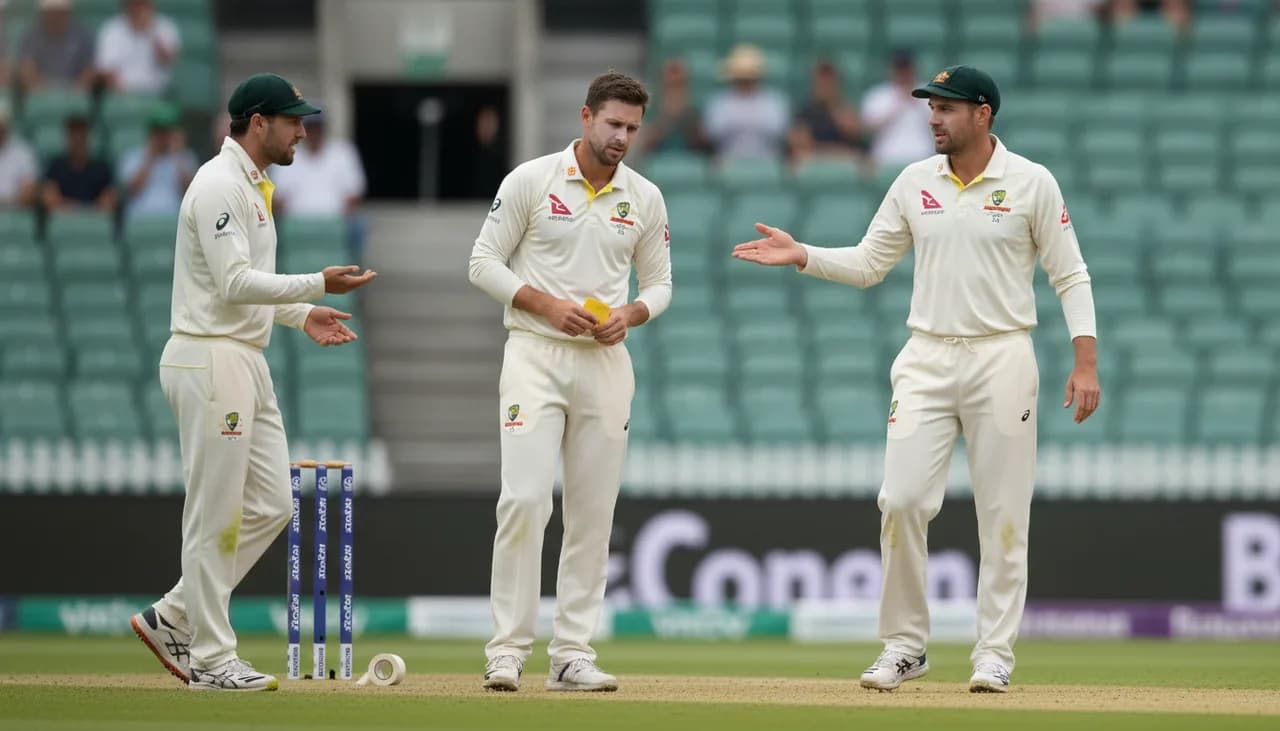

COLOMBO — England captain Harry Brook did not mince his words following a tense three-wicket victory over Sri Lanka in the second ODI, launching a scathing critique of the pitch at the R. Premadasa Stadium, calling it "probably the worst" he has ever played on. The remark, made in the immediate aftermath of a hard-fought win that sealed the series 2-0 with a game to spare, has ignited a fresh debate about pitch standards in international cricket, particularly in the subcontinent.
The surface, which offered excessive and unpredictable turn from the very first over, produced a low-scoring thriller where bat truly battled ball. Sri Lanka, opting to bat first, were bundled out for a meagre 141 in just 34.4 overs, with England's spinners, led by the excellent Adil Rashid (3/19), running riot. England's chase was equally fraught, lurching to 49 for 5 before a match-winning, unbroken 93-run partnership between Player of the Match Brook (44* off 65) and all-rounder Chris Woakes (48* off 60) guided them home with over 20 overs to spare, a statistic that belied the extreme difficulty of the conditions.
A Captain's Frank Assessment
In his post-match press conference, Brook, standing in as captain for the resting Jos Buttler, was unequivocal in his criticism. "It was probably the worst wicket I've ever played on in terms of a one-day wicket," he stated. "It was just turning from ball one. It wasn't like it got any worse. It was turning square from ball one." His comments highlighted a growing concern among players about surfaces that excessively favour bowlers, potentially undermining the balance between bat and ball that makes the 50-over format compelling.
Brook elaborated on the specific challenges, pointing out that the pitch's behaviour made conventional one-day batting plans almost impossible. "You can't really bat properly. You're just trying to survive. It's not really a great spectacle for people watching, is it, seeing everyone miss balls and get out? It's not great." This sentiment touches on a core tension in modern cricket: the desire for competitive, sporting pitches versus the expectation of high-scoring entertainment that often drives broadcast and fan engagement in the limited-overs game.
The Nature of the Challenge
The statistics from the match paint a stark picture of the dominance of spin and the struggle for run accumulation. Of the 17 wickets to fall in the match, 14 were taken by spin bowlers. The average run rate for the entire game was a paltry 4.16 runs per over, and only three batsmen across both sides managed to score more than 25 runs. The pitch's characteristics included:
- Excessive dry turn from the very first over, with several deliveries ripping past the outside edge.
- Low and inconsistent bounce, making forward defence a perilous undertaking.
- A complete absence of pace or carry for the seamers, negating any swing or seam movement.
England's senior spinner, Adil Rashid, who exploited the conditions masterfully, offered a slightly more diplomatic view but acknowledged the extremity. "It was a challenging wicket, no doubt. It was turning, it was gripping. As a spinner you're always happy to bowl on those, but it was tough for the batters." His performance, however, was a testament to skill in difficult conditions, not merely a product of a helpful surface.
The Sri Lankan Perspective
Unsurprisingly, the Sri Lankan camp had a different take. Captain Kusal Mendis, while admitting the pitch was challenging, stopped short of condemning it. "It was a spinning track, yes. We are used to these conditions at home. We just didn't bat well enough. 141 was not enough. England batted better under pressure in the chase." This highlights a cultural and experiential divide; subcontinental teams often prepare and expect turning tracks, viewing mastery on them as a key home advantage, while touring sides from other regions frequently find the adjustment jarring.
The pitch preparation likely fell under the purview of the Sri Lankan cricket board's curators, operating within the broad guidelines set by the International Cricket Council (ICC). The ICC rates the pitch and outfield for every Test match and has a monitoring process for ODIs and T20Is, though public ratings for limited-overs games are less common. A pitch is generally deemed "poor" if it does not allow an even contest, or is deemed dangerous. While this Colombo surface was not dangerous, Brook's comments squarely challenge its fairness as a contest.
Broader Implications for the Game
Brook's outburst is not an isolated incident. In recent years, several high-profile players have voiced concerns over extreme pitches, whether they are dust bowls in India, green seamers in England, or lifeless roads in some T20 leagues. The incident raises critical questions for administrators:
- Where is the line between a legitimate home advantage and a surface that compromises the integrity of the contest?
- Should there be stricter, more transparent ICC oversight for ODI and T20I pitches, similar to the Test match rating system?
- How do you balance the need for result-oriented pitches with the commercial expectations of the limited-overs game?
The context of a dead rubber—with England having already won the series—may have given Brook the freedom to speak so candidly. However, his status as a rising star and national captain lends significant weight to his words. They serve as direct feedback to the host board and the ICC about player welfare and spectacle.
Conclusion: A Victory Overshadowed
Ultimately, England's series-clinching win, a demonstration of immense character and skill from Brook and Woakes, will be remembered more for the post-match controversy than the cricket itself. While Brook praised his team's resilience, saying, "To win on that wicket, from the position we were in, shows great fight from the lads," the dominant narrative shifted to the quality of the stage upon which that fight was displayed.
The incident in Colombo is a potent reminder that pitch preparation remains one of the most contentious and influential aspects of international cricket. Harry Brook's "worst ever" label is a stark critique that will resonate far beyond this single match, forcing a necessary conversation about ensuring that the playing field, quite literally, fosters a fair and watchable contest for the world's best players and the fans who support them.