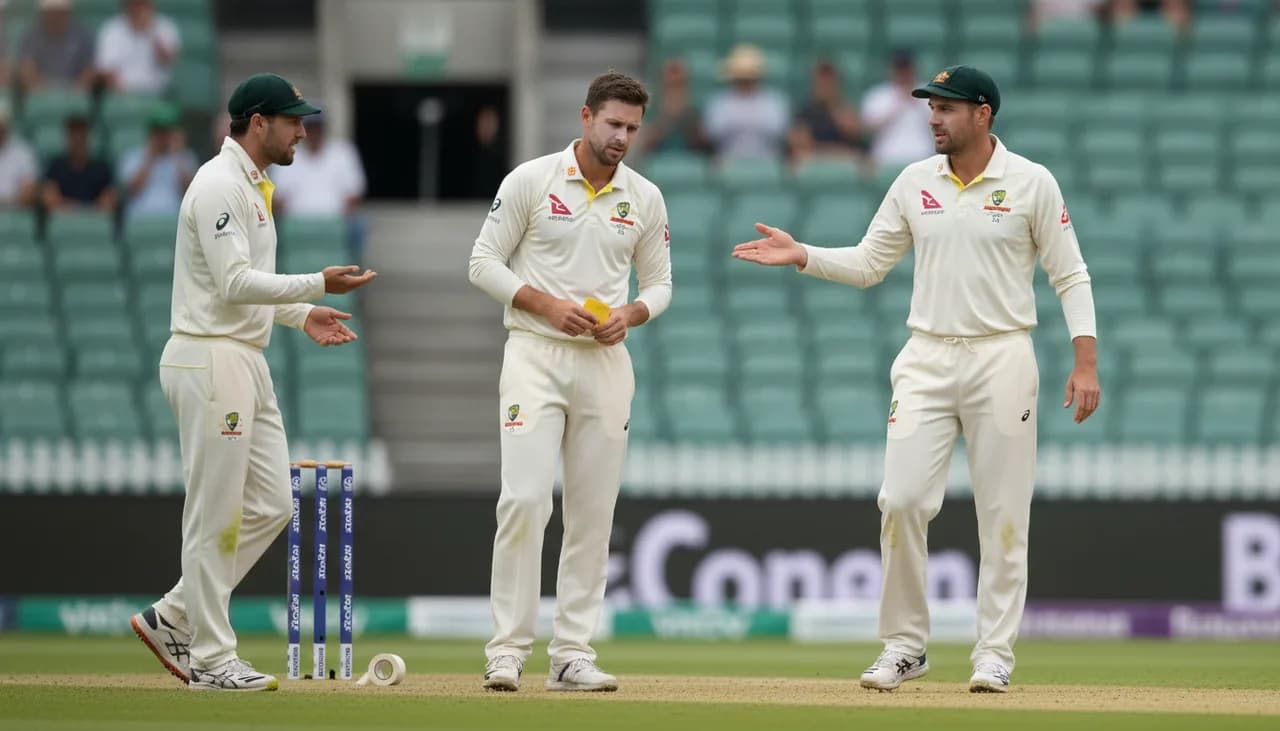

Former Lancashire opening batsman Stephen Moore has launched a scathing critique of the county's decision to retire George Balderson during their crucial T20 Blast clash against Somerset, labelling the tactical move as "really poor" and a significant factor in their narrow defeat at the Cooper Associates County Ground in Taunton.
The incident occurred during the 18th over of Lancashire's chase of 191. Balderson, who was well set on 33 from 24 deliveries, was bizarrely "retired out" to allow the hard-hitting Chris Green to come to the crease. The move backfired spectacularly, as Lancashire lost their final four wickets for just 15 runs, succumbing to a 16-run loss that severely dents their hopes of qualifying for the quarter-finals.
The Controversial Moment in Taunton
With 34 runs required from 18 balls, Lancashire captain Keaton Jennings and the team management made the calculated gamble. Balderson, a left-hander known for his ability to find gaps and rotate strike, was pulled from the game despite looking comfortable. Australian all-rounder Chris Green, renowned for his power-hitting in franchise leagues worldwide, was sent in with a clear license to swing from ball one. "The theory is understandable on paper," Moore explained in his analysis, "but the execution and timing were all wrong."
The move unravelled immediately. Green managed just a single from his first two balls before skying a catch off the bowling of Ben Green. The momentum shifted irrevocably to Somerset, and the Lancashire innings never recovered. Moore, who played for Lancashire between 2010 and 2013, was unequivocal in his assessment of the decision's impact on the game's psychology.
Moore's Blunt Assessment of the Gamble
Speaking on a regional cricket podcast, Moore did not mince his words. "I thought it was a really poor decision. I understand the thinking, but George Balderson was in. He was playing nicely. He's a good player of spin, he's a good player of pace. To retire him out and bring Chris Green in, who hasn't had a lot of time in the middle, under that pressure... it just smacked of panic."
Moore argued that the move disrupted the rhythm of the innings and showed a lack of faith in a player who was already performing his role effectively. He pointed to several key flaws in the decision-making process that ultimately cost Lancashire the match:
- The run rate was demanding but not yet insurmountable.
- Balderson had the skill to find boundaries and had just hit a six.
- Introducing a new batter always carries risk, especially against death bowling specialists.
- It sent a message of uncertainty to both teams at a critical juncture.
Furthermore, Moore highlighted Balderson's all-round contribution, noting he had also bowled two economical overs earlier in the Somerset innings. "He's a confidence player, and a move like that can be damaging. You're effectively telling him he's not good enough to finish the game, which is a brutal message to receive."
The Wider Context of "Retired Out" in T20
The tactic of retiring a batter out is not new to T20 cricket but remains a high-risk, high-reward strategy popularized in franchise tournaments. It is typically used to maximize the final few balls of an innings by bringing in a fresh hitter specifically for that purpose. However, its success is highly dependent on context:
- Timing: It is usually deployed later, often off the final ball of an innings.
- Player Form: The incoming player is almost always a recognised finisher in red-hot form.
- Match Situation: It is a move for clear, desperate circumstances, not a 50/50 game state.
In this instance, critics argue the situation did not yet warrant such a drastic measure. With set batters at the crease and overs remaining, conventional wisdom suggested backing Balderson to launch, with the power-hitting Green waiting in the wings if a wicket fell naturally. The forced nature of the change is what Moore and other pundits found so baffling.
Lancashire's Playoff Hopes Dented
The defeat leaves Lancashire Lightning's T20 Blast campaign in a precarious position. They sit mid-table in the North Group, and every point is now critical in the race for the knockout stages. The loss against a direct rival, in a game they were in a strong position to win, could prove to be the difference between qualification and an early end to their campaign.
The fallout from this decision extends beyond just one match. It raises questions about team strategy, man-management, and the confidence of a talented young player in George Balderson. How the team management handles this situation internally, and how Balderson responds with bat and ball in the remaining group games, will be closely watched.
As for Stephen Moore, his commentary has sparked a broader debate about the use of analytics versus gut feeling in modern cricket. "There's a place for data," he conceded, "but you cannot ignore the human element of the game. You have to back your players."
The "retired out" gambit will be remembered as a defining, and ultimately failed, moment in Lancashire's 2024 T20 Blast season. While innovation should be encouraged, this instance serves as a stark reminder that even the most logical-sounding tactics can unravel when they overlook the form of a player and the flow of a match.