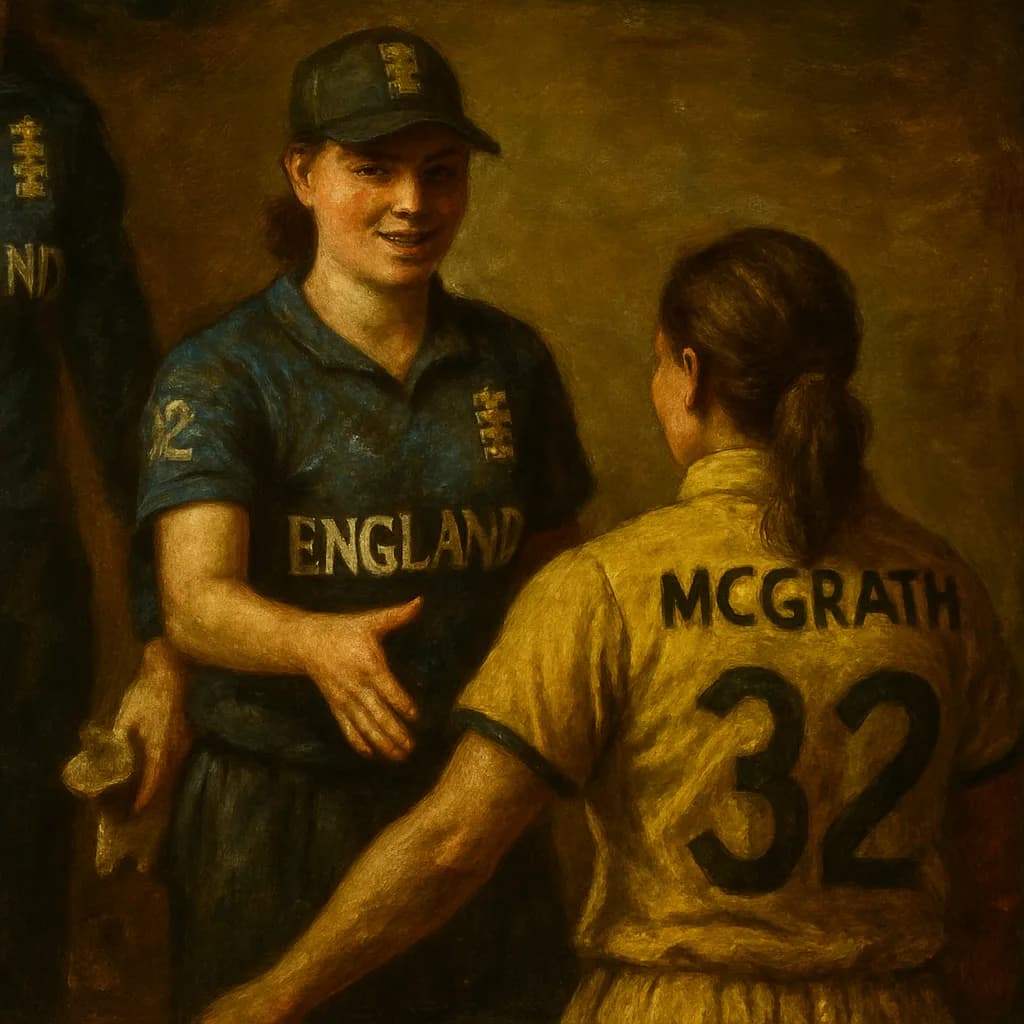
England are a different side from the one that was thrashed 3-0 in the T20 series against Australia at the start of the year, but at the Kensington Oval in Barbados, they were taught a harsh and familiar lesson by their oldest rivals, writes Ffion Wynne.
A Familiar Foe, A Familiar Script
The narrative was set for a new chapter. A refreshed England squad, bolstered by the return of Jofra Archer and the explosive batting of Phil Salt and Will Jacks, had spoken confidently of laying down a marker at this T20 World Cup. Yet, as the floodlights took over from the Caribbean sun, the age-old script of an England-Australia encounter began to play out, with Pat Cummins’ side once again holding all the aces.
The 36-run defeat was not just a loss; it was a stark reminder of Australia’s ruthless efficiency in global tournaments. Where England sought flair, Australia executed fundamentals with chilling precision. Captain Jos Buttler did not mince his words in the aftermath, stating "We were a long way short, we were outplayed by a good Australian side."
The Powerplay Pivot
The match turned decisively in the first ten overs of each innings. England’s bowlers, notably Mark Wood and Moeen Ali, started with promise, restricting Australia to 54-2 after the powerplay. However, the middle overs exposed a familiar frailty. The inability to consistently strike and build pressure allowed Travis Head and Marcus Stoinis to rebuild before launching a devastating assault.
Adil Rashid, England’s premier white-ball spinner, was targeted with brutal effectiveness. The contrast in the powerplays was stark. While England managed to contain, Australia’s attack, led by the peerless Pat Cummins and the ever-dangerous Mitchell Starc, went for the kill from ball one.
England’s top order was dismantled, reduced to 73-4 and effectively out of the contest within the first ten overs of their chase. The key differences in the powerplay phases were glaring:
- Australia's Bowling: Aggressive, full-length seam bowling targeting the stumps, backed by impeccable fielding.
- England's Bowling: An initial good spell that lacked the killer instinct to prevent a late-innings onslaught.
- Top Order Temperament: Australia’s batsmen weathered the early storm; England’s collapsed under it.
The Stoinis Blitz and Missed Chances
The defining passage of play was the partnership between Marcus Stoinis and Travis Head. After a cautious start, Stoinis cut loose in a manner that England’s middle order could not replicate. His 30-ball 50 was a masterclass in power-hitting, but it was built on a life. Stoinis was dropped on 15 by Mark Wood off Adil Rashid, a straightforward chance at deep mid-wicket.
In a game of such fine margins, that single moment was catastrophic. As England’s fielding coach, Carl Hopkinson, had emphasised pre-tournament, "Catches win matches, it’s as simple as that. We put a huge emphasis on our fielding." On the day, Australia held their catches; England did not.
The Archer Conundrum
The return of Jofra Archer was meant to be England’s X-factor. And while his two early wickets provided a thrilling glimpse of what has been missed, his overall figures of 2-28 from four overs told a story of a bowler still finding his way back to peak condition. There were the trademark searing yorkers, but also periods where the length drifted and the pressure was released.
This is the delicate balance England must now manage. Archer’s sheer talent is undeniable, but relying on him as the primary strike bowler in a high-pressure World Cup, with so little recent cricket under his belt, is a monumental gamble. His final over, which went for 15 runs, demonstrated that the journey to full match sharpness is still ongoing.
A Reality Check for the New Look
This England team is undoubtedly different in personnel and spirit from the one that left Australia dejected in January. There is more dynamism at the top of the order and a genuine belief in their aggressive philosophy. However, the defeat exposed issues that are hauntingly familiar from their disappointing 50-over World Cup campaign:
- Middle-order fragility: The collapse from 73-1 to 105-6 was a carbon copy of past failures.
- Death bowling concerns: Conceding 74 runs in the final seven overs is a luxury no team can afford.
- Clutch performance: Australia, as they so often do, raised their level at the key moments.
As one seasoned commentator noted, "Australia play tournament cricket better than anyone. They find a way. England are still searching for that knockout instinct."
The Road Ahead
This loss is not terminal for England’s World Cup hopes, but it is a profound reality check. It removes their margin for error in a tough group and places immense pressure on their remaining fixtures. More than that, it reaffirms a painful truth: while England may be a different team on paper, conquering the mental and tactical hurdle posed by Australia in a global event remains their ultimate challenge.
The lessons are there, written in the stark scoreboard and the composed celebrations of the Australian team. The question now is whether this different England has the resilience and adaptability to learn them in time. The familiar foe has issued a familiar warning; the response in the coming days will define their tournament.