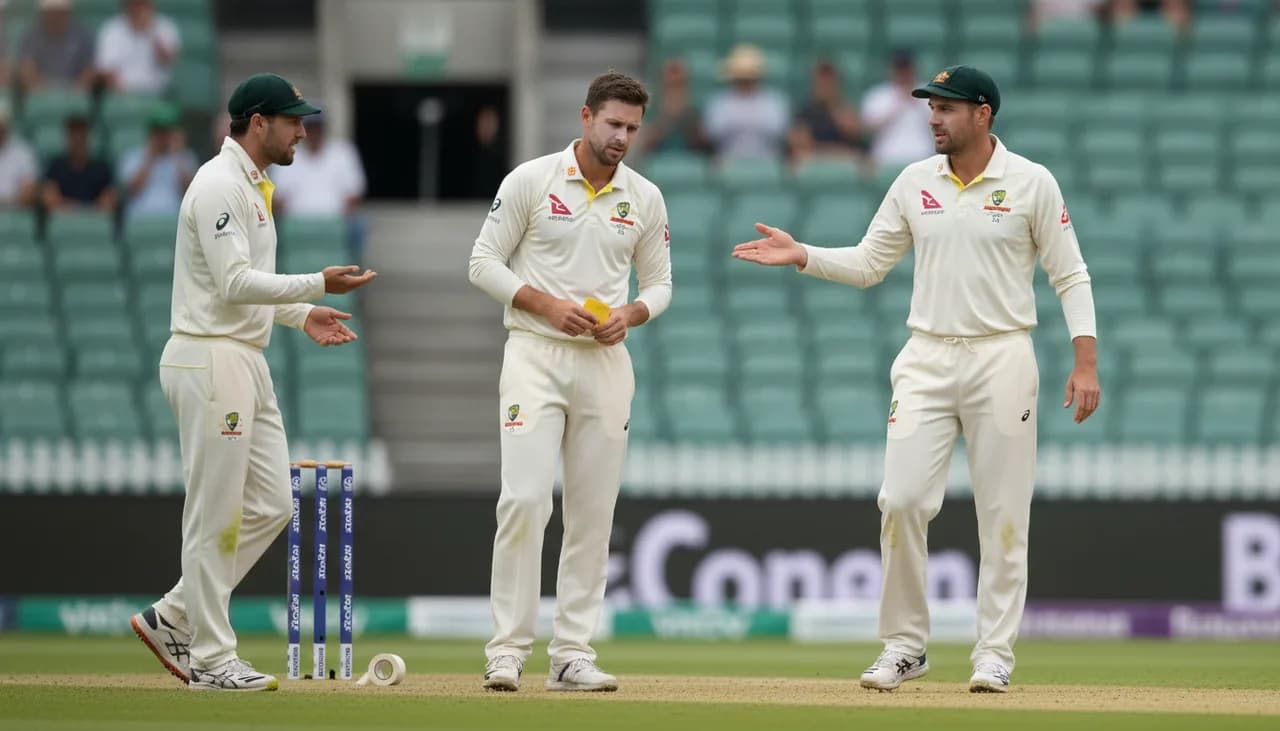
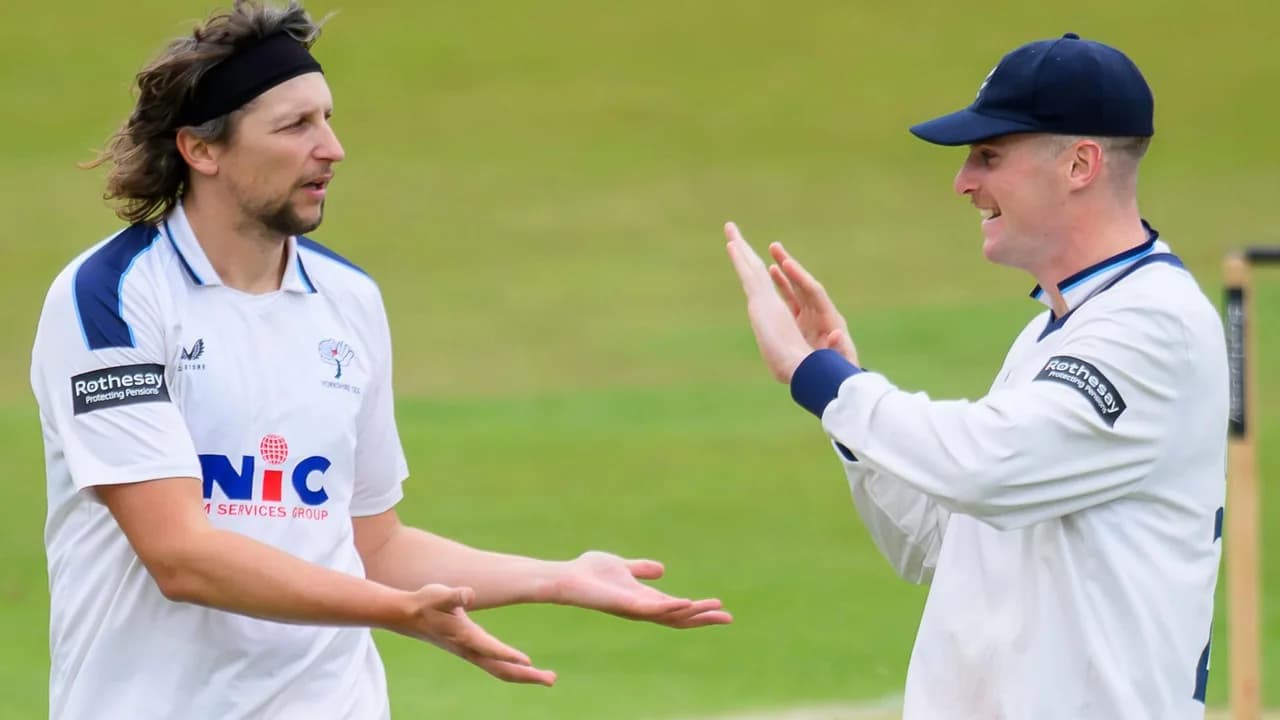
The Ashes returns on 21 November and to get you in the mood we thought we'd Test your knowledge with a quiz. The fierce rivalry between England and Australia has produced legends whose names are etched in cricketing folklore. But what of the supporting cast? The players who had their moments in the sun, defined a particular series, or whose careers flickered brightly but all too briefly? Let's take a nostalgic trip back to the 2000s and see if you remember these Ashes protagonists.
The Unfulfilled Promise: Michael Clarke's Ashes Debut
The 2005 Ashes series was arguably the greatest of all time, a nail-biting contest that captivated a nation. While the heroics of Freddie Flintoff, Kevin Pietersen, and Shane Warne are rightly celebrated, it's easy to forget the debut of a fresh-faced Australian batsman. Michael Clarke announced himself on the world stage in the First Test at Lord's with a scintillating 91 in the first innings. He followed it up in the Second Test at Edgbaston with a composed 40 in a losing cause, but it was his first-innings century – a majestic 91-ball 91 – that truly announced his arrival. Commentator Richie Benaud noted at the time, "This young man has the touch of a genius, a rare talent for such a pressure-cooker environment."
Despite this explosive start, Clarke's overall series was a microcosm of his early career – flashes of brilliance punctuated by inconsistency. He failed to pass fifty in his next seven innings as England's bowlers found a way to nullify his aggressive style. He was a star in the making, but in the cauldron of the 2005 Ashes, he was a supporting actor in a drama dominated by established legends.
The Metronomic Menace: Matthew Hoggard's Swing King
If you were to list the key bowlers of England's 2005 triumph, the names of Flintoff, Simon Jones, and Steve Harmison would spring to mind. Often overlooked, however, is the crucial role played by the unassuming Yorkshire seamer, Matthew Hoggard. While he lacked the raw pace of Harmison or the reverse-swing of Jones, Hoggard was the metronome of the attack, a master of conventional swing who relentlessly attacked the top of off-stump. His contribution was vital, not just for the wickets he took, but for the pressure he built at the other end.
Hoggard's finest hour came in the crucial Fourth Test at Trent Bridge. With the series poised at 1-1, he produced a devastating spell of 6-57 in the first innings, ripping through the heart of the Australian batting lineup. He dismissed:
- Justin Langer, caught behind for 27
- Ricky Ponting, bowled for 1
- Damien Martyn, caught for 1
- Michael Clarke, lbw for 36
This spell broke Australia's back and set up a famous English victory. Hoggard was the workhorse who became a warhorse when it mattered most.
The One-Series Wonder: Paul Collingwood's Epic Rearguard
Paul Collingwood is remembered as a gritty, determined cricketer and a World Cup-winning captain, but his Ashes career had its peaks and troughs. However, no moment defines his battling spirit more than his performance in the 2006/07 series – a 5-0 whitewash for Australia. While the series was a disaster for England, Collingwood emerged with his reputation enhanced, primarily due to one monumental innings in Adelaide. His double-century in the Second Test was a masterclass in concentration and defiance, though it ultimately ended in a heartbreaking draw after Australia batted England out of the game. Former Australian captain Ian Chappell said of the knock, "That was one of the great rearguard actions. He showed a technique and temperament that few in his side could match."
Collingwood's resilience in that series was a lone bright spot. He was one of only two English batsmen to average over 40, finishing with 392 runs. His contributions, while often in a losing cause, demonstrated the mental fortitude that would later define his leadership. He was the man who never knew when he was beaten, even when the cause was utterly lost.
The Forgotten Spinner: Michael Kasprowicz's Heartbreak
While Glenn McGrath and Brett Lee spearheaded the Australian attack for much of the decade, the role of the third seamer was often a revolving door. One man who filled that role with distinction, yet is often forgotten, is Michael Kasprowicz. A sturdy, whole-hearted bowler, 'Kasper' played in two Ashes series, but he is forever etched in history for his role in one of the most dramatic finishes in Test cricket. In the 2005 Edgbaston Test, with Australia needing just 107 to win, he and Lee put on a nerve-shredding last-wicket partnership of 59. Kasprowicz was the last man out, fending a Steve Harmison bouncer to Geraint Jones with Australia just 2 runs short of victory. The image of him walking off, head bowed, is an iconic one.
Beyond that heartbreak, Kasprowicz was a reliable performer. In the 2001 series, he took 13 wickets at an average of 28.76, providing crucial support to the main strike bowlers. He was the quintessential team man, the bowler who did the hard yards into the wind, allowing the stars to shine at the other end. His career serves as a reminder that in the Ashes, heroes are not always the ones holding the urn aloft; sometimes, they are the ones who came within a whisker of seizing it.
The Briefest of Flames: Simon Jones and Reverse Swing
No discussion of Ashes players from the 2000s is complete without Simon Jones. The Welsh fast bowler's career was cruelly truncated by injury, but for one glorious summer in 2005, he was unplayable. Partnering with Andrew Flintoff, Jones mastered the art of reverse swing, bringing a devastating new dimension to England's attack. His spell of 5-44 at Old Trafford, where he ripped through the Australian middle order, was a display of fast bowling at its most destructive.
Tragically, Jones suffered a horrific knee injury while fielding in the Fourth Test at Trent Bridge, ruling him out of the decisive Fifth Test and effectively ending his Test career at the age of 26. He finished the 2005 series with 18 wickets at an average of 21.00. His teammate Steve Harmison perhaps put it best: "We lost a champion that day at Trent Bridge. On that form, he was the best bowler in the world." Jones remains one of English cricket's great "what if" stories.
Conclusion: The Tapestry of Rivalry
The Ashes is built on more than just the legends; it's woven from the contributions of every player who stepped onto the field. The Michael Clarkes, who showed a glimpse of future greatness; the Matthew Hoggards, the relentless workhorses; the Paul Collingwoods, the indefatigable fighters; the Michael Kasprowiczs, the nearly-men; and the Simon Joneses, the shooting stars whose light was extinguished far too soon. As we anticipate the next chapter in this storied rivalry, let's not forget these players from the 2000s. They may not always be the first names we recall, but their efforts, their moments of triumph and despair, are the very threads that make the rich tapestry of the Ashes so compelling.