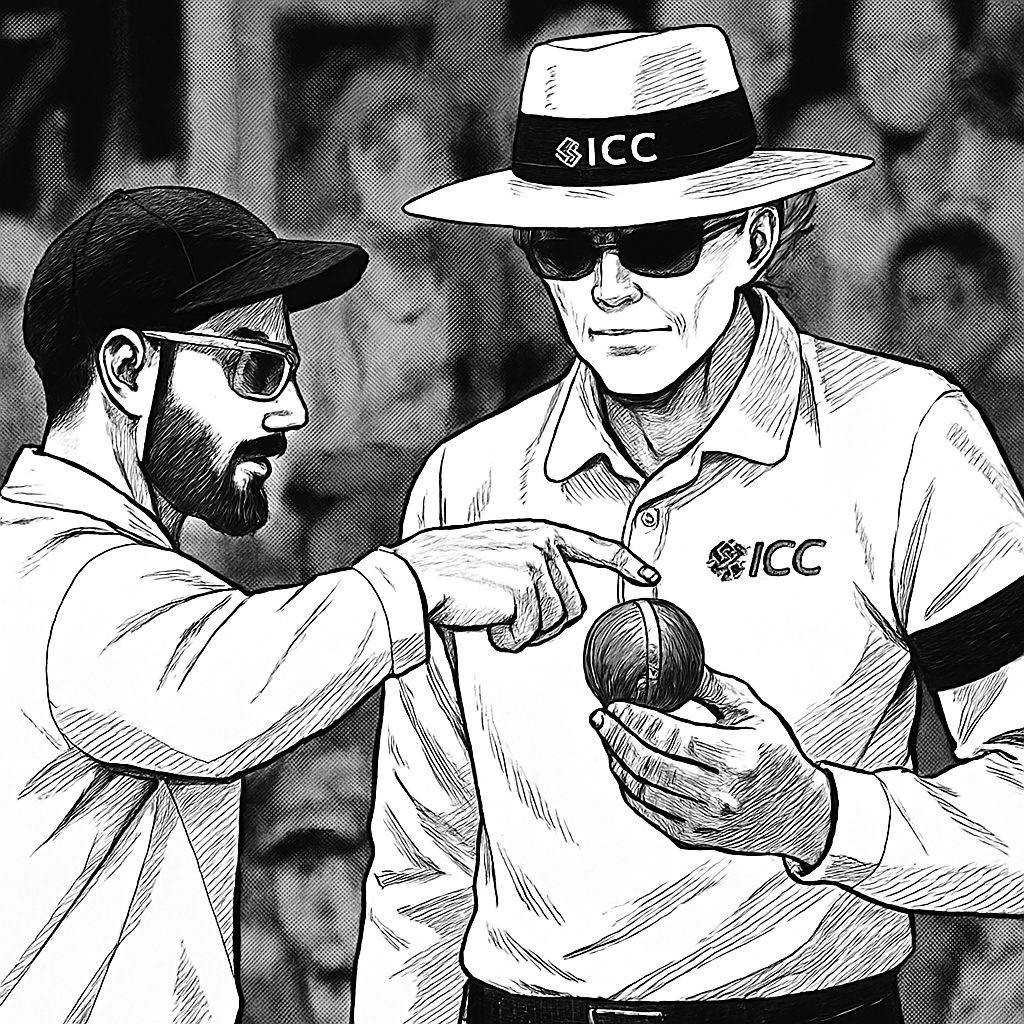
LONDON — The manufacturer of the Dukes cricket ball has announced it will examine the balls used in the ongoing Test series between England and India after concerns were raised about their quality and durability.
The first three Tests of the five-match series have been plagued by issues, with players and umpires reporting that the balls have gone soft unusually quickly, losing their shape and hardness, which has impacted the balance between bat and ball.
What’s the Problem with the Balls?
The primary complaint from players and officials is that the balls have not maintained their hardness for the required 80 overs, often becoming soft and misshapen well before that mark. This has led to:
- Reduced swing and seam movement, making it harder for bowlers to extract conventional or reverse swing.
- Increased difficulty in maintaining shine, as the leather has been reported to wear out faster than usual.
- Frequent ball changes, disrupting the natural flow of the game.
England’s veteran fast bowler James Anderson, who relies heavily on swing, expressed his frustration after the second Test: "The ball has been going soft very quickly. It’s not something we’ve experienced before with the Dukes ball. It’s made it tough to get movement as the game progresses."
Dukes to Investigate
Dukes, the manufacturer, has confirmed that it will conduct a thorough examination of the balls used in the series. A spokesperson stated: "We take these concerns seriously and will analyze the balls to determine if there’s an issue with the manufacturing process or if external factors are at play."
The company has also suggested that weather conditions—particularly the unusually damp and humid English summer—could be contributing to the problem, as moisture can affect the leather’s integrity.
Impact on the Series
The softness of the balls has had a noticeable impact on the contest between bat and ball. Bowlers, especially seamers, have struggled to maintain pressure, while batsmen have found it easier to score as the ball loses its bite.
Former England captain Michael Vaughan commented: "If the ball isn’t doing anything after 20 overs, it takes away a huge part of Test cricket’s challenge. The Dukes ball is usually reliable, so this is a real concern."
Umpires Forced to Intervene
Match officials have had to replace balls multiple times during the series, which is unusual for a high-profile contest. In the third Test, the umpires changed the ball twice in a single innings due to excessive wear.
An ICC spokesperson confirmed: "We are monitoring the situation closely and will work with Dukes to ensure the integrity of the game is maintained."
Historical Context
The Dukes ball has long been favored in England and the West Indies for its pronounced seam and consistent swing. However, this isn’t the first time concerns have been raised:
- 2018: Players complained about inconsistent quality during England’s series against India.
- 2020: The ball was criticized for going soft too quickly in the West Indies.
Dukes has previously adjusted its manufacturing process in response to feedback, but this latest issue suggests further refinements may be needed.
What’s Next?
With two Tests remaining in the series, both teams will be hoping for a resolution. Dukes has assured that replacements will be checked rigorously before being used in the remaining matches.
India’s bowling coach Paras Mhambrey acknowledged the challenge: "It’s the same for both teams, but as bowlers, we’d like a ball that holds up better. Hopefully, Dukes can find a solution soon."
Conclusion
The scrutiny on Dukes highlights how critical the quality of the ball is to the balance of Test cricket. While external factors like weather may play a role, the manufacturer’s response will be closely watched by players, officials, and fans alike.
As the series moves forward, all eyes will be on whether the balls improve—or if this becomes another chapter in the ongoing debate over cricket ball standards.