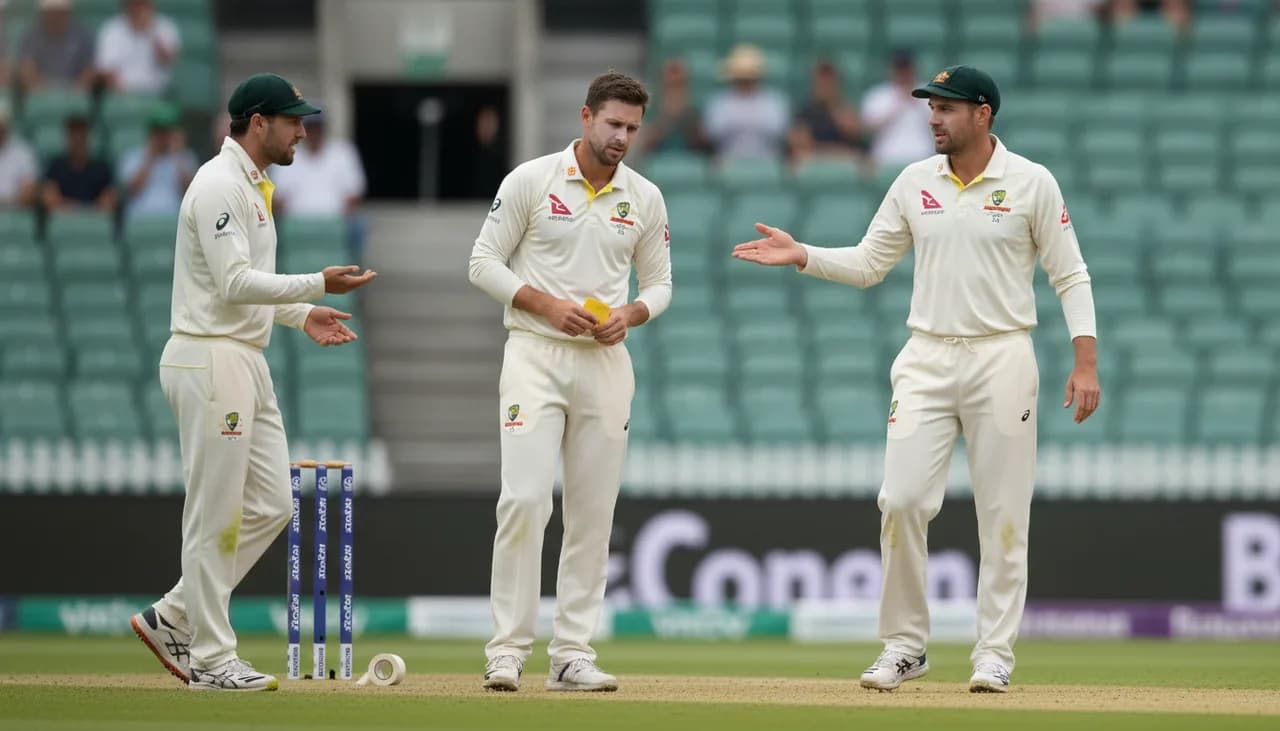
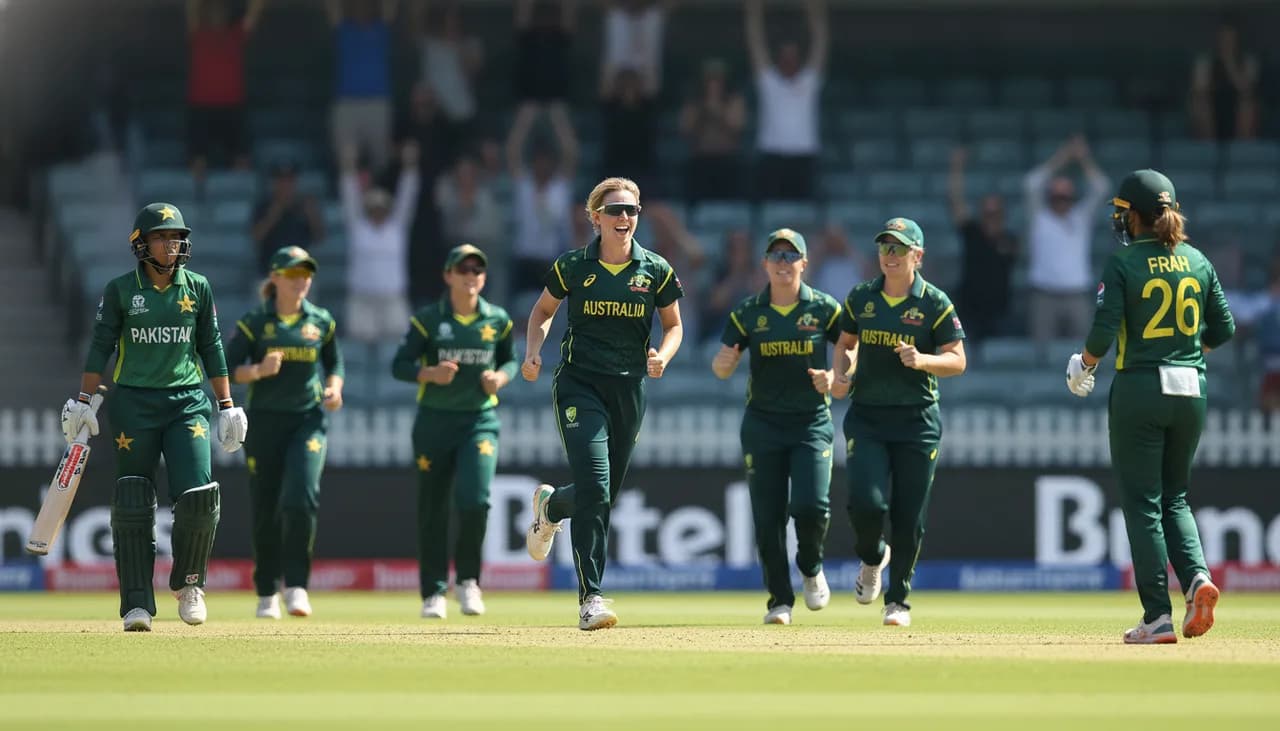
BRISBANE — England’s Ashes hopes lie in tatters after a crushing eight-wicket defeat by Australia in the second Test at the Gabba, leaving them 2-0 down in the series with just six days of cricket played. The loss, completed inside four days, was a comprehensive hammering that exposed familiar frailties and has all but extinguished any realistic chance of reclaiming the urn.
The tourists, resuming on a precarious 223 for 9 in their second innings, added just 12 runs before being bowled out for 235, setting Australia a paltry target of 75 to win. The hosts chased it down with ease before lunch on day four, losing only David Warner and Marnus Labuschagne in the process. The result means England must now win the final three Tests to retain the Ashes, a feat never before accomplished in the history of the series.
A Familiar Collapse Seals England's Fate
England’s capitulation on the third evening was the decisive passage of play. From a relatively secure position at 62 for 2, they lost 8 wickets for 161 runs in a chaotic final session under lights. The pink ball and Australia’s relentless pace attack, led by the superb Pat Cummins and Mitchell Starc, proved too much for a brittle batting lineup. Captain Joe Root, who top-scored with 89, cut a forlorn figure as wickets tumbled around him with alarming regularity.
The collapse highlighted England’s persistent issues against high-quality seam bowling in Australian conditions. The top order, with the exception of Root, failed to provide a platform, and the middle and lower order offered little resistance. Former England captain Michael Vaughan was scathing in his assessment, stating, "England are a million miles away from being a competitive Test team in Australia. They are 2-0 down and it could easily be 5-0."
Australia's Relentless Attack Proves Too Much
In stark contrast to England’s struggles, Australia’s bowling unit operated with ruthless efficiency. Captain Pat Cummins was the standout, claiming match figures of 7 for 103, but it was the collective pressure that suffocated England. Mitchell Starc’s crucial early strikes and Nathan Lyon’s persistent accuracy on a responsive pitch created a perfect storm. The hosts’ dominance was built on several key factors:
- Relentless line and length: Rarely offering England’s batters any width or free scoring opportunities.
- Exploiting the conditions: Mastering the Gabba’s bounce and the pink ball under lights.
- Depth in attack: Cameron Green’s role as a fourth seamer provided constant rotation.
- Catching Taking almost every chance that came their way, notably Labuschagne’s stunning one-handed grab.
Cummins praised his team’s clinical performance, saying, "It was a really complete performance. The way we bowled in that night session was fantastic. We’ve been relentless when we’ve had the chance, and that’s the key in Test cricket. To be 2-0 up is a great position to be in, but we know England will come back hard."
Root's Lone Resistance Not Enough
Once again, the burden of England’s batting fell squarely on the shoulders of captain Joe Root. His first-innings 89 was a masterclass in concentration and technique, but his dismissal – caught behind chasing a wide one from Starc – triggered the terminal collapse. Root now has over 1,600 Test runs in 2021, a phenomenal personal achievement, yet his team’s results highlight a disturbing reliance on one player.
The failures of Rory Burns, Haseeb Hameed, and Dawid Malan at the top of the order have left the middle order exposed to the new ball far too often. Ben Stokes, battling a side strain and clearly not at full fitness, looked a shadow of his usual self. The absence of a settled opening partnership since Andrew Strauss and Alastair Cook has been a chronic issue for England in Australia, and it continues to haunt them.
Selection Headaches and Injury Concerns
England’s problems are compounded by injury doubts and selection conundrums ahead of the crucial third Test in Melbourne. Stokes’ fitness is a major concern, while seamer Stuart Broad – controversially omitted at the Gabba – is pushing hard for a recall. The bowling attack, though spirited, lacked the penetration of Australia’s, with veteran James Anderson and Ollie Robinson unable to replicate their first-Test threat on a less responsive surface.
The decision to leave out both Broad and spinner Jack Leach has been heavily questioned. England’s management must now decide whether to stick with a failing formula or make radical changes for the Boxing Day Test. Coach Chris Silverwood faces his toughest challenge yet, needing to lift a demoralised squad. He admitted, "It’s very frustrating. We had a chance to get back into the game and we didn’t take it."
A Mountain Too High to Climb
History is overwhelmingly against England. No team has ever come from 2-0 down to win an Ashes series in Australia. The last time England found themselves in this position, in 2013/14, they went on to suffer a 5-0 whitewash. The momentum, confidence, and all the key sessions are firmly with Pat Cummins’s Australian side, who look hungrier and more disciplined in every department.
While the mathematics still allow for a drawn series if England win the next three Tests, the reality is that this England team has shown no evidence of being capable of such a remarkable turnaround. The batting is fragile, the bowling lacks a cutting edge without monumental effort, and the fielding has been inferior. The Ashes, barring a miracle of Lazarus-like proportions, are staying in Australia.
The Gabba hammering was more than just a defeat; it was a stark reminder of the gulf that exists between the two sides in Australian conditions. England’s journey from here is not about reclaiming the urn, but about salvaging pride and finding answers to questions that have plagued them for a decade down under. The final word goes to a resigned Joe Root, who conceded, "We have to be better. We know that. We have to learn from this quickly because it’s a very quick turnaround." For England, time – and hope – is running out fast.