
MANCHESTER — England’s injury woes deepened on the second morning of the crucial fourth Ashes Test at Old Trafford, as promising seamer Gus Atkinson was forced to leave the field with a hamstring issue. The Surrey bowler, playing in just his second Test match, will undergo a scan later today to determine the severity of the problem, casting a shadow over England’s fight to level the series.
A Crucial Blow in a Pivotal Test
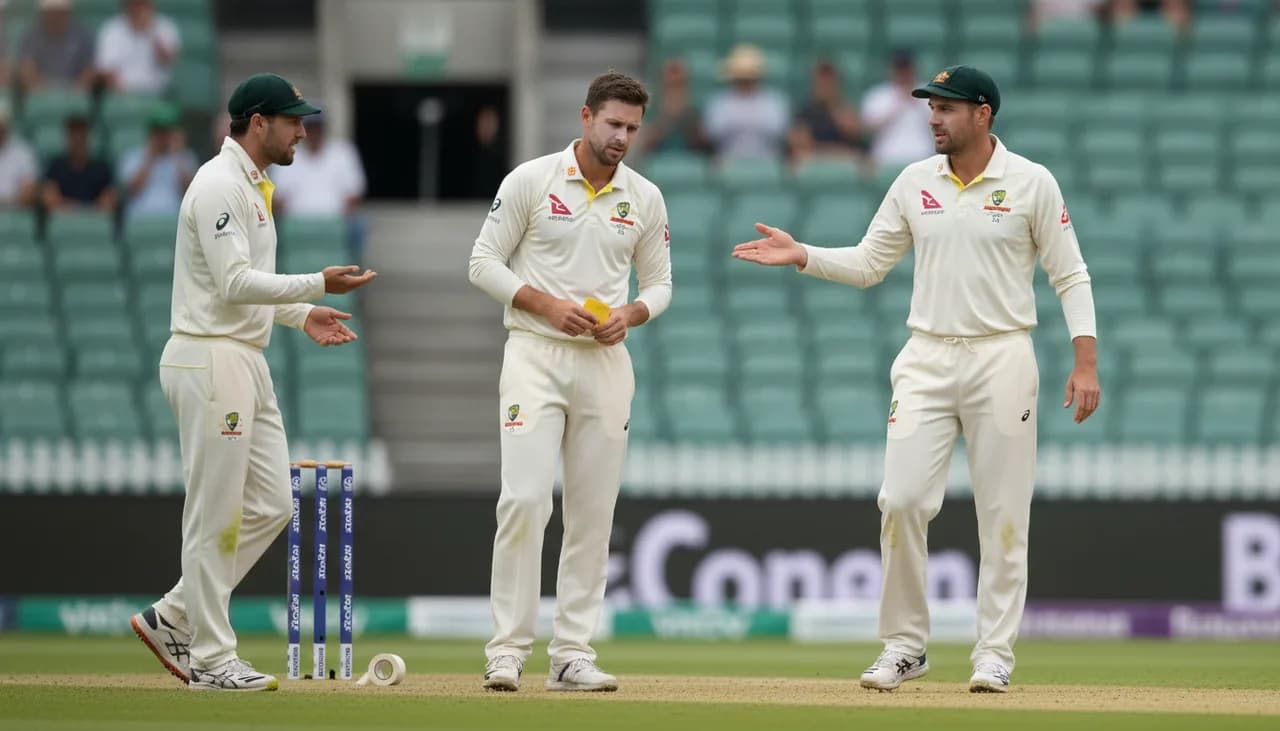
The incident occurred during the 37th over of Australia’s first innings, with the tourists well-placed at 107 for 2. Atkinson, who had bowled seven probing overs for 24 runs, pulled up sharply after delivering a ball to Australian centurion Marnus Labuschagne. He immediately clutched at his left hamstring and, after a brief conversation with captain Ben Stokes and the team physiotherapist, walked gingerly from the field. His absence leaves England’s bowling attack significantly depleted for the remainder of Australia’s innings.
Atkinson’s potential loss is a significant setback for an England side already managing a host of fitness concerns. The team is without the express pace of Jofra Archer and the control of Olly Stone for this entire series, while frontline spinner Jack Leach was ruled out before the first Test. Most pressingly, England’s attack leader, James Anderson, is playing on his home ground at the age of 40 and has been carefully managed through the summer. Losing another seam option could prove catastrophic to their hopes of bowling Australia out twice.
Stokes and England Await the Verdict
England captain Ben Stokes cut a frustrated figure at the close of play, acknowledging the compounding nature of the team’s injury problems. “It’s obviously not ideal, especially with the position we’re in in the game and the series,” Stokes said. “Gus has been fantastic since he came into the side, offers us something different with his high release point and skiddy pace. We’ll get it scanned and hope for the best, but we have to plan for all outcomes.”
The immediate concern is Atkinson’s availability for the remainder of this Test. A minor strain could see him return to bowl later in the match, but a more serious tear would rule him out entirely and place a huge burden on the remaining bowlers:
- Stokes himself, who is bowling with a chronic knee issue and has been used in short, impactful spells.
- Chris Woakes, the hero of Headingley, who must now shoulder a heavy workload.
- Mark Wood, whose extreme pace requires careful management over long spells.
- James Anderson, who has taken just four wickets in three Tests this series.
The balance of the side would be severely disrupted, potentially forcing part-time spinner Joe Root to bowl more overs on a pitch that is expected to take turn as the game progresses.
Atkinson’s Meteoric Rise and the Road Ahead
The injury is particularly cruel for Atkinson, 25, who made a spectacular debut at Lord’s in the second Test, claiming a five-wicket haul in Australia’s second innings. His ability to generate steep bounce and sharp seam movement had marked him as a key component of England’s present and future attack. His potential absence not only affects this Ashes series but could also impact his involvement in the upcoming white-ball contests against New Zealand and the build-up to the ODI World Cup in India, where he is seen as a vital asset.
A History of Hamstring Hassles
Hamstring injuries are a notorious and common issue for fast bowlers, with recovery times varying dramatically based on the grade of the tear. The England medical team, led by Dr. Glen Rae, will be keenly aware of the need for a cautious approach:
- Grade 1 (Mild): A few days to two weeks of rest and rehab. Could return later in the Test.
- Grade 2 (Moderate): Three to six weeks out. Would end his Ashes series and threaten World Cup prep.
- Grade 3 (Severe): Several months of rehabilitation. A worst-case scenario for player and team.
The scan results, expected by Thursday evening, will dictate England’s strategy not just for the next three days in Manchester, but for the series decider at The Oval and beyond. With the series poised at 2-1 to Australia, England must win this Test to keep their Ashes hopes alive, making every bowling resource priceless.
Broader Context: England’s Fitness Crisis
Atkinson’s injury is symptomatic of a wider issue for English cricket. The relentless schedule, featuring multiple formats with minimal rest, has been cited by many pundits and former players as unsustainable. The physical demands on fast bowlers are immense, and England’s current casualty list highlights a system under strain. The management of Anderson and Wood this series has been a delicate operation, and Atkinson’s breakdown suggests the toll is extending to the next generation of quicks.
Former England captain Michael Atherton, commentating for Sky Sports, noted the strategic implications. “This changes the entire complexion of the day and possibly the match,” he said. “England were looking to attack, to build pressure with fresh bowlers. Now they are a key weapon down, and Australia will know that. The overs from Root and even Stokes become absolutely critical.”
Conclusion: An Anxious Wait
As the Old Trafford crowd enjoyed the afternoon sunshine, the mood in the England dressing room was one of anxious anticipation. The sight of Atkinson walking off has placed England’s Ashes campaign on a knife-edge. The scan results will deliver a verdict not just on the state of a bowler’s muscle, but on the viability of England’s quest to reclaim the urn. For Gus Atkinson, a young man living his dream, it is a brutal interruption. For England, it is yet another formidable obstacle in a series already defined by them. All now wait for the medical report that will shape the destiny of this Test match.