LONDON — The debate surrounding Zak Crawley’s place at the top of England’s Test batting order is as perennial as the English summer. Just as one majestic cover drive seems to cement his status, a loose waft outside off-stump reignites the chorus of doubters. Into this fray has stepped former England captain Michael Vaughan, who has delivered a characteristically forthright, yet ultimately supportive, verdict on the enigmatic opener.
Writing in his column for The Telegraph, Vaughan articulated the frustration felt by many observers, but arrived at a conclusion that may surprise some. "Zak Crawley frustrates the life out of me," Vaughan admitted. "But England should stick with him. They have to." This encapsulates the complex relationship between Crawley’s undeniable potential and his inconsistent returns, a duality that defines his career to date.
The Vaughan Verdict: Frustration and Faith
Vaughan’s analysis cuts to the heart of the modern "Bazball" ethos under coach Brendon McCullum and captain Ben Stokes. He argues that Crawley, more than any other player, embodies the high-risk, high-reward philosophy they have championed. His style is not a bug in the system; it is a fundamental feature. "He is the one who sets the tone," Vaughan stated, highlighting the psychological pressure Crawley’s aggressive starts can impose on opposition bowlers from the very first over.
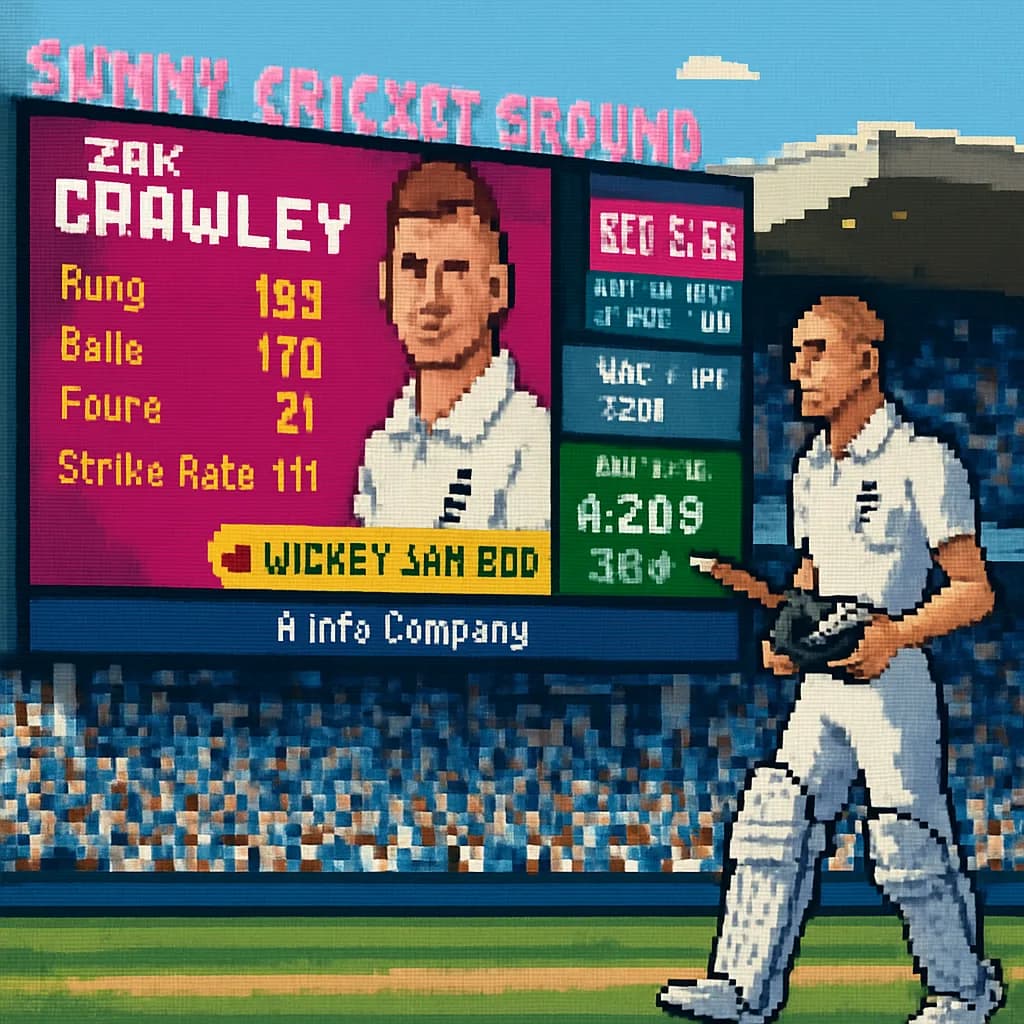
The statistics, however, tell a story of unfulfilled promise. After 41 Tests, Crawley averages a modest 32.38. Yet, within that lies the tantalising evidence of his game-changing ability: a monumental 267 against Pakistan, a blistering 189 against Australia in last summer’s Ashes, and a string of rapid-fire fifties. Vaughan’s point is that discarding Crawley now would be to abandon the very identity England have painstakingly built. "You can’t preach this aggressive message and then drop the player who plays that way the most," he asserted.
The Case For Perseverance
Why does the argument for persistence hold weight, especially when more consistent county performers are waiting in the wings? Proponents point to several key factors that extend beyond the raw numbers:
- Intangible Impact: His presence forces fielding captains to defend from ball one, altering field placements and bowling plans to his will, which can create opportunities for batsmen at the other end.
- The X-Factor: In an era where drawing Tests is rare, Crawley’s method is geared towards winning. He can seize a session and change the complexion of a match in a way few others in world cricket can.
- Age and Profile: At 26, he is entering what should be his prime years as a batsman. Having invested over four years in his development, England would be abandoning a significant project at the very moment it could bear fruit.
Former England batsman Mark Butcher echoed similar sentiments on the Wisden Cricket Weekly podcast, arguing that Crawley’s role is unique. "He’s not there to be a consistent, 45-average opener. He’s there to be a disruptor," Butcher said. This reframing of expectations is central to the current management’s support for him.
The Technical Conundrum
The source of the frustration Vaughan mentions is Crawley’s technique. His high backlift and pronounced front-foot stride, while generating breathtaking power, also leave a sizeable gap between bat and pad and can make him susceptible to the ball nipping back in. Critics argue these are fundamental flaws that will forever limit his consistency. Supporters counter that it is the price of his power and that technical "perfection" would neuter his greatest strengths. The challenge for England’s coaches has been to refine, not remodel, his game.
The Alternatives and the Road Ahead
The discussion is given context by the current state of England’s top order. With the retirement of Alastair Cook years ago and the recent departure of stalwarts like Joe Root (from the opener's experiment) and the dropping of Haseeb Hameed, the cupboard of proven Test openers is not overflowing. While county cricket has performers like Ben Duckett (Crawley’s current partner, who has excelled) and others averaging heavily, the selectors clearly value the specific, attacking template Crawley provides.
The upcoming summer series against West Indies and Sri Lanka presents a critical juncture. It is a chance for Crawley to build a compelling body of work against (on paper) less formidable attacks than India or Australia. Vaughan believes this period is crucial. "This summer is a big one for Zak," he wrote. "He needs to turn those starts, those flashy 30s and 40s, into big hundreds. The talent is there, no doubt. It’s about the mentality now."
Conclusion: An Investment in Identity
Michael Vaughan’s mixed review—frustration married to firm faith—ultimately serves as a microcosm of English cricket’s broader gamble. In backing Zak Crawley, England are not just backing a player; they are doubling down on an entire cricketing identity. They are accepting the maddening dismissals as the necessary cost of the exhilarating strokeplay and the strategic advantage it brings.
To drop him would be to admit a flaw in their foundational philosophy. As Vaughan concludes, for better or worse, England are wedded to their path, and Crawley is its most pure exponent. The hope for England fans is that this prolonged vote of confidence will finally unlock the consistency to match the breathtaking ceiling that makes Zak Crawley, in equal measure, so frustrating and so indispensable.