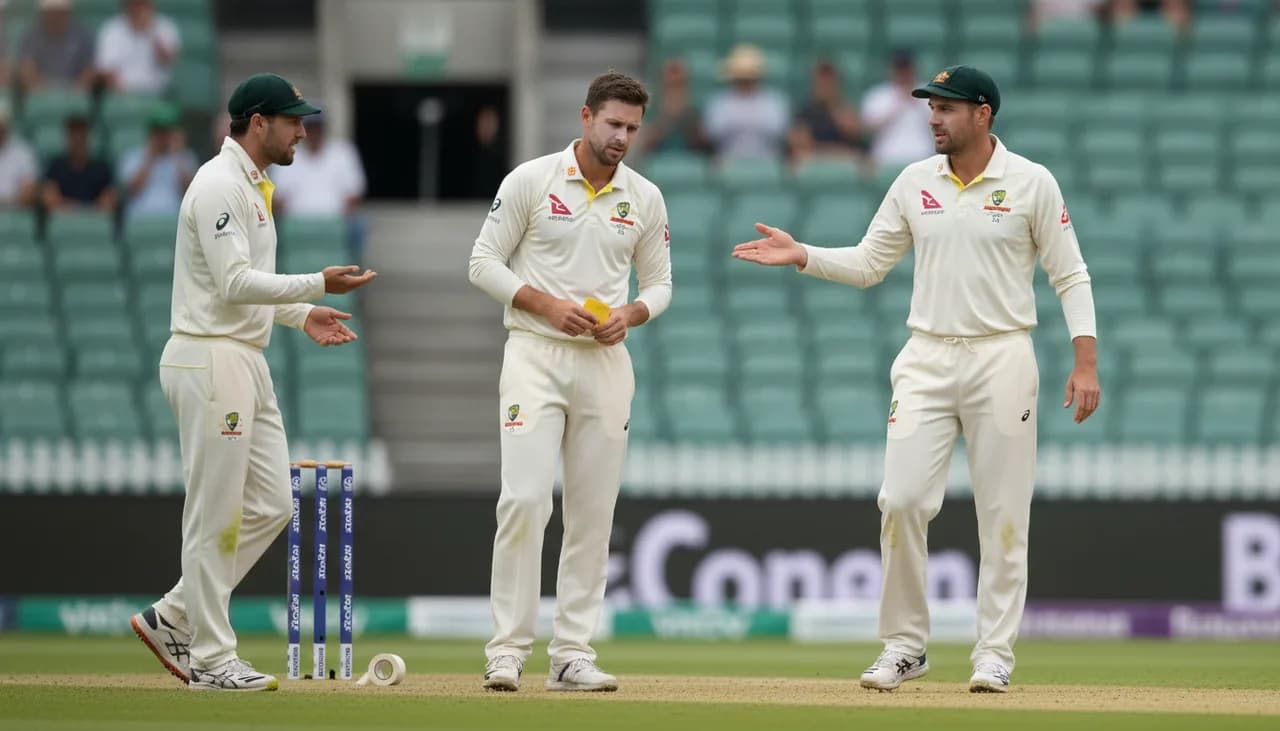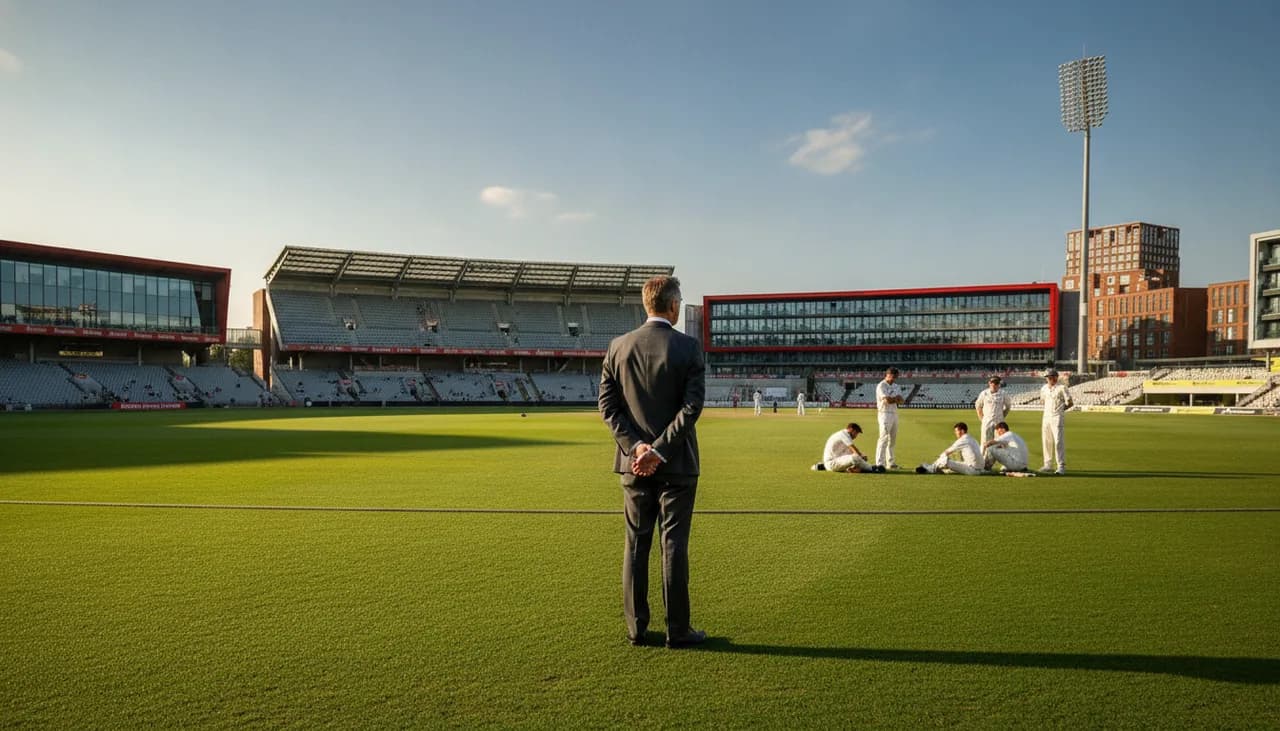
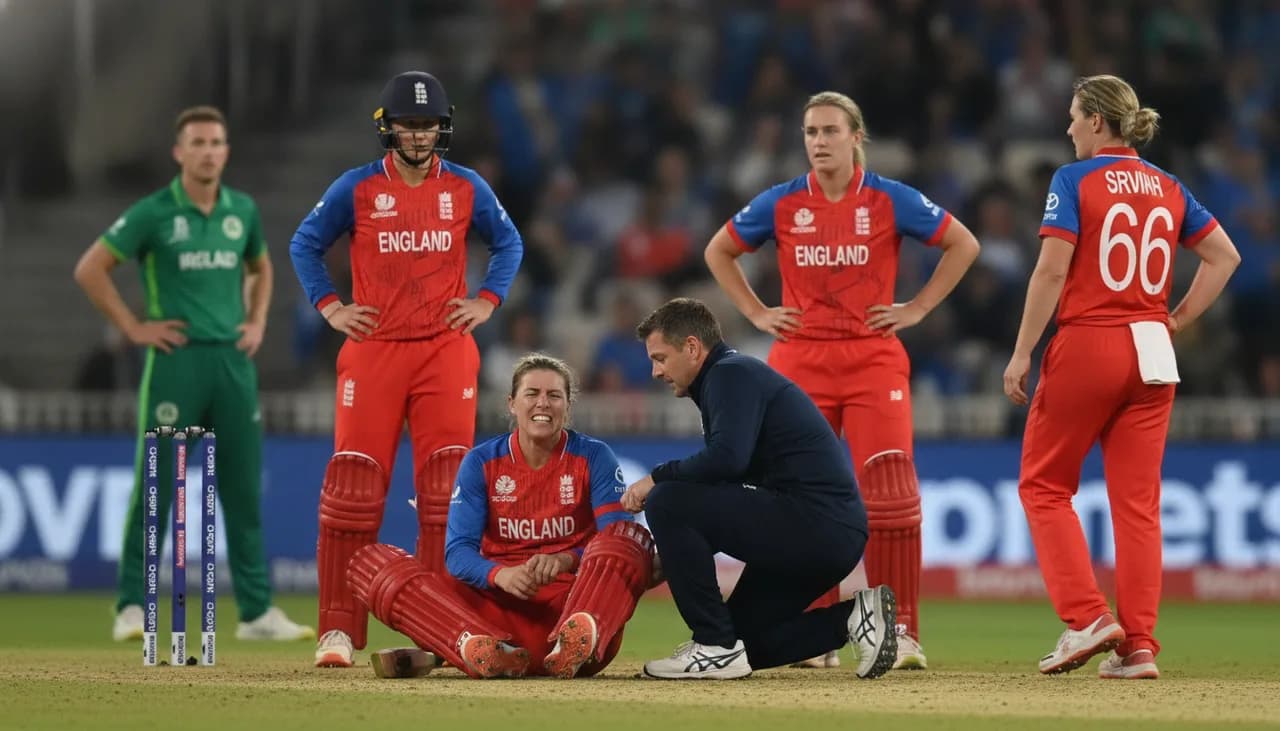
LEEDS — England’s hopes of regaining the Ashes are hanging by the thinnest of threads after a calamitous batting collapse on the second day of the crucial third Test at Headingley. Facing a first-innings deficit of just 26 runs, England’s top order folded once more, leaving them 142-7 at stumps and with a lead of a mere 116, their ambitions of levelling the series at 1-1 vanishing into the Yorkshire gloom.
The day was overshadowed by yet another controversial dismissal involving the Snickometer, this time accounting for England’s captain and last great hope, Ben Stokes. With his side in desperate trouble at 121-6, Stokes was given out caught behind off the bowling of Mitchell Starc. He immediately reviewed, but despite no clear spike on the real-time Snicko, the third umpire upheld the on-field decision, a moment that may well prove the defining point of the match and perhaps the series.
A Familiar Tale of Batting Frailty
England’s second innings followed a depressingly familiar script. After bowling Australia out for 263, thanks largely to Mark Wood’s blistering five-wicket haul, the hosts had a golden opportunity to seize control. Instead, the top order crumbled under the relentless pressure applied by Pat Cummins and Starc. The procession began with Ben Duckett, caught at slip off Cummins, and continued with Zak Crawley and Harry Brook falling in quick succession. The scoreboard told a grim story: 68-4, then 121-6, then 142-7.
The critical phase of the innings exposed the gap in resilience between the two sides. Where Australia’s lower order, through Mitchell Marsh’s counter-attacking 118 and valuable contributions from the tail, had stretched their total, England’s batting lacked the same stubborn resolve. The home side’s struggles were encapsulated by the dismissals of Joe Root and Jonny Bairstow, both falling to loose shots at a time when occupation of the crease was paramount.
The Snicko Controversy Strikes Again
The dismissal of Ben Stokes for 13 will be debated long after this Test concludes. Facing a fierce Starc delivery, Stokes shouldered arms. There was a sound as the ball passed the bat, and Australia went up in unison. Given out on the field, Stokes reviewed instantly. Replays showed a significant gap between bat and ball. The crucial evidence came from UltraEdge, which showed a faint, delayed spike as the ball was near the bat, but not necessarily making contact.
Third umpire, Nitin Menon, after several minutes of scrutiny, decided there was insufficient evidence to overturn the on-field ‘out’ decision. The frustration in the England camp was palpable. Speaking after play, a visibly disappointed Stokes could only offer a terse assessment: "I thought there was a gap between bat and ball. The technology has spoken, and we have to accept it."
This incident follows the first-Test controversy at Edgbaston, where England’s Ollie Pope was given out caught behind via a similar faint, delayed spike. The consistency and interpretation of the Snickometer technology have become a major subplot of this fiercely contested series, leaving players and fans alike bewildered. Former England captain Michael Atherton summarised the mood on Sky Sports, stating, "There is a growing sense of confusion around these decisions. The margin is so fine, and the consequence so huge, that the process feels increasingly unsatisfactory."
Australia Turn the Screw
While England faltered, Australia were clinical. Pat Cummins led the attack with intelligence and menace, exploiting the conditions and English nerves perfectly. The supporting cast was equally effective:
- Mitchell Starc: Provided the crucial breakthrough to remove Stokes and finished the day with three wickets, his angle and pace from over the wicket proving a constant threat.
- Scott Boland: The metronome, conceding less than two runs an over and building the pressure that led to mistakes.
- Mitchell Marsh: The hero with the bat in the first innings, he chipped in with the vital wicket of Joe Root, justifying his recall in spectacular fashion.
Australia’s fielding was also sharp, with catches held and energy maintained throughout the final session. They now need just three wickets to wrap up the England innings and will be confident of chasing any target under 150 on a pitch that, while offering assistance, remains largely true.
A Mountain to Climb
England’s only realistic hope now rests with the last-wicket pair of Mark Wood and Chris Woakes, who are at the crease, and a miraculous lower-order rally. Wood’s explosive 24 off 8 balls at the end of the day offered a flicker of entertainment, but it underscored the missed opportunity from the specialist batsmen. The required mindset for a Test match fightback was absent when it was most needed.
The broader context makes this collapse even more damaging. Trailing 2-0 in the series after narrow defeats at Edgbaston and Lord’s, this was the must-win game. The ‘Bazball’ philosophy, which brought thrilling success over the past year, has been tested to its limits by an Australian side that has remained patient, disciplined, and ruthlessly opportunistic. England’s aggressive approach has too often tipped over into recklessness at critical moments.
Conclusion: Hopes on Life Support
As the sun set on Headingley, the atmosphere was one of stunned resignation. From a position of strength after the first morning, England have let the match and likely the Ashes slip from their grasp in the space of two chaotic sessions. The Snicko controversy will dominate headlines, but it cannot mask the fundamental issue: England’s batting lineup, for the third Test in a row, has failed to post a commanding total under pressure. With only a paltry lead and three wickets in hand, they require something beyond extraordinary to prevent Australia from retaining the Urn on Sunday. Barring a rain miracle or a bowling performance for the ages, England’s Ashes hopes are not just vanishing—they are all but extinguished.