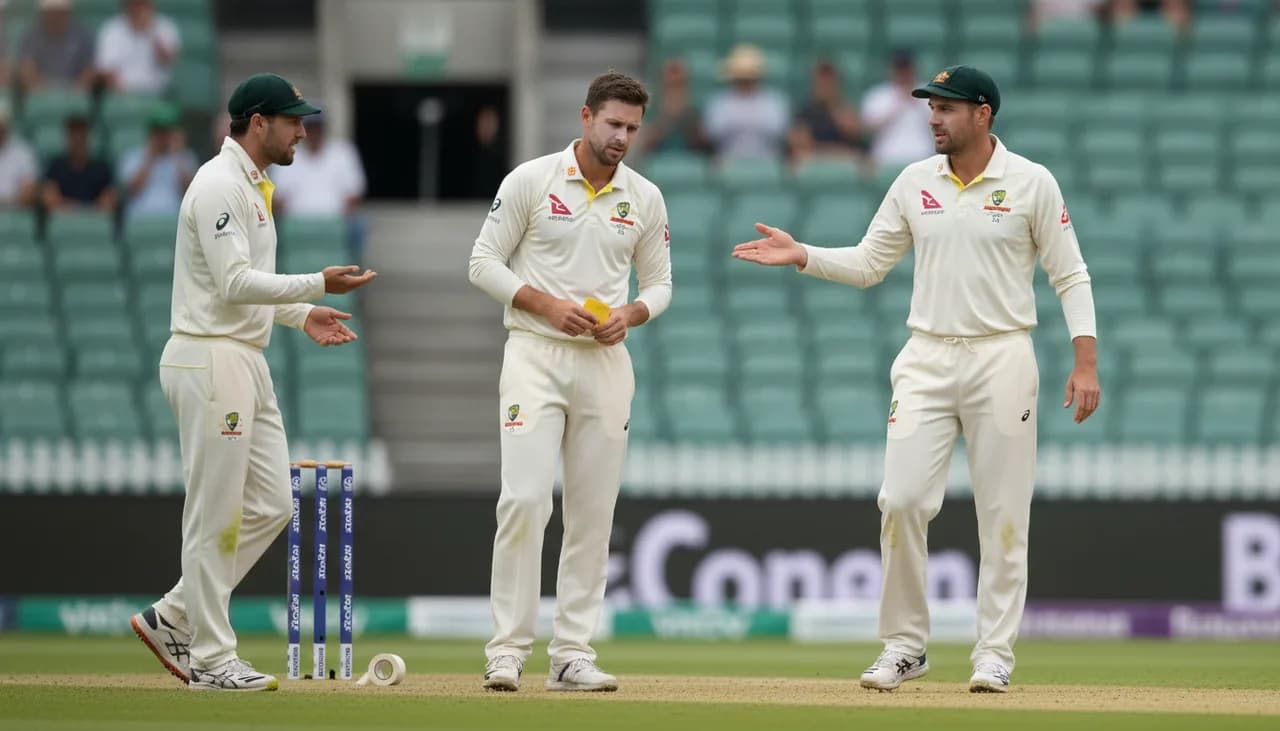
BRISBANE — England's hopes of levelling the Ashes series have been dealt a significant blow, with fast bowler Mark Wood almost certainly ruled out of the crucial second Test at the Gabba in Brisbane. The decision stems from ongoing concerns over the fitness of his left knee, an issue that flared up following his fiery spell in the first Test at Lord's.
A Crucial Blow for England's Attack
The absence of Wood, England's premier pace bowler and a key weapon in their quest to reclaim the Ashes urn, leaves a substantial void in the visiting team's bowling arsenal. His ability to consistently breach the 90mph/145kph barrier provides a point of difference in an attack otherwise built on seam movement and relentless accuracy. A team insider, speaking on condition of anonymity, confirmed the likely omission, stating, "The medical team and coaching staff are being ultra-cautious. Pushing him through at the Gabba could risk the entire series for him. It's a long tour, and his fitness is paramount."
Wood bowled with ferocious pace and heart in the first Test, a performance that saw him claim three vital wickets but also placed immense strain on his body. He was visibly struggling towards the end of the match, and subsequent scans revealed inflammation in the joint. While not a new tear or major structural damage, the management is acutely aware of Wood's injury history and the punishing nature of a five-Test series in Australia.
The Gabba's Unforgiving Nature
The Gabba pitch in Brisbane is renowned for its pace, bounce, and tendency to favour fast bowlers, particularly those with genuine speed. It is precisely the kind of surface where Wood's skiddy, short-pitched bowling could have been most effective in unsettling the Australian batting lineup, which includes players like Marnus Labuschagne and Steve Smith who relish pace on the ball. Losing him for this specific fixture is therefore a double blow for England. Captain Ben Stokes and coach Brendon McCullum now face a tactical recalibration. The potential replacements offer different skill sets, but none can replicate the raw, intimidating pace that Wood brings to the fore.
Weighing the Replacement Options
England's selection panel has a difficult decision to make. The contenders to fill Wood's spot in the XI present a classic dilemma between like-for-like pace and controlled seam bowling. The primary options being considered are:
- Gus Atkinson: The Surrey quick is the closest England have to a direct replacement for Wood, capable of generating high speeds. He is relatively inexperienced at Test level but offers the 'X-factor' pace.
- Chris Woakes: A seasoned campaigner, Woakes provides control, a potent outswinger, and valuable lower-order runs. However, his record away from home is significantly less impressive than his stellar performances in England.
- Josh Tongue: Another promising fast bowler who impressed during the summer, Tongue offers bounce and seam movement but lacks Wood's express pace.
The final choice will reveal England's strategy: whether they aim to match Australia's firepower directly with Atkinson or opt for the reliability and batting depth of Woakes. Former England captain Michael Vaughan commented on the situation, noting, "Losing Wood is a massive setback. He is the one bowler who can change the complexion of a session with his sheer speed. It forces a complete re-think of their bowling plans for Brisbane."
A History of Fitness Battles
This latest setback is part of a recurring theme in Wood's career. His all-action, high-impact bowling style has taken a toll on his body, particularly his ankle and knee joints. He has undergone multiple surgeries and has often been managed carefully through busy schedules. The England and Wales Cricket Board (ECB) has a detailed management plan for him, which includes rest periods and specific conditioning work. Pushing him through a Test match on a hard Gabba surface, so early in the series, was deemed an unacceptable risk by the medical team. The priority is to have him fit and firing for the later Tests in Adelaide, Melbourne, and Sydney, where his reverse-swing capabilities could be decisive.
The news was met with disappointment from fans and pundits alike, but also with understanding. Nasser Hussain, writing in his column, articulated the consensus view: "It's desperately sad for Mark and for England. He wears the Three Lions with immense pride and is a warrior. But the medics have to look at the bigger picture. A half-fit Wood at the Gabba helps no one, and could break him for the rest of the tour. It's a brave but correct call."
The Broader Series Context
The first Test at Lord's ended in a dramatic and controversial victory for Australia, giving the visitors a 1-0 lead in the five-match series. Falling 2-0 behind in an Ashes series in Australia is historically a near-insurmountable challenge for any touring side. The second Test at the Gabba, a fortress where Australia has not lost a Test since 1988, was already a monumental task. Without Wood, England's mission becomes even more difficult. The onus now falls even more heavily on veterans James Anderson and Stuart Broad, as well as Ollie Robinson, to lead the attack and find a way to take 20 Australian wickets.
An ECB spokesperson released a brief update on the squad's status: "Mark Wood is undergoing treatment and rehabilitation for soreness in his left knee. He will continue to be assessed ahead of the second Test, but his availability is considered highly doubtful. A final decision on his participation will be made closer to the start of the match." This official line, while not a definitive confirmation, leaves little room for optimism regarding Wood's involvement.
As the England team prepares for one of their most important matches in recent years, the absence of Mark Wood's electrifying pace and infectious energy will be keenly felt. The selection dilemma his injury creates is a stark reminder of the fine margins and physical demands of elite Test cricket. The coming days will reveal whether England's reshuffled attack can rise to the occasion and prevent Australia from taking a stranglehold on the coveted Ashes urn.