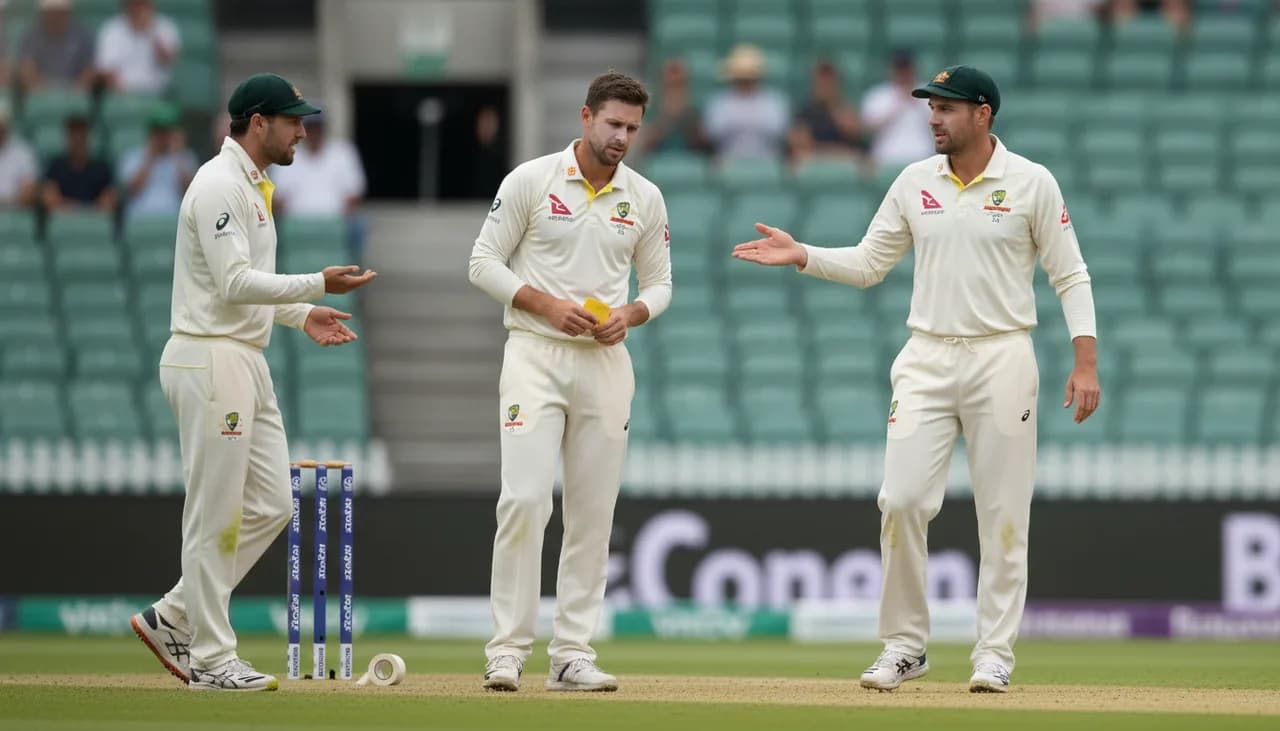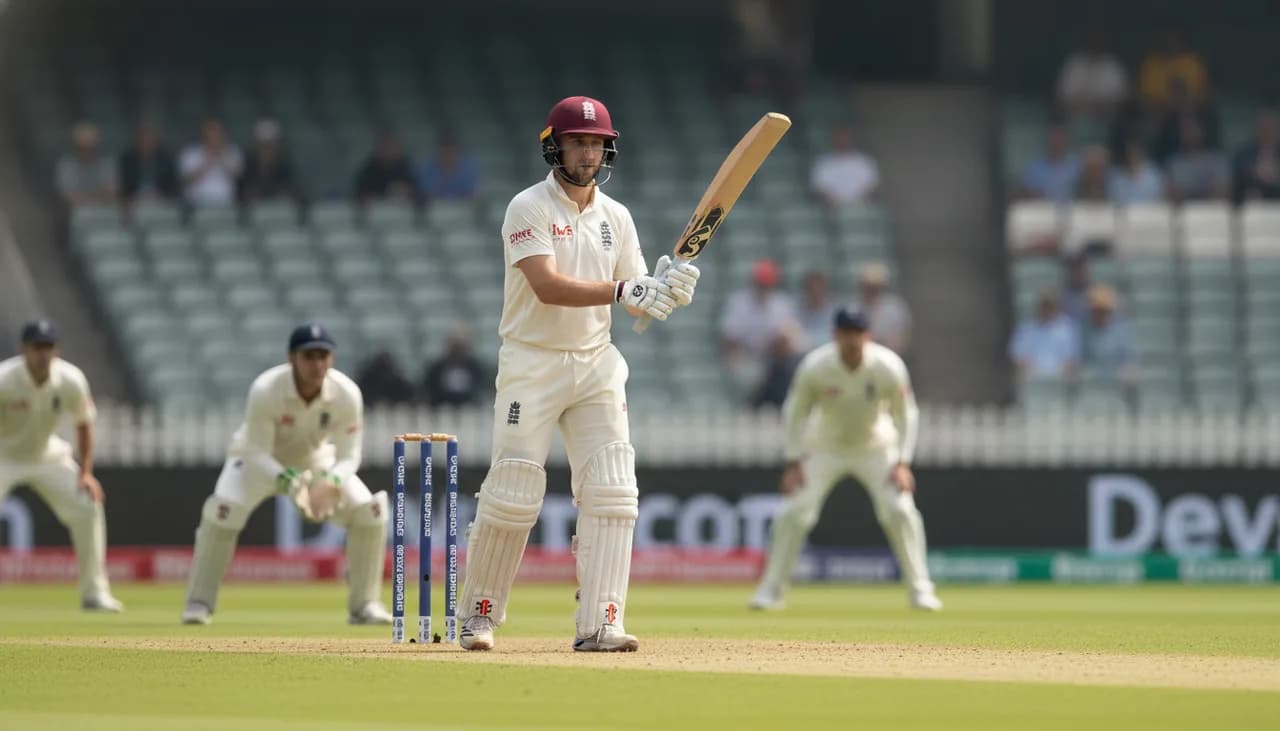
As the 2025-26 Ashes tour looms on the horizon, a curious and potentially costly subplot is unfolding within the England camp. The selection of Shoaib Bashir, the 20-year-old off-spinner, for the current tour of Australia was hailed as a bold, forward-thinking move. England had invested nearly two years in his development, with the express intention of having him ready to play a pivotal role Down Under. Yet, with four Tests played and the series poised at 2-2 heading into the final match in Perth, Bashir remains uncapped on Australian soil. The question now being asked with increasing urgency is: has Bashir, through sheer lack of opportunity, become 'unselectable' for the decisive Ashes finale?
The Long-Term Project
England's courtship of Shoaib Bashir is a well-documented story of identification and investment. First spotted by Somerset and England scouts, his tall frame, high release point, and prodigious turn marked him as a unique prospect. His Test debut came in challenging circumstances in India earlier this year, where he took wickets and, more importantly, displayed a temperament beyond his years. The selection for the Ashes tour was not based on a glut of county wickets, but on a specific "projection" – the belief that his style could be uniquely disruptive on Australian pitches.
The plan, as articulated by Captain Ben Stokes and Coach Brendon McCullum, was to acclimatise him early. He arrived with the squad weeks before the first Test, immersing himself in Australian conditions. The theory was sound: Australia's batters, bred on a diet of pace and facing Nathan Lyon's off-spin for a decade, could be vulnerable to a different type of slow bowler. As former England spinner Graeme Swann noted, "Bashir gets more bounce than most. In Australia, where the Kookaburra seam goes soft, that bounce can be a genuine weapon."
The Reality of the Series
However, the narrative of the series has stubbornly refused to follow England's script. The first three Tests in Brisbane, Adelaide, and Melbourne were dominated by pace and swing. England's seam attack, led by the relentless Gus Atkinson and the resurgent Mark Wood, took centre stage. The surfaces offered little for spin, and when a change was needed, the all-round skills of Chris Woakes or the left-arm angle of Sam Curran were seen as more versatile options. Bashir became a spectator.
The fourth Test in Sydney, traditionally the most spin-friendly venue in Australia, presented his clearest opportunity. Yet, England opted for the experience of Jack Leach, recalling the left-armer for his first Test in over a year. The reasoning was tactical; Leach's ability to bowl tight, containing lines to right-handers was deemed crucial against a powerful Australian middle order featuring the likes of Cameron Green. Stokes defended the decision, stating, "It's about what we feel is right for this specific challenge. Jack's control gives us a different dynamic."
The Unselectability Conundrum
This is where the problem crystallises. With each passing Test Bashir doesn't play, the perceived risk of selecting him for a high-stakes match increases exponentially. The reasons form a vicious cycle:
- Lack of Match Sharpness: He hasn't bowled a competitive delivery in a first-class match since September.
- Increased Pressure: Throwing him into a series-deciding Ashes Test in Perth would be an immense burden on a young player.
- Tactical Predictability: Australia's batters have had no live look at him, but he also has no recent form to build confidence upon.
As BBC Cricket correspondent Jonathan Agnew observed, "There's a world of difference between being a 'project' and being 'match-ready' for an Ashes decider. England may have backed themselves into a corner where selecting Bashir, the very player they brought for this purpose, now feels like an unnecessary gamble."
The Perth Equation
The final Test at the Optus Stadium in Perth presents a final, complex dilemma. The pitch is expected to be fast and bouncy, traditionally a paradise for pace. However, recent history suggests the abrasive surface and strong cross-breezes can offer opportunities for a spinner as the game progresses. Nathan Lyon has enjoyed success there. The question for England is whether they stick with a four-pronged seam attack, possibly including both Wood and the returning Jofra Archer, or if they finally pull the trigger on their long-term plan.
Selecting Bashir would be the ultimate show of faith in their original vision. It would be a statement that they believe in his skill to transcend the conditions and his temperament to handle the occasion. Omitting him again, however, would render his entire tour a purely developmental exercise and raise serious questions about the initial selection strategy. Some pundits argue a middle ground exists. Former Australian captain Ricky Ponting suggested, "If they're unsure, they could play him as the second spinner alongside Leach. It's aggressive, but this England side doesn't do conservative."
A Crossroads for 'Bazball' Philosophy
The Bashir situation touches on a core tenet of the Stokes-McCullum era: bold, proactive selection based on potential and mindset. This philosophy has unearthed stars like Harry Brook and Ben Duckett. Yet, it now faces a test of its own. Is the faith in a player's "ceiling" enough to override the complete absence of recent match practice in the most high-pressure environment of all? The decision they make will be deeply revealing. Does 'Bazball' double down on its convictions, or does it pragmatically acknowledge that the realities of an Ashes series have overtaken a two-year plan?
Furthermore, the implications extend beyond this series. If Bashir is not considered for Perth, what does it mean for his immediate future? Confidence, especially for a young spinner, is fragile. Spending an entire marquee tour carrying drinks, despite being fit and ostensibly prepared, could be a significant psychological setback. As one county coach told BBC Sport anonymously, "You pick a kid for an Ashes tour to play. If he doesn't, you risk him feeling like a tourist, not a combatant. That's a hard tag to shake."
Conclusion: A Decision of Defining Significance
As England's selectors and leadership group ponder their XI for Perth, the Shoaib Bashir dilemma encapsulates the tension between long-term strategy and short-term exigency. They embarked on this path with a clear destination in mind: a tall, turning off-spinner causing havoc in Australia. The path, however, has been blocked by the compelling performances of their seamers and the tactical demands of each preceding Test. The investment has been made, but the dividend remains unclaimed.
Whether he plays or not, his absence from the field thus far has already altered his story. If selected, he walks into the cauldron with everything to prove and nothing to lose—a potentially liberating position. If omitted, his Ashes tour becomes a footnote, a case study in planning versus practicality. England's choice will not only reveal their confidence in Shoaib Bashir the bowler, but will also serve as a defining statement on the limits and convictions of their entire cricketing philosophy. The final answer to whether he is 'unselectable' will be delivered not in words, but on the team sheet for the Optus Stadium.