
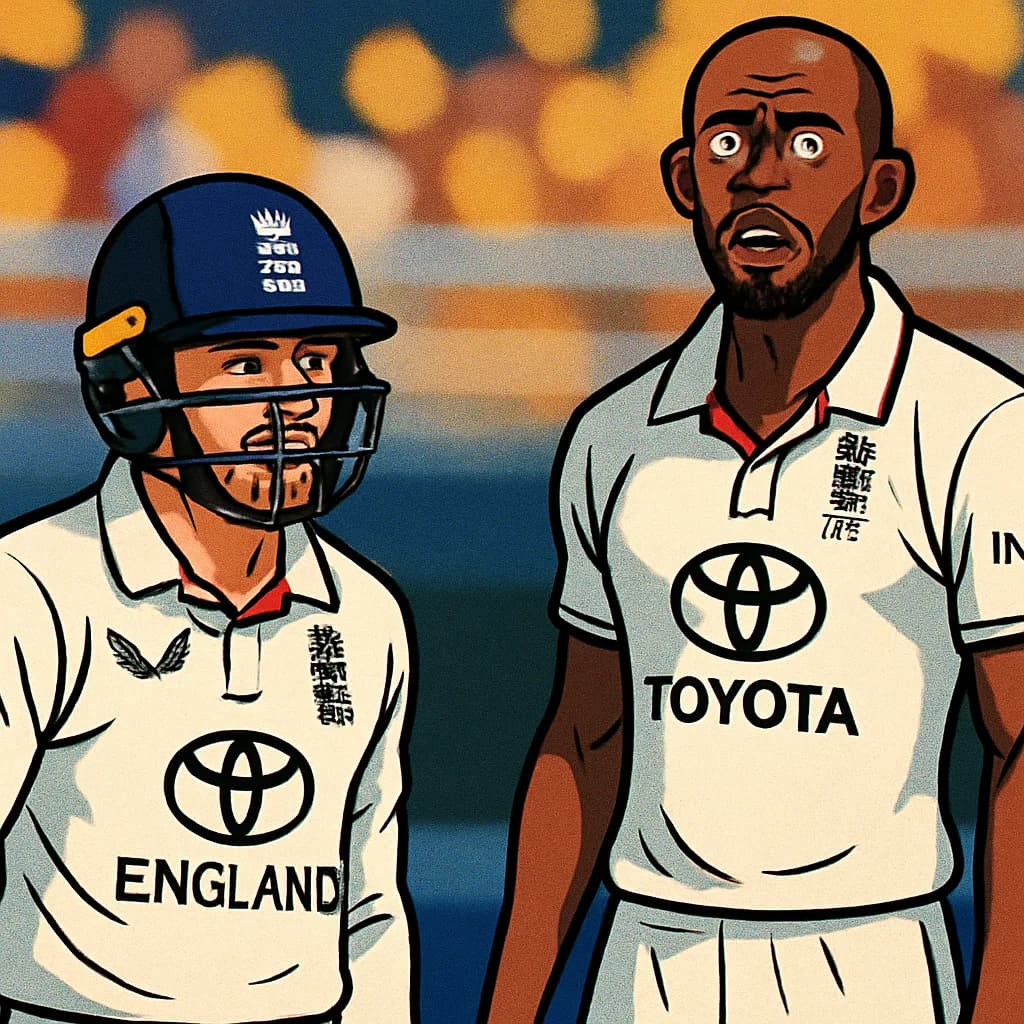
BRISBANE — The Ashes, cricket's oldest and most storied rivalry, is a theatre where every gesture, every piece of body language, is scrutinised under the harshest light. On the third day of the second Test at the Gabba, England's fast bowler Jofra Archer provided an unexpected talking point that had nothing to do with a searing bouncer or a cunning slower ball. Instead, it was the sight of him arriving at the ground carrying a pillow that drew sharp criticism from former Australian opener Matthew Hayden, who labelled it a "shocking look" for a professional athlete.
The incident occurred during the 2021-22 Ashes series, a tour defined by strict COVID-19 protocols and immense pressure on the visiting England side. Archer, a key component of England's pace attack, was managing a persistent elbow injury that had plagued him for months. His arrival at the Gabba with a pillow in hand was interpreted by some, including Hayden on commentary for Fox Cricket, as a sign of softness or a lack of professional focus at a critical juncture in the series, which Australia was dominating.
Hayden's Blunt Assessment on Air
Matthew Hayden, renowned for his aggressive and uncompromising approach at the crease, did not mince his words when the camera panned to Archer. His commentary, delivered with the forthrightness characteristic of his playing days, immediately framed the narrative. "That is a shocking look for a professional cricketer," Hayden declared. He expanded, questioning the mentality it projected: "You're coming to the Gabba, day three of an Ashes Test match, you're 0-1 down, and you're bringing a pillow to the ground? What is going on?"
Hayden's critique centred on the perceived symbolism. In the macho, endurance-testing environment of Test cricket, and particularly the Ashes, such an act was seen as antithetical to the "hard man" image often associated with fast bowlers. For Hayden, it represented a comfort-seeking mentality at odds with the sacrifice and grit required. "It's about the mindset," he argued. "You're here to do a job, you're here to win a Test match. A pillow? Really?"
Context: Bio-Bubbles, Injury, and Misunderstanding
While Hayden's comments resonated with a certain old-school perspective, they largely ignored the complex context surrounding Archer and the modern touring cricketer. The 2021-22 Ashes was played under stringent biosecurity "bubble" conditions, which isolated players from normal life and confined them to hotels and grounds. The psychological toll of these bubbles was widely documented, with players seeking small comforts to alleviate the monotony and stress.
More critically, Jofra Archer was battling a career-threatening stress fracture in his right elbow. The injury required meticulous management, including extensive rest and rehabilitation sessions. The pillow was widely reported by team sources and journalists close to the England camp to be related to his treatment—likely for use during physiotherapy or to provide support while resting the injured arm. This practical explanation, however, was lost in the immediate visual and Hayden's forceful commentary.
The episode highlighted a growing cultural clash in cricket understanding:
- The Traditional View: Espoused by Hayden, values a Spartan, no-comforts-allowed attitude where any sign of perceived weakness is criticised.
- The Modern Reality: Acknowledges the intense physical and mental demands of year-round cricket, where injury management and player well-being are paramount for performance and longevity.
Broader Reactions and the Defence of Archer
The reaction to Hayden's comments was mixed. While some former players and fans agreed with his sentiment, many others, including journalists and sports science professionals, rushed to Archer's defence. They pointed out that criticising an athlete for managing a serious injury was deeply unfair. England captain Joe Root, while not addressing the pillow incident directly, consistently backed Archer throughout the tour, emphasising the bowler's importance and the need to handle his fitness with care for the long term.
Prominent cricket writer Geoff Lemon summarised the counter-argument succinctly, stating that the criticism was a "bizarre overreaction to a non-event." He and others argued that in an era where players use cryotherapy chambers, hyperbaric chambers, and advanced mobility devices, a pillow was a mundane tool for recovery, not a symbol of frailty.
The Aftermath and Lasting Perception
The pillow incident became a minor but persistent footnote of the 2021-22 Ashes. For Archer, the tour was a personal ordeal; his elbow injury worsened, and he would subsequently undergo multiple surgeries, facing a near two-year absence from Test cricket. The criticism over the pillow seemed trivial in the shadow of this significant physical battle.
However, the story endured because it touched on deeper themes in sports culture: the judgment of athletes' professionalism based on appearance, the generational gap in attitudes towards player welfare, and the media's role in amplifying minor incidents into major controversies. Hayden’s comments, for better or worse, cemented the moment in Ashes folklore as an example of Australian punditry holding an opponent to a fiercely competitive standard.
In retrospect, the episode serves as a case study in the importance of context. What was portrayed as a lapse in professionalism was almost certainly a pragmatic measure for injury management by an athlete operating under extraordinary physical and mental strain. The "shocking look" was, for many, only shocking because it was misinterpreted through a narrow, traditional lens.
The final word might best be left to a perspective that balances both sides. As former England captain Michael Atherton later reflected, while understanding the old-school viewpoint, "In the age of sports science, we perhaps need to be slower to judge. That pillow probably had more to do with an ice pack than a desire for a nap." The incident at the Gabba remains a vivid, if curious, reminder that in the high-stakes drama of the Ashes, even the most mundane personal items can become a subject of intense scrutiny and debate.