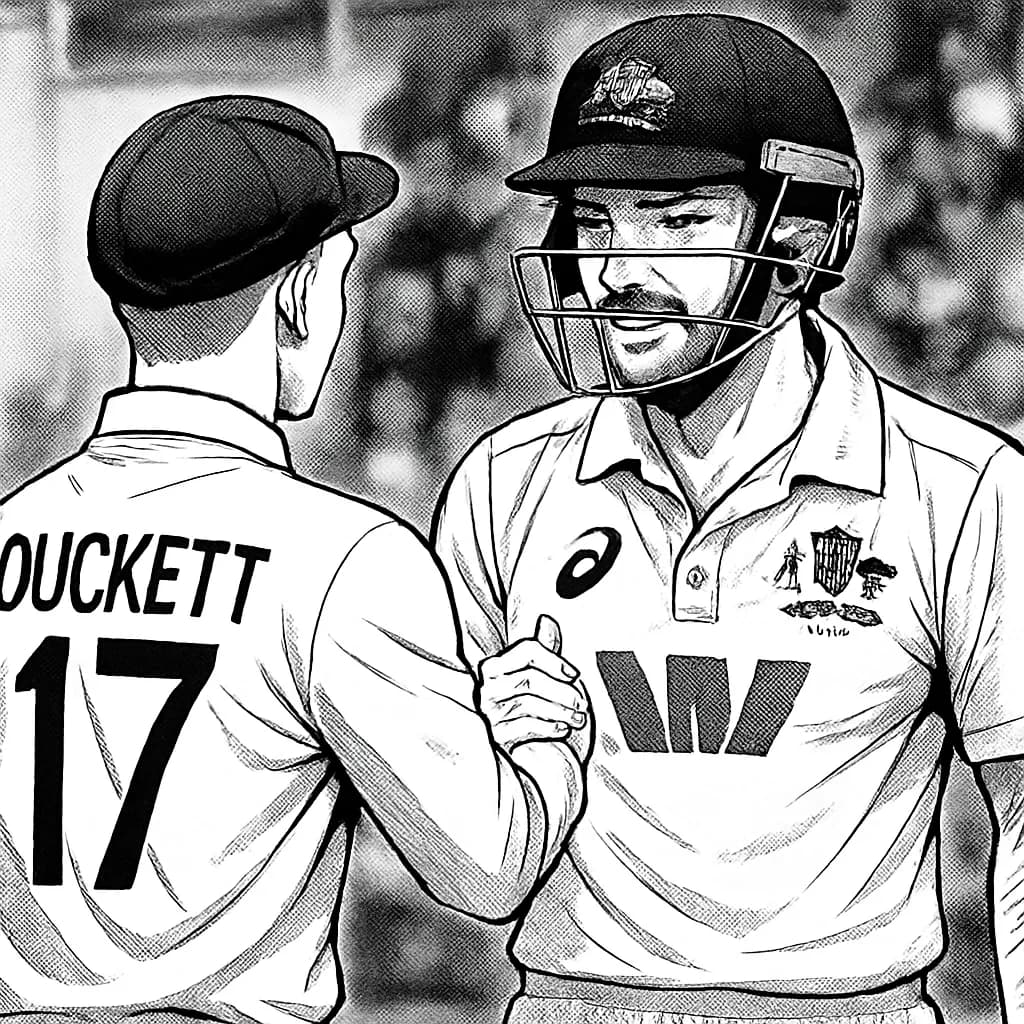
MELBOURNE — In a display of sportsmanship that transcended the fierce Ashes rivalry, Australian opener Travis Head has revealed he personally reached out to England's Ben Duckett after a controversial social media video emerged ahead of the Melbourne Test during the 2021-22 series. The video, which showed Head playfully mocking Duckett's batting, sparked criticism and threatened to overshadow the on-field contest.
The incident occurred during a light-hearted moment in the Australian dressing room after the Adelaide Test. A clip posted to social media showed Head, celebrating Australia's victory, mimicking a left-handed stance and joking about Duckett's approach. While intended as internal banter, the video's public release led to accusations of disrespect from some English fans and pundits, putting the spotlight on player conduct off the field.
The Incident and Immediate Fallout
The video quickly gained traction online, with many interpreting it as a targeted slight against Duckett, who was touring as a reserve batter and had not played in the match. The timing was particularly sensitive, coming between Test matches in a heated series. Head, realizing the clip had been misconstrued and caused unintended offense, took immediate and direct action to defuse the situation.
In a recent interview on the Gilly and Goss podcast, Head explained his thought process: "I just wanted to reach out and make sure he knew that there was no malice behind it. It was a couple of beers after a Test match, celebrating a good win." He emphasized that the mimicry was not a serious critique but a moment of camaraderie that escaped its intended confines.
A Private Conversation to Clear the Air
Head described contacting Duckett directly to ensure there was no bad blood. "I just sent him a message and said, ‘Hopefully you’ve seen the funny side to it. It’s all good banter.’" The Australian batter stated that Duckett was understanding and accepted the explanation in the spirit it was intended. This private resolution prevented the issue from festering and becoming a media-driven distraction for both teams.
The episode highlighted the modern challenge athletes face in an era of ubiquitous smartphones and instant social media sharing. What stays in the dressing room often no longer does. Head reflected on this, noting the need for players to be increasingly mindful, even in private celebrations. The key takeaways from the incident include:
- The fine line between internal team banter and public perception.
- The importance of personal accountability in managing off-field narratives.
- How direct communication can swiftly resolve potential conflicts before they escalate.
Broader Context of Ashes Camaraderie
This incident, and Head's handling of it, fits into a broader history of respect between Ashes rivals despite the intense competition. Players often share drinks after matches, and many are teammates in various global T20 leagues. Head's proactive approach underscored that the rivalry, while fierce, is ultimately rooted in mutual respect. "It’s a tough, competitive environment but we all respect each other," Head remarked, contextualizing his actions.
The Role of Social Media
The Head-Duckett episode serves as a case study in modern sports diplomacy. Social media can amplify moments, stripping them of context and nuance. Head’s decision to bypass public statements and go straight to the source—Duckett himself—was widely praised as the mature and effective path. It acknowledged the reality of the digital age while adhering to the old-fashioned principle of a direct, man-to-man conversation.
Moving Forward and Lessons Learned
The resolution had a positive outcome. No lingering animosity affected the subsequent Melbourne Test, and both players have since competed against each other without issue. For Head, the experience was a learning moment about the magnifying glass under which international cricketers, especially in an Ashes series, constantly live.
He concluded, "You’ve got to be careful… but at the end of the day, we’re out there playing competitive sport and what happens on the field stays on the field. What happens off the field, you try and look after as much as you can." This sentiment captures the dual responsibility of the modern athlete: to compete with unrelenting passion while navigating the interpersonal and public relations aspects of the sport with equal care.
Conclusion: Respect Above Rivalry
Travis Head's decision to reach out to Ben Duckett stands as a testament to the character often required behind the scenes in professional sport. It reinforced that while the Ashes battle is fought with immense intensity for public consumption, the relationships between players are governed by a code of respect. By taking personal responsibility for a misunderstood moment, Head ensured that a minor off-field incident did not become a major distraction, preserving the focus on the cricket where it belongs. In the end, the story became less about a viral video and more about the maturity and sportsmanship that defines the spirit of the game at its best.