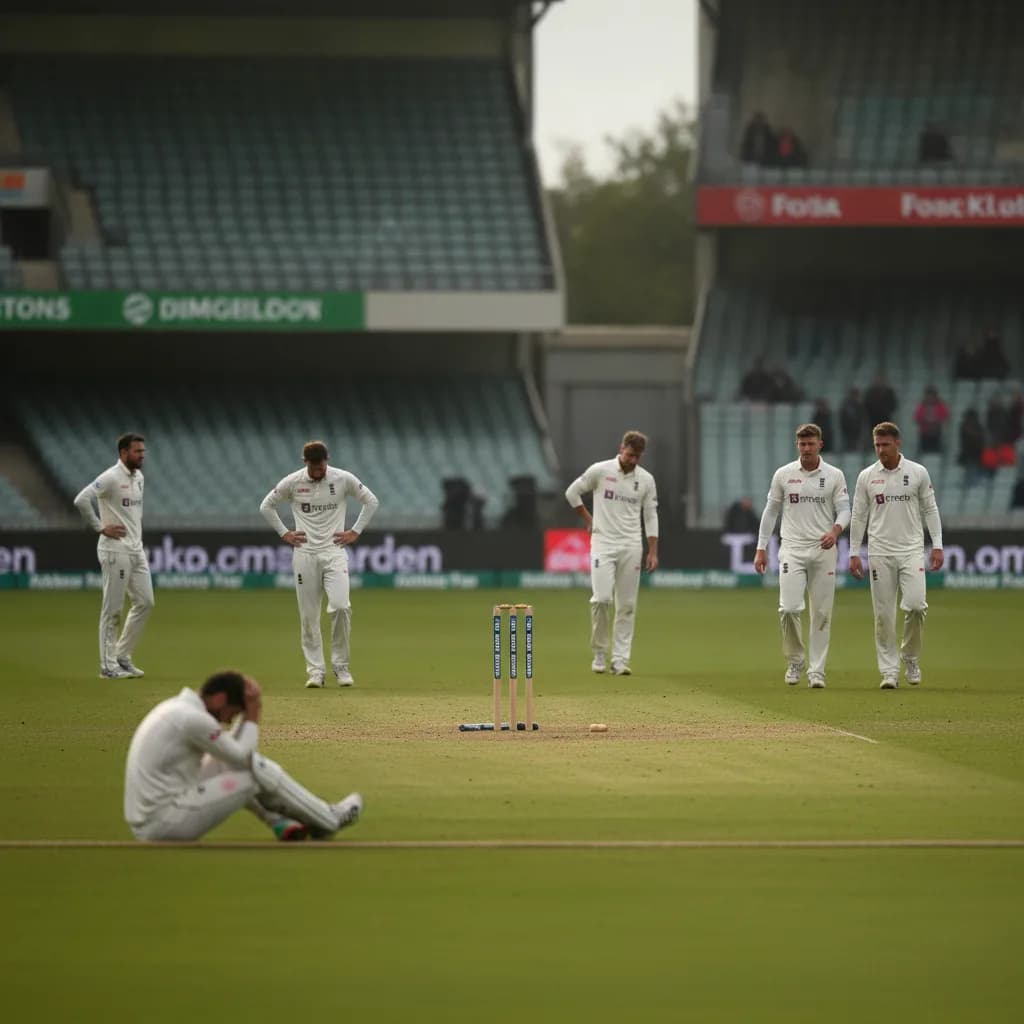
There are upsets, there are shocks, and then there is Japan nearly beating India at cricket. World champions India somehow found themselves on the brink of an embarrassing defeat in a one-off T20 fixture, eventually escaping with a two-run win — though not without the kind of controversy that will fuel debate for weeks to come.
Japan Restrict India to a Paltry Total
With the match reduced to five overs per side, India — a side that has dominated world cricket in recent years — mustered only 32-4 from their allocation. That is a number most decent club sides would fancy chasing, and it speaks volumes for just how well Japan's bowlers performed. Teenage spinner Charlie Hara-Hinze was the standout with figures of 2-17, removing dangerous opener Abhishek Sharma for a golden duck and keeping India's middle order under relentless pressure. India were reduced to 14-3 at one stage, and only a composed knock of 16 from 12 balls by captain Shreyas Iyer prevented a truly catastrophic total. From a betting perspective, had this scorecard flashed up at the halfway stage, you would have struggled to find a bookmaker offering India at anything shorter than odds-on — quite rightly so.
Japan Push For a Famous Victory
Japan's chase began shakily, slipping to 8-2 inside two overs and threatening to let the opportunity slip away. But to their enormous credit, they regrouped and plundered 17 runs from the third and fourth overs, bringing the equation down to a very achievable eight off the final over. Kadowaki-Fleming top-scored with 12 from 12 balls in what was a disciplined if high-pressure innings. The dramatic finale meant Japan needed to rewrite history with every delivery, and for a while, it genuinely looked possible.
The Wide That Changed Everything
The decisive moment came mid-over when left-hander Alexander Shirai-Patmore attempted a reverse sweep against Axar Patel. The ball went past what would ordinarily be regarded as the leg side, and the square-leg umpire duly signalled wide. Axar was visibly unhappy, and skipper Iyer joined him in remonstrating with the officials. The two umpires consulted and, crucially, reversed the decision — no easy call without a Decision Review System in place for this fixture.
The reversal was legally defensible. ICC playing conditions for men's T20 internationals are clear that when a batter switches their grip and stance to attempt a reverse shot, both sides of the wicket are treated as the off side. A delivery that would otherwise be a leg-side wide is therefore not a wide in that scenario. So, technically, the correct ruling was ultimately reached. However, the manner in which it was overturned — through player pressure and without DRS — sits uncomfortably with the spirit of the game, which the ICC's own preamble specifically references, including the principle of accepting the umpire's original decision.
That single reversal shifted the equation from five needed off four balls to six needed off three, a change that ultimately proved decisive. Japan finished on 30-3, two runs short of glory.
A Wake-Up Call for India and a Proud Moment for Japan
India may have their two-run victory, but the performance will offer precious little comfort to supporters or selectors. Being restricted to 32-4 by Japan — regardless of the shortened format — is alarming, and this result should serve as a sharp reminder that no opponent in modern cricket should be taken lightly. For Japan, this was a magnificent display that will do wonders for the profile of cricket in the country. Any outright tournament odds featuring Japan in future should be treated with rather more respect than bookmakers might historically have afforded them.
As someone who has spent years coaching at various levels, I can say with confidence that performances like Japan's — disciplined, fearless, and tactically smart — are exactly what associate cricket needs to grow. The controversy may dominate the headlines, but let us not allow it to overshadow just how remarkable Japan's effort truly was.
Scorecard: India 32-4 (5 overs) — Iyer 16 (12), Hara-Hinze 2-17 | Japan 30-3 (5 overs) — Kadowaki-Fleming 12 (12), Washington 2-13. India won by 2 runs.