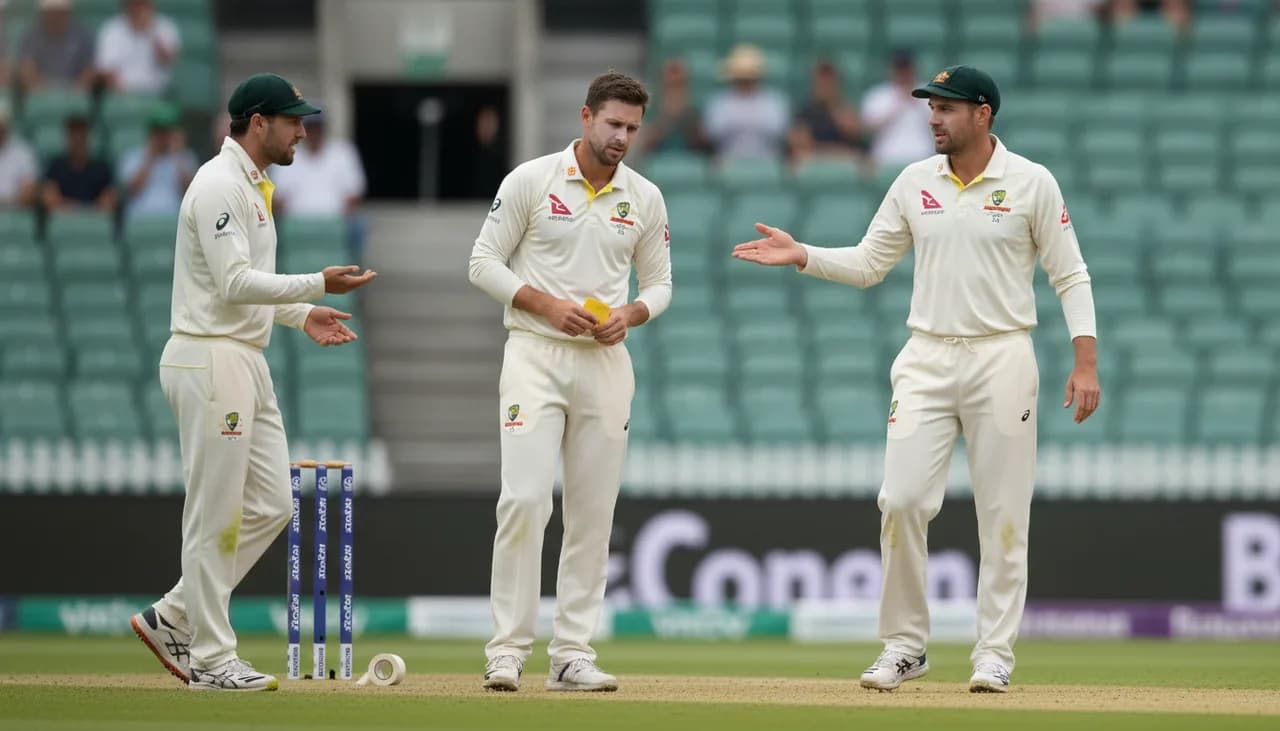
MELBOURNE — In a significant blow to Australia's T20 World Cup campaign, star fast bowler and Test captain Pat Cummins has been ruled out of the upcoming tournament in India and Sri Lanka due to a persistent back injury. The announcement came as Cricket Australia (CA) unveiled its final 15-man squad, with selectors opting for caution over risk with one of their most prized assets.
Cummins, 29, has been managing the injury for several weeks, but scans and medical advice have confirmed he requires a period of rest and rehabilitation. The injury is a lumbar stress fracture, a concerning ailment for fast bowlers that demands careful management. National selector George Bailey confirmed the news, stating the decision was made with Cummins' long-term future and a packed schedule in mind.
The Injury and Its Implications
The specific injury is understood to be a recurrence of a stress-related issue in the lower back. For a bowler of Cummins' pace and action, the repetitive force of delivery places immense strain on the lumbar spine. CA's head of sports science, Alex Kountouris, emphasized the non-negotiable nature of the recovery timeline: "Pat has had previous back issues, and this latest scan has shown an early-stage stress fracture. The healing process for these injuries is very clear, and attempting to rush back for a World Cup would be a significant long-term risk."
Cummins' absence leaves a gaping hole in Australia's bowling attack. Not only is he the world's top-ranked Test bowler, but his skills in the T20 format have become increasingly potent. His ability to bowl demanding overs in the Powerplay and at the death, combined with his improved batting lower down the order, makes him a multifaceted threat. His leadership, honed as Test and ODI captain, is also a loss in a high-pressure tournament environment.
Australia's Revised World Cup Squad
With Cummins out, selectors have turned to a blend of experience and specific role players to fill the void. The squad sees the return of all-rounder Mitchell Marsh, who himself is returning from injury, and the inclusion of dynamic wicketkeeper-batter Josh Inglis as a backup to Matthew Wade. The pace bowling responsibilities will now fall more heavily on the trio of Mitchell Starc, Josh Hazlewood, and Kane Richardson.
Chair of Selectors George Bailey, while disappointed, expressed confidence in the group: "It's always tough to lose a player of Pat's calibre, but we have built a squad with considerable depth and versatility. Our medical staff were unequivocal in their advice, and protecting Pat's career is our absolute priority. We believe we have the bowling firepower and all-round options to challenge in this tournament."
The final 15-player squad for the ICC Men's T20 World Cup 2022 is:
- Aaron Finch (c)
- Ashton Agar
- Tim David
- Josh Hazlewood
- Josh Inglis
- Mitchell Marsh
- Glenn Maxwell
- Kane Richardson
- Steve Smith
- Mitchell Starc
- Marcus Stoinis
- Matthew Wade
- David Warner
- Adam Zampa
A Crowded Calendar Forces Tough Choices
The decision to sideline Cummins underscores the immense physical toll of modern cricket's schedule. The T20 World Cup, scheduled for October and November, is followed almost immediately by a home Test summer featuring a marquee series against the West Indies and South Africa, and then a crucial tour of India for the Border-Gavaskar Trophy in early 2023. Bailey acknowledged this delicate balancing act: "The calendar is relentless. We have to be smart and work with our medical team to ensure our players are managed appropriately across all formats. Pat is central to our plans in Test cricket, and his recovery is paramount."
This injury also reignites the debate about player workload management in an era of franchise leagues, international duties, and packed bilateral series. Cummins, like many top stars, has been in near-constant action, featuring prominently in the recent Ashes series, ODI tours, and the Indian Premier League. The back injury serves as a stark reminder of the physical price fast bowlers pay.
Who Steps Up in Cummins' Absence?
The onus now shifts to the remaining pace attack. Mitchell Starc will be expected to lead the new-ball charge with his swinging yorkers, while Josh Hazlewood's impeccable length and economy will be crucial in the middle overs. The third seamer role, likely shared between Kane Richardson and all-rounders Marcus Stoinis and Mitchell Marsh, becomes even more critical. Richardson's variations and experience in subcontinent conditions could prove particularly valuable.
Furthermore, the role of the spin duo of Adam Zampa and Ashton Agar expands. In conditions expected to favour slower bowling, their combined 12 overs per match will be key to restricting opponents. Glenn Maxwell's off-spin also provides a handy part-time option, adding to the team's tactical flexibility.
Cummins' Focus Shifts to Recovery
For Pat Cummins, the immediate focus is on a structured rehabilitation program. The typical recovery period for a lumbar stress fracture is several weeks of rest from bowling, followed by a graduated return to loading. In a statement, Cummins expressed his disappointment but accepted the medical advice: "Representing Australia at a World Cup is a huge honour, and I'm gutted to miss out. My back has been bothering me for a while, and the scan clearly showed what needed to be done. I'll be supporting the guys from home and will focus on getting myself right for the summer ahead."
His target return is likely the start of the Australian Test summer in late November, provided his recovery progresses without setbacks. The management of this injury will be watched closely, as Cummins is not only the Australian captain but also a linchpin of the bowling attack across all formats.
Conclusion: A Setback, But Not a Disaster
While the loss of Pat Cummins is undeniably a major setback for Australia's T20 World Cup title defence, it is not a fatal blow. The selected squad remains packed with match-winners and T20 specialists who have proven themselves on the global stage. The tournament, being held in conditions that may negate some pure pace, could see spin and batting depth become the decisive factors—areas where Australia is still well-equipped.
The episode, however, serves as a critical moment for cricket administrators worldwide. The increasing frequency of such injuries to premier fast bowlers highlights an unsustainable workload crisis. For now, Australia must adapt and overcome, hoping their depth can carry them through, while their champion fast bowler begins the careful journey back to full fitness.