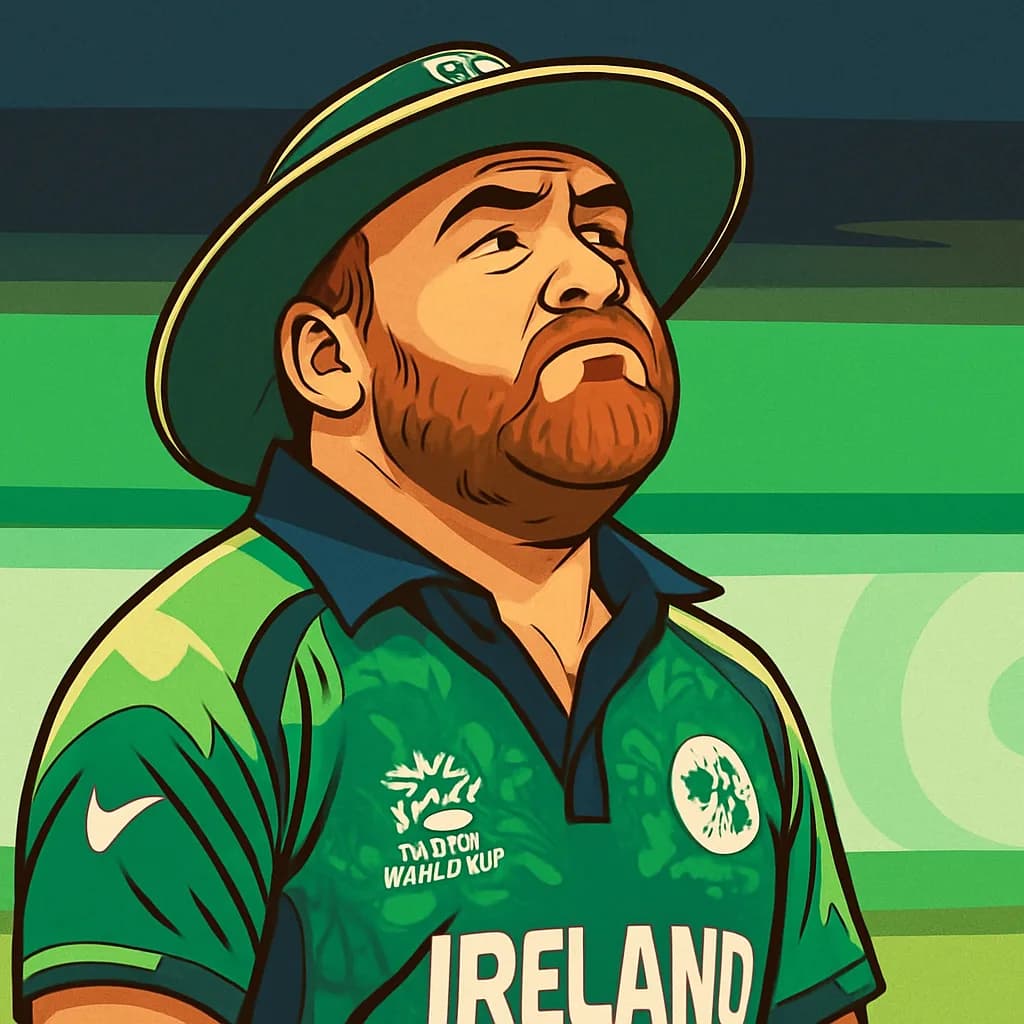
DUBLIN — Ireland men's white-ball captain Paul Stirling has issued a stark warning about his team's readiness for the upcoming T20 series against England, citing a severe lack of competitive cricket this summer that has left the squad "obviously disappointed" and underprepared.
With just a three-match T20 International series against their formidable neighbours on the horizon, Stirling expressed significant concern over the sparse international schedule afforded to his team, a situation he believes hampers their ability to compete at the highest level and build crucial momentum.
A Sparse Summer Schedule
Ireland's 2024 home summer is conspicuously lean. Following the England T20Is in late May, the team faces no further fixtures until a visit from Zimbabwe for five T20Is in early October. This lack of game time is a point of major frustration for the captain and the playing group, who are eager to test themselves against top-tier opposition more regularly.
Stirling did not mince his words when addressing the media, stating, "We're obviously disappointed with the amount of cricket we've got this year. It's something we've spoken about for a long time. We want to be playing as much cricket as we can, and we want to be testing ourselves against the best teams."
The scheduling issue is not new for Associate nations like Ireland, but its impact is acutely felt. The team's primary preparation for facing a full-strength England side, one of the favourites for the imminent T20 World Cup, has been domestic competitions and internal training sessions.
The Challenge of Facing England
The three-match series, starting at Headingley on May 22nd before moving to Edgbaston and the Seat Unique Stadium in Bristol, pits Ireland against an English team loaded with world-class talent. For Ireland, these matches represent a golden opportunity to cause an upset and gain invaluable experience.
However, Stirling admits the preparation is far from ideal. "It's a huge challenge for us. They are one of the best teams in the world, and we're going in a little bit underprepared, there's no point hiding away from that fact," he conceded.
The captain highlighted the stark contrast in preparation between the two sides. While England's players are immersed in the high-intensity environment of the Indian Premier League (IPL) and County Championship, Ireland's contingent has been largely reliant on:
- The ongoing inter-provincial series in Ireland.
- Franchise league appearances for a lucky few, like Josh Little in the IPL.
- Net sessions and strength and conditioning work without competitive match pressure.
This disparity in lead-in competition puts Ireland at a distinct disadvantage, making the task of defeating a juggernaut like England even more daunting.
Broader Context for Irish Cricket
Stirling's comments touch on a long-standing and critical issue in the global cricket landscape: the widening gap between the privileged FTP (Future Tours Programme) of Full Member nations and the ad-hoc scheduling of Associates.
Despite impressive performances in recent World Cups, including famous victories over England and the West Indies, Ireland consistently struggles to secure bilateral series against the world's top teams. These series are vital for:
- Player development and exposure to different conditions.
- Generating crucial revenue for Cricket Ireland.
- Building a consistent team rhythm and strategy.
- Maintaining fan engagement and growing the sport domestically.
The financial realities of the sport often mean that boards like the ECB (England and Wales Cricket Board) prioritize lucrative series against other Big Three nations (India and Australia), leaving smaller windows for contests against teams like Ireland.
Looking Ahead: The World Cup and Beyond
The timing of this series is particularly poignant as it serves as a final tune-up for England before they defend their T20 World Cup title in the Caribbean and the United States. For Ireland, it is one of their only competitive outings before they themselves travel to the same tournament.
Stirling remains pragmatic, focusing on the positives his team can take from the opportunity. "Any time you get to play against England in their own conditions is a fantastic experience for the group. We'll be going out there to be competitive and to try and win games of cricket, as we always do."
He also pointed to the emergence of young talent as a reason for optimism, noting that the series provides a perfect stage for new players to announce themselves on the international scene, much like Lorcan Tucker and Harry Tector have done in recent years.
A Call for Change
While disappointed, Stirling's comments are less a complaint and more a passionate plea for a more equitable future. The captain is advocating for a structured pathway that allows emerging nations consistent and meaningful competition.
"It's a conversation that needs to be had at a higher level," he stated, emphasizing that for Ireland to continue its progression and compete consistently, the volume and quality of fixtures must increase.
The message from the Irish camp is clear: they possess the talent and the desire to compete with the best, but they are being held back by a international calendar that does not provide them with the necessary tools to succeed. As they walk out at Headingley, they will be playing not just for a victory, but for the future of cricket in their country.
The series represents a classic clash of circumstances: a cricketing superhouse fine-tuning its engine versus a hungry, talented team desperate for miles on the clock. Ireland, as Stirling admits, may be underprepared, but they will certainly not be lacking in fight.