BENONI — Ireland’s hopes of ending their tour of South Africa on a competitive high were washed away in a deluge on Tuesday, as the third and final T20 International at Willowmoore Park was abandoned without a ball being bowled. Persistent heavy rain, accompanied by dramatic lightning strikes, rendered the outfield waterlogged and unsafe, leaving both teams to share the series spoils.
The abandonment confirmed a 1-1 series draw, a respectable result for the touring Irish side against the reigning world champions. South Africa had taken the opener in Pretoria by 44 runs, before Ireland bounced back with a stunning six-wicket victory in the second match at the same venue, chasing down a target of 159 with seven balls to spare.
A Frustrating Anti-Climax to a Promising Series
The final match was poised to be a compelling decider. Ireland’s confidence was sky-high after their historic win on Sunday, their first-ever T20I victory against South Africa on South African soil. The Proteas, meanwhile, were eager to reassert their dominance with a more clinical performance. Instead, fans and players were left staring at the gloomy Benoni skies.
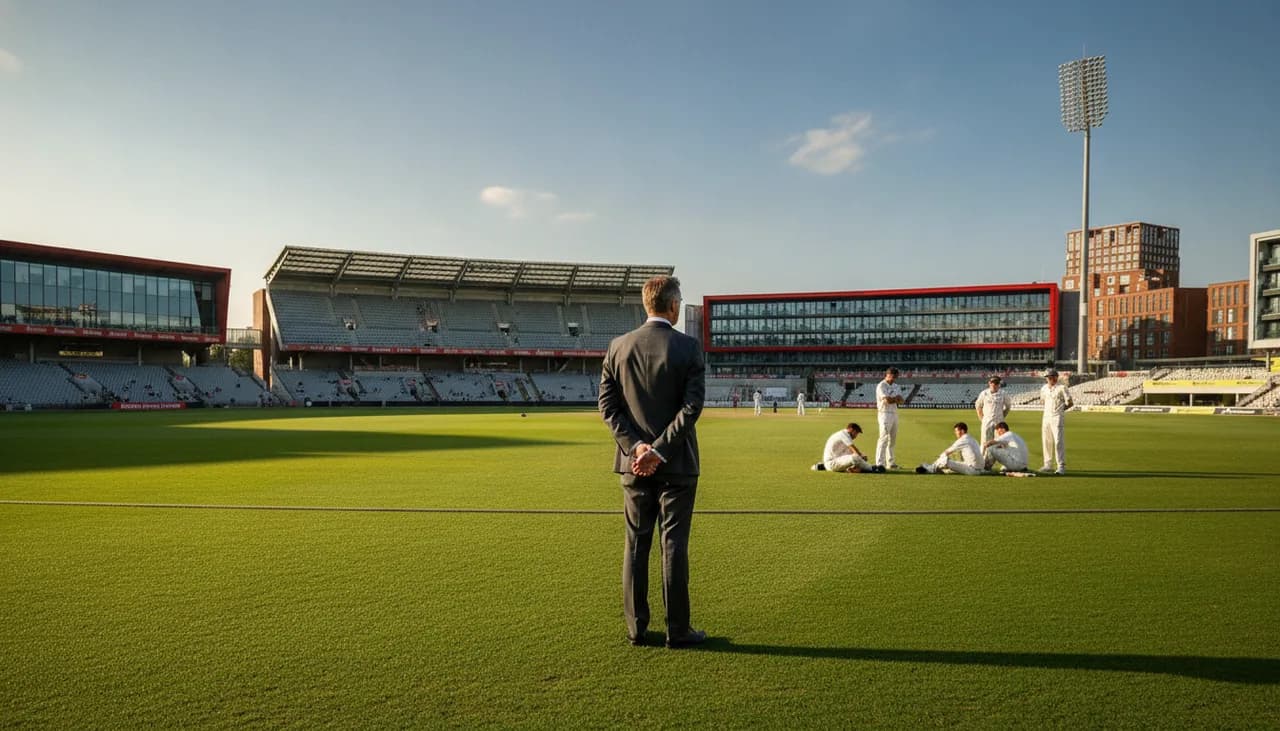
Match officials conducted multiple inspections throughout the afternoon, but the weather was unrelenting. Puddles formed across the playing surface, and despite the best efforts of the ground staff, the conditions never improved sufficiently to allow for even a reduced-overs contest. The official call was made shortly after 5:00 PM local time.
Ireland’s captain, Paul Stirling, expressed the collective disappointment but reflected on the tour's positives. "It's a frustrating way to end, of course," he said. "We were really up for the challenge today, but the weather had the final say. You can't control that. Looking at the series as a whole, to come here and level it 1-1 against a team of this quality is a massive achievement for us."
Ireland's Tour Highlights and Key Takeaways
Despite the damp finish, Ireland’s tour of South Africa will be remembered for significant strides. The landmark victory in the second T20I showcased their growing capability to compete with and beat the very best. The performance was built on a complete team effort, featuring several standout individual contributions that bode well for the future.
Key positives for Ireland included:
- Lorcan Tucker's Form: The wicketkeeper-batter was exceptional, top-scoring in both completed matches with 78 and 56 respectively.
- Bowling Discipline: The attack, led by Josh Little and Mark Adair, successfully restricted a powerful South African batting lineup in the second game.
- Fielding Prowess: Sharp catching and ground fielding, notably from Harry Tector and Curtis Campher, created crucial pressure.
South African captain, Aiden Markram, acknowledged Ireland’s competitive spirit. "Credit to Ireland, they outplayed us in that second game and showed why they are a dangerous side," he stated. "It’s a pity we couldn’t get a decider in today, but we’ll take the lessons from this series as we build towards the World Cup."
The Bigger Picture: T20 World Cup Preparations
This series held added importance for both nations as crucial preparation for the ICC Men’s T20 World Cup, co-hosted by the West Indies and the United States in June. For Ireland, competing in Group A alongside India, Pakistan, Canada, and the USA, the confidence gained from beating a top-tier side is invaluable.
South Africa, placed in Group D with Sri Lanka, Bangladesh, Netherlands, and Nepal, will be more concerned with finding consistency. Their batting, while explosive, showed fragility, and the bowling attack missed the rested Kagiso Rabada’s potency in the middle overs. The washed-out game denied them a chance to test combinations one final time on home soil.
Ireland’s head coach, Heinrich Malan, emphasized the developmental value of the entire multi-format tour, which also included a 2-0 loss in the ODI series. "The exposure for our players in these conditions against this quality of opposition is irreplaceable," he noted. "We’ve seen areas where we’ve improved and areas we need to sharpen up. We’re building a squad with depth, and that’s what you need for world tournaments."
Weather Woes: A Recurring Theme in Benoni
Unfortunately, the abandonment added to Willowmoore Park’s recent reputation for weather-affected matches. The venue has seen several high-profile games, including domestic finals, disrupted or decided by the Duckworth-Lewis-Stern method due to the region’s volatile summer thunderstorms.
This has sparked renewed discussion among cricket administrators about the scheduling of international matches at this time of year in the Highveld. While the weather is often glorious, the risk of afternoon thunderstorms in January and February is historically high, potentially undermining the spectacle for fans and the competitive integrity of series deciders.
Conclusion: A Series Drawn, Respect Earned
In the end, the Benoni washout could not dampen the significance of Ireland’s achievements on this tour. While a winner-takes-all finale would have been the ideal climax, securing a drawn T20 series against South Africa represents a major milestone for Irish cricket. It proves their capability is not limited to occasional upsets but includes sustained, high-level performance.
For South Africa, the series served as a timely reminder that there are no easy games in modern T20 cricket. As both teams now shift their focus to the global stage in June, they do so having been tested and challenged. Ireland will travel with belief bolstered, while the Proteas will be keen to refine their game, ensuring that when the World Cup arrives, they are ready to weather any storm—metaphorical or otherwise.
The final word perhaps belongs to Ireland’s Paul Stirling, who captured the tour’s essence: "We came here to test ourselves and to learn. We’ve done that, and we’ve shown we belong. Now the real work begins for the World Cup."