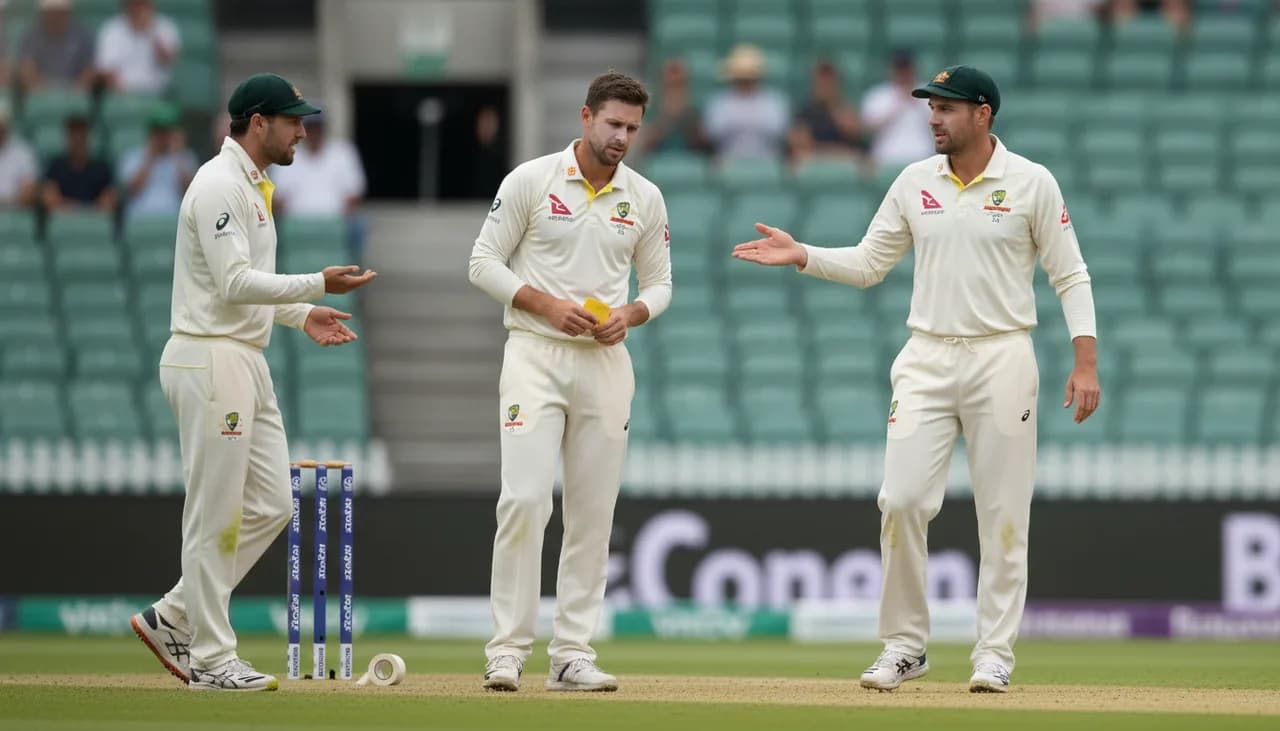

The dust has settled on the Gabba, but the conversation is only just beginning. After Australia and England played out the first two-day Ashes Test in 104 years, the cricketing world is asking a single, pressing question: Is batting becoming an impossible task in Australia?
The first Test of the 2025-26 Ashes series was a blur of pace, seam, and shattered stumps. Wrapped up in just 136.5 overs across two days of frantic action, it was a throwback to a bygone era, a result that has ignited a fierce debate about the nature of pitches and the balance between bat and ball down under.
A Relentless Pace Onslaught
The numbers from the Gabba tell a stark story. England, bowled out for 147 and 168, never looked settled. Australia fared little better, managing 189 in their first innings before chasing a paltry 127 for victory. The star of the show was undoubtedly the pitch, offering consistent bounce, significant seam movement, and disconcerting pace from the first session. Pat Cummins and Mitchell Starc were unplayable at times, but England’s Mark Wood and Gus Atkinson also found conditions to their supreme liking.
Former England captain Michael Atherton, commentating for Sky Sports, captured the mood, stating, "This wasn't a contest between bat and ball; it was an execution. The batters were simply passengers in a game dominated by the bowlers and the surface. It makes for compelling, if brief, viewing, but it raises serious questions about the desired characteristics of a Test match pitch."
The Trend: A Shift in Australian Cricket
This Gabba Test is not an isolated incident. It fits into a growing pattern over recent Australian summers. While the nation has long been known for its hard, fast, and bouncy tracks, there is a sense that the balance has tipped. The 2021-22 Ashes saw several low-scoring affairs, and the preceding series against Pakistan and West Indies also featured pitches where survival, let alone run-scoring, was a monumental challenge.
Several factors are being cited for this shift:
- Drop-in Pitches: The increased use of drop-in pitches at major grounds like Adelaide, Melbourne, and Perth.
- Kookaburra Ball: The pronounced seam on the Australian Kookaburra ball in recent years.
- Climate & Preparation: Changing weather patterns and more aggressive pitch curation.
Australian coach Andrew McDonald offered a pragmatic, if controversial, defence of the conditions, arguing, "We play to our strengths. Our strength is our world-class pace attack. There's no point preparing flat tracks that nullify that advantage. This is Test cricket, it's meant to be tough. Batters need to find a way."
The Drop-In Pitch Conundrum
The move to drop-in pitches was initially intended to create more consistent, batsman-friendly surfaces for multi-use stadiums. However, curators have struggled to replicate the traditional character of each ground. The result has often been pitches that lack the wear and tear of old, remaining hard and true for the bowlers for the entire match, rather than breaking up to favour spin on days four and five.
The Ripple Effect on the Series
The two-day finish has immediate and significant implications for the rest of the Ashes series. With such a short game, bowlers from both sides have had minimal workload, meaning they will be fresh and raring to go for the second Test at the MCG. This sets the stage for another potentially explosive and abbreviated contest.
England captain, Ben Stokes, while disappointed with the result, refused to criticise the pitch outright. In his post-match press conference, he remarked, "It's the same for both teams. We just didn't adapt as well as they did. We'll be better for the experience, but it does make you wonder what's coming next."
The concern for administrators and fans alike is the commercial and sporting impact. A two-day Test represents a significant financial loss for broadcasters and grounds. More importantly, it deprives the contest of the narrative ebbs and flows that define a great Test series. Can a five-match series retain its prestige if matches are consistently over in three days?
A Global Perspective on Pitch Debate
This is not a uniquely Australian problem. Recent tours of India have seen matches finish in two and three days on raging turners, while England’s ‘Bazball’ revolution has, at times, been aided by flat, fast-scoring tracks. The global challenge is finding a standard that provides a fair contest. Former Australian wicketkeeper and commentator, Adam Gilchrist, summed up the dilemma, saying, "We decry roads, then we decry minefields. The perfect pitch is the holy grail, and it seems we're further away than ever."
The International Cricket Council (ICC) rates pitches as part of its monitoring process, and the Gabba surface is likely to be officially scrutinised. A "poor" or "below average" rating could lead to a demerit point for the venue, with the threat of a suspension from hosting international cricket if multiple demerits are accrued.
Conclusion: An Uncertain Future
The first Ashes Test of 2025 was a spectacle of fast bowling, a dramatic and brutal advertisement for the sport's most demanding format. Yet, it also served as a stark warning. While bowlers deserve conditions that reward skill, the art of batting cannot be allowed to become a lottery. The spectacle of Test cricket relies on the tension between the two.
As the teams travel to Melbourne, all eyes will be on the MCG pitch. Another green-top and a three-day finish will confirm a worrying trend. A more balanced surface, however, could provide the epic, back-and-forth battle that this historic rivalry deserves. The answer to the question "Is batting getting harder?" will define not just this Ashes series, but the future character of Australian Test cricket.