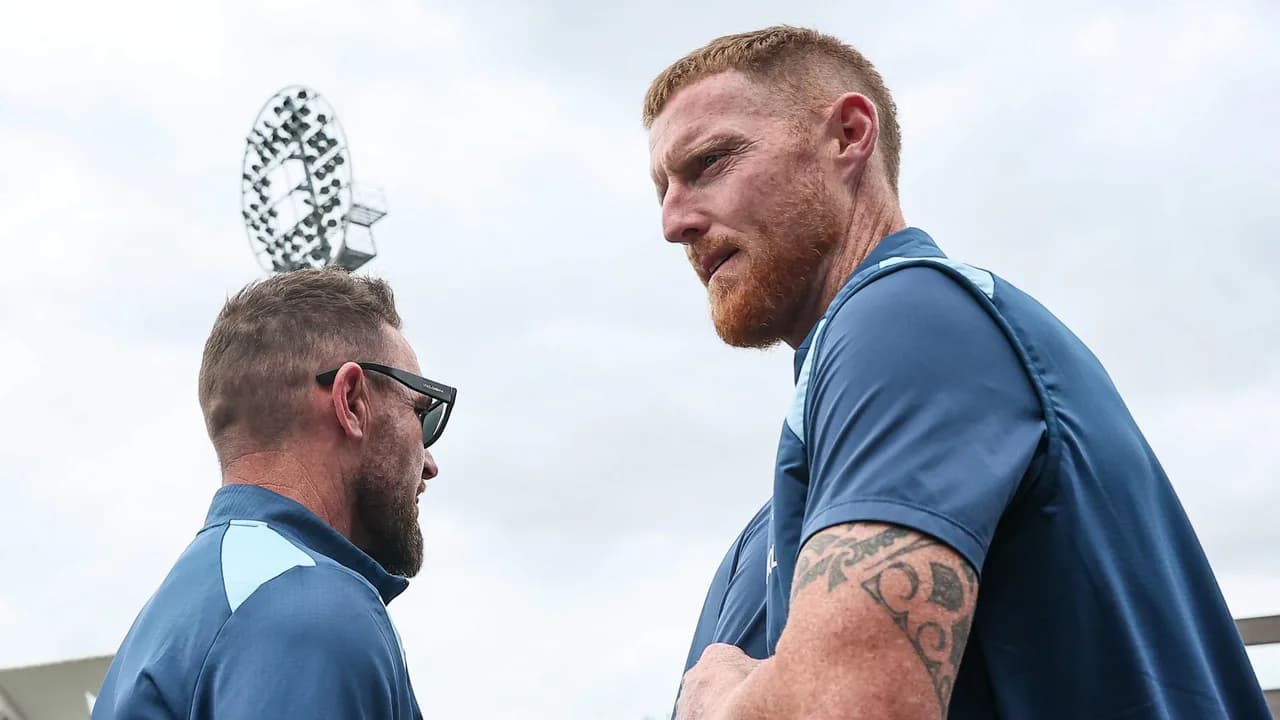

LONDON — Rob Key, the managing director of England men's cricket, has issued a public apology to supporters for the team's dismal performance in the 2023-24 Ashes tour of Australia, describing their efforts as operating at "20%" of their potential. However, he has emphatically backed captain Ben Stokes and head coach Brendon McCullum to lead the team forward, insisting the much-vaunted 'Bazball' philosophy is not to blame for the 4-0 series defeat.
Key's apology comes after a tour where England, despite moments of competitive play, were comprehensively outplayed. The series was defined by familiar English failings in Australian conditions: brittle top-order batting, an inability to build consistent pressure with the ball, and crucial missed opportunities in pivotal sessions. The 4-0 scoreline, with one match drawn due to rain in Sydney, marked one of England's heaviest Ashes defeats in recent memory.
A Frank Admission of Failure
In a candid assessment, Key did not shy away from the scale of the disappointment. "I'd apologise to people who have spent their hard-earned money coming out to Australia," he said. "We haven't performed at all. We came here with high hopes, expecting to see this team at its best, and we've operated at about 20% of what we can do. That's the most frustrating thing." This stark admission underscored the gulf between the team's aggressive self-belief and the harsh reality of their execution under the fierce Australian sun.
Key pinpointed the fundamental issue as a failure to adapt the team's aggressive mindset to the demands of the situation. He argued that the problem was not the philosophy itself, but its misapplication. "It's not about playing one way," he explained. "It's about understanding that the way you play in England on flat wickets is different to playing at the Gabba or the MCG. It's about being smart enough to adapt."
Unwavering Backing for Stokes and McCullum
Despite the result, Key was resolute in his support for the leadership duo of Stokes and McCullum. He dismissed any notion of a change in direction, framing the Ashes defeat as a painful but necessary learning experience in the team's long-term development. "I've got no doubts about Ben Stokes and Brendon McCullum," Key stated. "I believe they are the people to take this team forward. This is part of the journey. Sometimes you have to fail to learn."
He highlighted the intangible benefits of the 'Bazball' era—a renewed sense of belief and enjoyment—while acknowledging the tangible results in Australia were unacceptable. The challenge, as he sees it, is to marry that positive mindset with the technical and tactical discipline required to win in all conditions, particularly away from home. The series exposed several key areas where England fell short:
- Top-Order Collapses: Repeated batting failures in the first innings, leaving the middle and lower order with constant rescue missions.
- Kookaburra Ball Struggles: An inability to maintain pressure with the ball once the initial shine had worn off, a chronic issue for England abroad.
- Missed Key Moments: Failing to capitalise on positions of strength, notably in Adelaide and Melbourne, where sessions were won but matches were lost.
The Road to Redemption
Looking ahead, Key indicated that the post-Ashes review would be thorough but focused on evolution, not revolution. Selection will come under scrutiny, particularly regarding the balance of the side and the roles of senior players. The future of veterans like James Anderson and Stuart Broad, who struggled for impact at times, will be a topic of discussion, as will the continued development of younger bowlers like Ollie Robinson and the fit-again Jofra Archer.
The batting lineup also faces questions. The form of opener Zak Crawley was inconsistent, while the middle-order, despite flashes from Jonny Bairstow and Stokes himself, lacked the collective resilience of their Australian counterparts. Key emphasised the need for batsmen who can score big hundreds, not just rapid cameos. "We need players who can get scores that win Test matches, and that means double hundreds, 150s," he said.
A Cultural Crossroads
The Ashes defeat presents a critical crossroads for English Test cricket. The 'Bazball' approach, which brought thrilling victories and a renewed fanbase at home, has faced its ultimate examination and been found wanting in its current form. The task for Key, McCullum, and Stokes is now to refine the model, not abandon it. This involves cultivating a squad with the skill and intelligence to toggle between aggressive intent and stubborn defence as the match situation dictates.
Former England captain Michael Atherton echoed this sentiment, writing, "The challenge for England is to retain the positivity and verve that has characterised their play under Stokes and McCullum, while adding a layer of pragmatism and game-smarts that was conspicuously absent in Australia."
Conclusion: An Apology and a Promise
Rob Key's apology is a rare and necessary act of accountability from a senior administrator. It acknowledges the emotional and financial investment of the fans who travelled to Australia expecting a contest, not a capitulation. By backing Stokes and McCullum, he is betting on continuity and the capacity of this leadership group to learn from a brutal experience.
The 2023-24 Ashes will be recorded as a low point in England's cricketing history. However, Key's message is clear: this is not the end of a project, but a painful chapter in its story. The true test of this era will not be the Ashes defeat itself, but how England responds to it. The roadmap to the 2025-26 Ashes rematch in Australia begins now, with the hard lessons of this tour needing to be absorbed and acted upon. The apology has been made; the redemption must follow.