
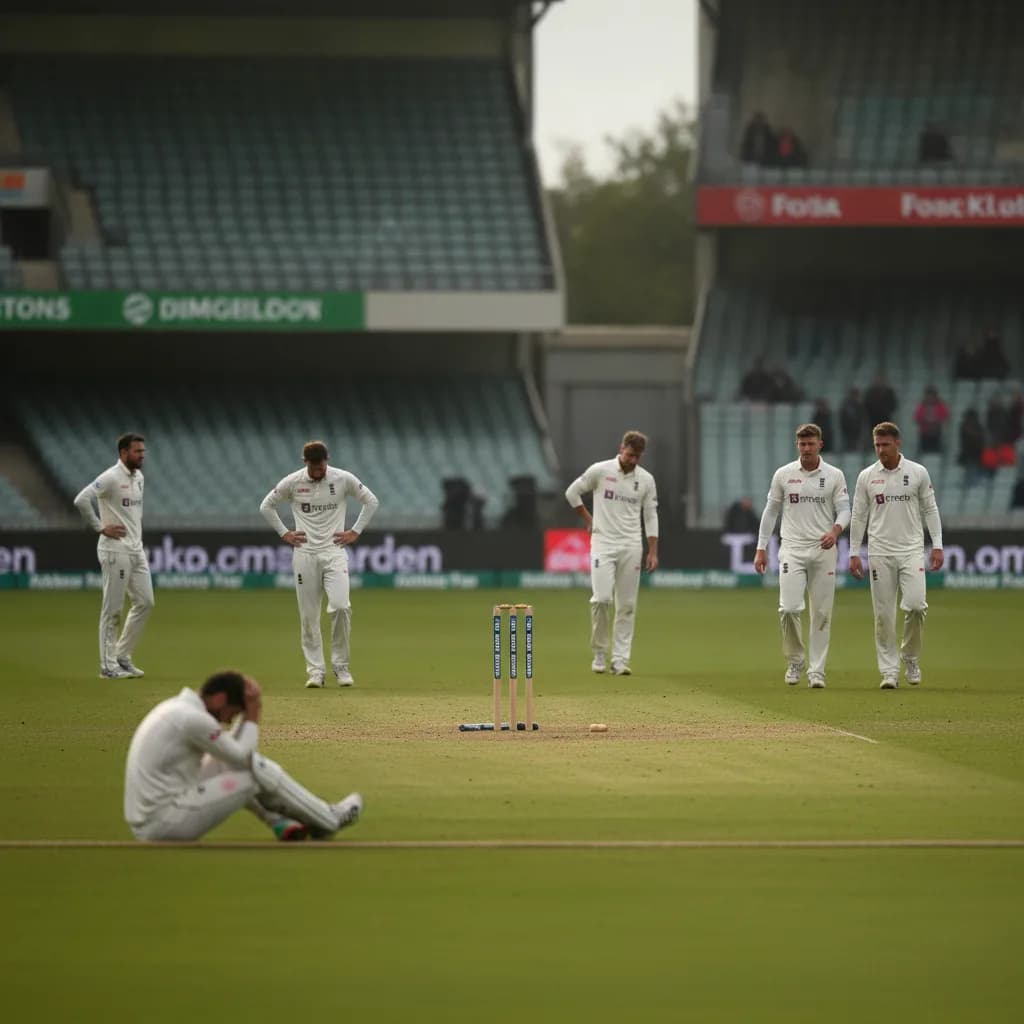
There are clubs in English cricket that carry genuine historical weight, and Lancashire is absolutely one of them. Which makes what is unfolding at Emirates Old Trafford all the more difficult to watch. With just one County Championship match left in the 2026 season, the Red Rose county are hovering dangerously close to finishing bottom of Division Two — a position they have never occupied in 136 years of Championship cricket. For a club of Lancashire's standing, that is not just a poor season. It is a genuine crisis.
A Club Without a Clear Identity
The rot did not set in overnight. Lancashire were relegated for the fourth time two years ago and, unlike previous spells in Division Two — from which they bounced back as champions at the first attempt, every single time — this one has proved far more stubborn. The underlying problem, identified publicly by former head coach Dale Benkenstein before he departed midway through the 2025 campaign, was a lack of clarity at boardroom level about what the club was actually trying to achieve. Was the priority winning games and earning promotion? Or was it developing young talent for the longer term? That tension between short-term results and long-term investment may sound like a familiar county cricket dilemma, but at Lancashire it has been paralysing. Benkenstein walked away after seven Championship matches without a single victory. Remarkably, more than twelve months on, that fundamental question still appears unanswered.
A False Dawn Under Anderson
When Steven Croft took over in an interim capacity following Benkenstein's exit, there were genuine signs of improvement. Three wins from the second half of 2025 earned him the permanent role, and optimism was further boosted by the appointment of James Anderson as full-time captain for 2026. The early signs were genuinely encouraging. Lancashire won two and drew one of their opening three Championship fixtures, with Anderson himself exceptional — taking 21 wickets in that spell, including a match-winning return of 4-18 against Derbyshire. Promotion felt like a realistic ambition. It is a measure of how dramatically things have deteriorated that the club now enters their final game ninth points above bottom-placed Gloucestershire, having lost eight of their last ten Championship matches. The odds on Lancashire avoiding the wooden spoon will have shortened considerably in recent weeks, and with runaway Division Two champions Durham arriving for that final fixture, a confidence-boosting send-off looks unlikely.
Batting Fragility Laid Bare
The statistics tell a damning story. Lancashire's leading run scorer in the Championship this season is Australian import Marcus Harris, who has accumulated 665 runs at an average of 33.25. That is a respectable enough return in isolation, but when your overseas player is comfortably your most productive batter and no one else is consistently firing, the home-grown batting unit has clearly struggled to cope with the demands of red-ball cricket at this level. Building a promotion-worthy side around a single overseas contributor is never a sustainable model, and Lancashire are paying the price for a lack of depth and consistency across their top and middle order.
What Needs to Change?
The honest answer is quite a lot. Lancashire need that strategic clarity Benkenstein spoke about to finally materialise into action. The coaching staff, the recruitment team, and the board must align on a shared vision — and then stick to it. Whether the answer lies in backing youth or bringing in proven performers, the worst outcome is continuing to do both half-heartedly. Whatever the result of that final match against Durham, the real work begins the moment the season ends. Lancashire's proud history demands better than this, and their supporters deserve a concrete plan rather than another summer of drift.