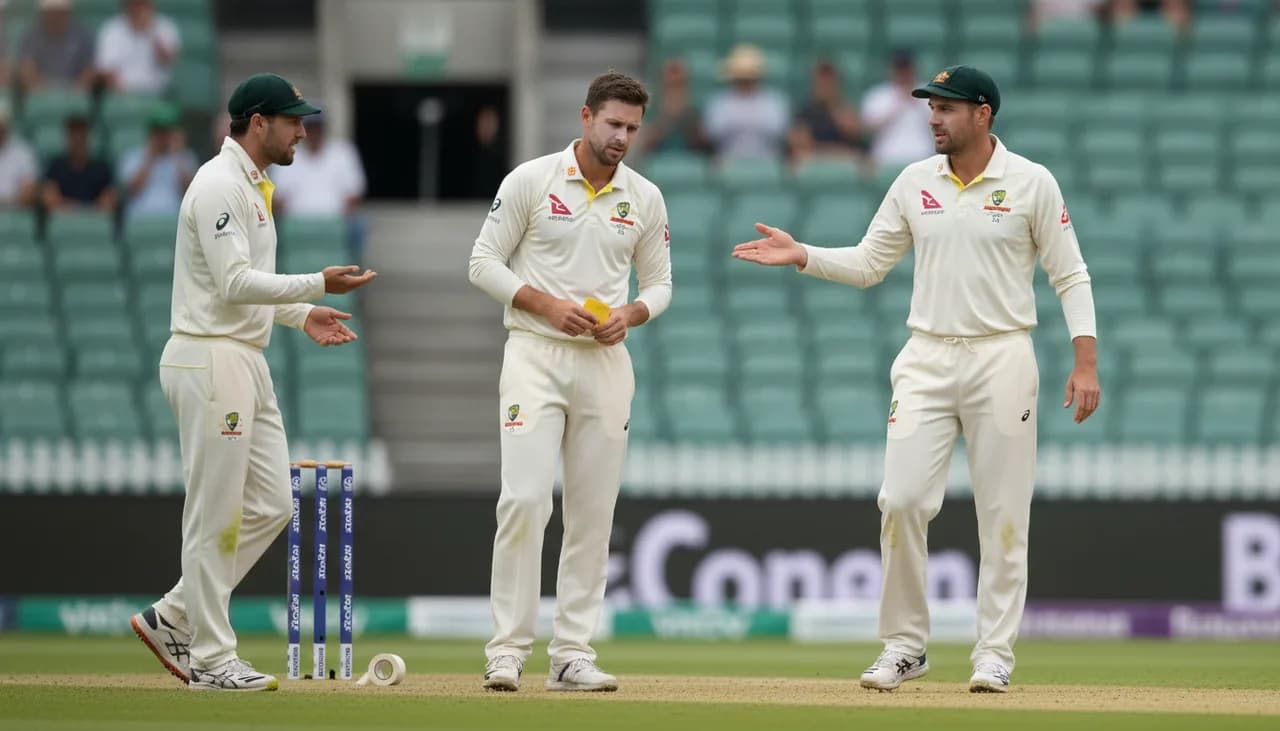

The echoes of the 2021-22 Ashes series still reverberate through English cricket, a painful memory of a 4-0 drubbing in Australia. As England prepares for the next chapter in 2025-26, a familiar and critical flaw has resurfaced in post-mortem analyses, highlighted by one of the campaign's central figures. The issue isn't just about skill or conditions; it's about leadership on the field. Stuart Broad, England's retired pace spearhead, has pointedly identified the absence of a clear attack leader as the root cause of what he labelled England's "worst bowling display" since 2008.
Broad's comments, made in his column for the Daily Mail, zeroed in on the first Test at Brisbane's Gabba ground. There, England's bowlers toiled for 152.1 overs as Australia piled up a mammoth 425 runs. The attack lacked penetration, consistency, and, most crucially, a coherent plan. "We had no attack leader," Broad wrote, a statement that cut to the heart of a systemic problem.
The Void Left by Anderson and Broad
For over a decade, England's bowling strategy was built around the legendary partnership of James Anderson and Stuart Broad. While they hunted as a pair, their roles were distinct. Anderson, the master craftsman, often set the tone with the new ball, probing for swing and seam. Broad, the fiery competitor, frequently acted as the attack's heartbeat and tactician, especially in Anderson's absence. His famous 8-15 at Trent Bridge in 2015 is a prime example of a leader seizing the moment and decimating a batting lineup through sheer force of will and skill.
With Broad's retirement after the 2023 Ashes and Anderson's international career concluding in 2024, a vast chasm of experience and tactical nous has opened up. The current crop of English quicks—including Ollie Robinson, Mark Wood, Chris Woakes, and the emerging Josh Tongue—are talented, but as Broad observed, "nobody took charge" in Brisbane.
What Does an "Attack Leader" Actually Do?
The role is less about being the most talented bowler and more about being the on-field general. It involves constant communication with the captain, setting fields that suit each bowler's strengths, identifying opposition weaknesses in real-time, and changing the tempo of the game. An attack leader is the one who grabs the ball when the partnership is flourishing and breaks it, who senses a moment of opposition vulnerability and exploits it. They manage the emotional energy of the group, lifting spirits after a dropped catch or a poor decision.
In Brisbane, England appeared reactive. The plans to David Warner and Marnus Labuschagne seemed generic, and when Travis Head launched his counter-attacking century, the bowlers had no answer. There was no one to rally the troops, to suggest a change in angle or a surprise bouncer barrage. The lack of leadership manifested in several key areas:
- Field Placements: Fields often appeared misaligned with the bowling plan, offering easy scoring options.
- Length Consistency: Bowlers drifted between too short and too full without building sustained pressure.
- Failing to Seize Key Moments: After a wicket, England frequently allowed new batters to settle too easily.
Is Ben Stokes the Solution?
Captain Ben Stokes is undoubtedly a leader of men and a bowler capable of inspirational spells. However, the dual burden of captaincy, all-rounder duties, and managing a chronic knee injury makes it incredibly challenging for him to also micromanage the bowling attack ball-by-ball. As Broad noted, the captain needs a deputy he can trust to execute the broader strategy. "Stokesy is such an imposing figure, but he can't do everything," Broad stated.
The Candidates for the Leadership Role
So, who can step up? The search is complicated by the modern schedule, which often sees England rotate their fast bowlers to manage workloads. However, a clear hierarchy needs to be established. Ollie Robinson, with his metronomic accuracy and height, has the cricket brain for it but must prove his fitness and durability. Mark Wood is the X-factor, the mood-changer, but his role as an impact bowler in short bursts limits his tactical oversight across an entire innings.
The return of Jofra Archer, if he can regain full fitness, would bring immense skill but not necessarily the leadership pedigree. Veteran Chris Woakes, a respected and intelligent cricketer, could be a short-term option, especially in English conditions, but his place overseas is less certain. This leaves a potential gap for a younger bowler to seize the mantle, but the pressure of an Ashes tour is a brutal proving ground.
A Historical Problem Exposed Again
Broad's reference to 2008 is telling. That was another era of transition, where England struggled to replace the leadership of figures like Andrew Flintoff and the consistent threat of Matthew Hoggard and Steve Harmison. The problem of identifying and grooming attack leaders is cyclical for England. The 2010-11 Ashes-winning team had the luxury of a peak Anderson and Broad, supported by the relentless control of Graeme Swann.
The current setup, under coach Brendon McCullum and captain Stokes, has revolutionized the batting with the 'Bazball' philosophy. However, their aggressive approach with the bat often places even greater pressure on the bowlers to deliver quick results with the ball. Without a shrewd tactician to manage that pressure and adapt plans on the fly, the bowling unit can look rudderless, as it did in key moments during the 2023 Ashes in England and in that fateful Brisbane Test.
The Path Forward for 2025-26
The identification and empowerment of an attack leader must be a priority for the England setup over the next 18 months. It requires a conscious decision from the management to give one bowler the responsibility and the backing. This involves more than just handing them the new ball; it means involving them in pre-series planning, fostering their tactical development, and supporting their authority on the field.
As Stuart Broad concluded, the solution isn't necessarily about finding a like-for-like replacement for himself or Anderson. It's about cultivating a mindset. "It's about someone putting their hand up and saying, 'I'll take responsibility for this session, for this partnership.'" Until that happens, England's bowling, for all its individual promise, risks remaining a collection of parts rather than a cohesive, threatening unit. In the cauldron of an Australian Ashes series, that lack of leadership could once again be the difference between retaining the urn and another long, hard tour.