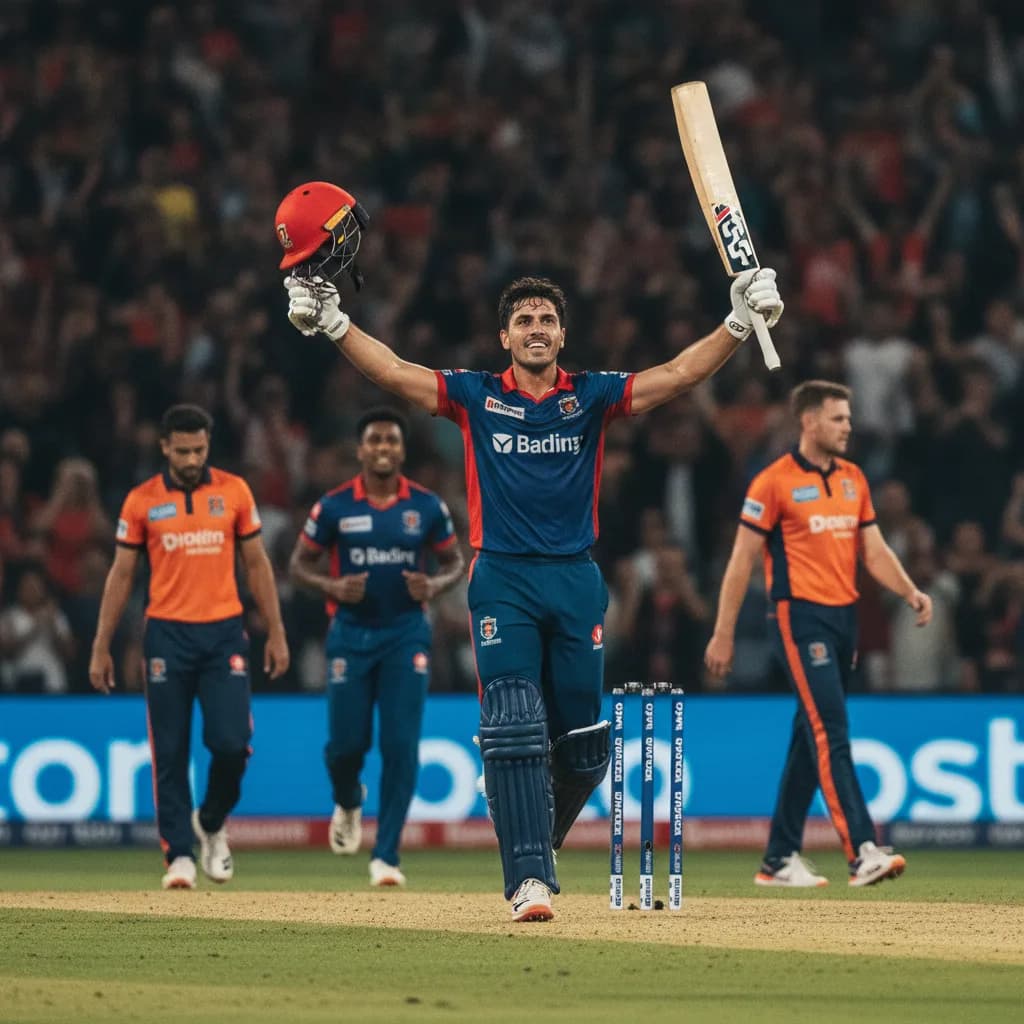
In the high-octane world of modern cricket, where innovation is currency, few shots capture the imagination quite like the switch hit. And few players execute it with the audacious precision of Phoebe Litchfield. For the Australian and Northern Superchargers batter, the shot isn't a mere party trick; it's a calculated weapon, a statement of intent that whispers, 'Left or right-handed, I back myself.'
The Anatomy of the 'Litch Switch'
Unlike the traditional switch hit popularized by the likes of Kevin Pietersen, which involves a complete 180-degree reversal of stance and grip mid-delivery, Litchfield’s signature move is a more nuanced, yet equally devastating, manoeuvre. She begins in her natural left-handed stance. As the bowler enters their delivery stride, she subtly shifts her back foot, opening her body up to almost face the bowler head-on, and effortlessly brings her bat down as a right-hander. The transformation is seamless, a blur of coordinated movement designed to exploit gaps in the field that simply don't exist for a conventional batter.
The effectiveness of the shot lies in its element of surprise and its geometric perfection. By switching, she turns good-length balls on off stump into deliveries angling across her new arc, perfect for manipulating behind square on the off side or driving through extra cover. As Litchfield herself explains, the thinking is deeply strategic: "It's about trying to open up another side of the field. If they've got a heavy leg-side field, I can try and access the off side as a right-hander."
A Skill Forged in the Backyard
The origins of the 'Litch switch' are not found in a high-performance academy but in the classic Australian backyard cricket crucible. Facing her older brother, Tom, a right-arm quick, a young Phoebe had to get creative to compete. "I used to get him out by getting caught on the fence, so I'd just turn around and try and hit him the other way," she recounted to reporters. This playful innovation became second nature, a unique tool she honed while rising through the ranks, long before it became a feature of international broadcasts.
This extensive, informal practice is key to her mastery. While many players can attempt the shot, Litchfield’s success rate is remarkably high. She doesn't just make contact; she finds the boundary with consistency and power, a testament to the thousands of repetitions that have baked the complex motor skill into her muscle memory. It’s a high-risk shot for most, but Litchfield’s deep-rooted familiarity transforms it into a calculated, low-risk percentage play.
The Tactical Ripple Effect
The impact of Litchfield's proficiency with the switch hit extends far beyond the runs it directly accumulates. It creates a pervasive sense of uncertainty for opposition captains and bowlers, disrupting their entire game plan. Fielding placements, meticulously set for a left-hander, are rendered obsolete in an instant. Bowlers are forced to second-guess their lines and lengths, often leading to poor executions and freebies on her natural side.
The psychological advantage is immense. It projects utter dominance and a fearless mindset. As England bowler Kate Cross noted, facing a batter with such a skill is a nightmare: "It makes captaining a nightmare because your field is irrelevant. As a bowler, you just have to back your best ball and hope it's good enough, because if you try and outthink her, you're already in trouble."
This forces captains into a defensive, reactionary posture. Common counter-strategies include:
- Setting generic, straight fields that sacrifice saving runs on one side to protect both.
- Bowling wider outside off-stump to a left-hander, which ironically plays into her natural strength for powerful cuts and slashes.
- A constant, and often disruptive, reshuffling of the field after every delivery, breaking the bowler's rhythm.
More Than Just a Shot
For Litchfield, the switch hit is symbolic of a broader evolution within women's cricket. It represents a new generation of players who are technically brilliant, tactically astute, and utterly fearless. They are not constrained by the way the game "used to be played." This confidence to innovate and express oneself is a hallmark of her batting and that of her peers. "I think it's just about having fun and not being afraid to get out," she says, distilling her philosophy into a simple, powerful statement.
Her ability has also sparked conversations about the laws of the game. The switch hit has long been a topic of debate, with some purists arguing it confers an unfair advantage by muddying the distinction between right and left-handed batters after the bowler has entered their delivery stride. However, the prevailing view, supported by the MCC, is that it is a legitimate skill that represents a spectacular evolution of batting, and Litchfield is its foremost pioneer in the women's game.
The Future of Innovation
As Litchfield continues to develop her game on the world stage, the 'Litch switch' will only become more refined and more feared. The next challenge for opponents will be to devise new strategies to counter it, which in turn may inspire further innovation from batters. This cycle of action and reaction is the engine of sporting progress. Phoebe Litchfield, with her backyard-born, international-grade signature shot, is not just playing the game; she is actively shaping its future, one audacious switch hit at a time.
Her journey underscores a crucial lesson for aspiring cricketers: innovation often blooms from play. It’s a reminder that at the heart of this highly professionalized sport, there is still room for creativity, for a bit of cheek, and for the sheer joy of confounding your opponent. As she perfectly sums up her approach, "I just back my skill. I've practised it a lot, so I feel comfortable playing it in a game. It's about knowing your game and having the confidence to back it."